

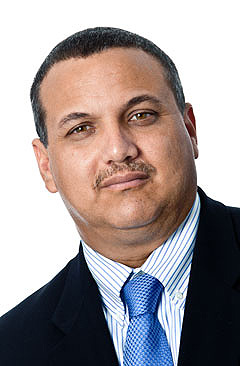
Issues canvassed included pensions and salary cuts
A 3.2 per cent pay cut for civil servants was the better of two evils members of the Civil Servants Association were told during an annual general meeting last week.
Cayman Islands Deputy Governor Franz Manderson told the several dozen people who were in attendance that he was disappointed that this course of action had to be taken and assured the group that their original salaries would be reinstated as soon as possible.
“That is part of what we agreed to in order to take the cut in the first place,” said James Watler, president of the Civil Service Association. “We have a deputy governor who understands the issues and is happy to work with us. We are also happy to work with him. He said that was the best of all possible evils for civil servants right now.”
Mr. Watler also surmised that cutting the civil service, of which thousands of people are in the association, would mean worse service, as people would be overworked and the government would be expecting more output from fewer resources.
Some of the other topics discussed during meeting were initiatives such as the loan programme, which offers up to $45,000 at a 5 per cent interest rate. This has been available to civil servants through the associations for 20 years.
Concerns such as the under-funding of the Public Service Pensions Board and the possibility of a bill coming to the Legislative Assembly that would allow civil servants to take money out of their retirement funds to purchase a house or a piece of land, as is now possible in the private sector, were also discussed.
“We as the Civil Service Association do not support the pulling out of funds. This would be a divestment of assets and does not make any sense. First of all, it depends on your age whether or not you will even be considered for a loan. Secondly, the $35,000 or so that individuals would get now will not make up for the hundreds of thousands they would lose down the road,” Mr. Watler said.
He said the government would have to pick up the slack when people had no money to retire with and that less money in the fund would mean less money to invest and therefore fewer overall profits.
“We would have to hold the government accountable in the end for this mistake because it is their job to ensure fairness and equity,” Mr. Watler said. “The fund already has enough grief.”
At least 107 people in the private sector have taken money from their pension funds for land or home purchases. A bill proposing to offer the same programme to civil servants was on the order paper for the Legislative Assembly last year. Whether the measure will be brought back to parliament in the next sitting remains to be seen.
The Public Service Pensions Board has a mandate to do an actuarial evaluation of the fund every three years in order to advise government. The last exercise in this regard was done in 2011. It showed that withdrawal of money from the fund would have a catastrophic effect.

Related Videos











Bad thing about equal cuts across all personnel is that those employees who work harder and do more get hit the same way as those who are slacking. Based on Pareto principle it is applicable to every organizations – there are always hard workers and not-so-hard workers.
In case of staff lay-offs not-so-hard workers usually have to leave first. With equal salary cuts across all personnel, hard workers feel more offended and might leave with higher probability. In more simple terms – equal salary cuts do not promote hard work and achieving.
If the Cayman Islands would come out of the dark ages and allow unions, this crap would not happen. A strike would sure bring the wheels to a quick stop.
Then again we must look at who we are dealing with.
Yes, Bubba, right on the nail.
A strike and the resulting realisation of what services are necessary, and to what extent, across the Civil Service, would be an eye-opener.