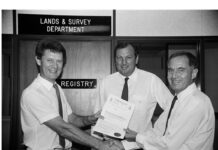
Hosted by the new local chapter of the Royal Institution of Chartered Surveyors, the first Cayman Islands Property and Construction Conference served as a forum for discussion of many topics relevant to the islands, including public-private partnerships and the outlook for the real estate market.
The event, held on 28 February at the Grand Cayman Marriott Beach Resort, was also the official launch of the Cayman chapter of the international property professionals organisation.
PPPs
During the first panel discussion of the day, Appleby (Cayman) partner Norm Klein presented a list of projects in Cayman that could potentially follow the private-public partnership model.
In addition to oft-discussed projects such as waste management, cruise berthing, and airport expansion, Mr. Klein (who is head of the firm’s Cayman property practice group) also included projects such as sewage management; roads; schools; sports facilities; affordable housing; health services and facilities; social services and facilities; and public transportation.
Sharlene Williams of PricewaterhouseCoopers Jamaica said a public-private partnership can be for anything from a road to education, so long as a service is provided. Ms Williams said many Caribbean countries are using public-private partnerships, including in Aruba (roads for the airport), Barbados (desalination, prison, government buildings), Haiti (power), Jamaica (highway, airport, resort, port, schools, hospitals) and St. Lucia (roads).
Panel moderator Nigel Bates, who is director of estates at Dart Enterprises, said public-private partnerships are not a new concept, particularly in the Caribbean. He cited the example of English monarchs issuing letters of marque authorising privateers to police faraway shipping channels.
In terms of cruise berthing, Richard Deslauriers of PricewaterhouseCoopers Canada said there are few examples of true public-private partnerships.
Most small- and medium-sized cruise pier projects are done either by the private sector or by government. He said public-private partnerships become necessary when the objectives of a major project go beyond that of a functional cruise pier. For example, he highlighted a $1 billion-plus real estate project in the Philippines, of which a cruise pier is a relatively small component.
Mr. Klein and the other speakers stressed the importance of transparency in the bidding process and the necessity of demonstrating adequate “value for money” under current law. “Value for money doesn’t necessarily mean you’re getting a great deal,” he said.
Market outlook
Regarding property market conditions, Charterland partner Simon Watson said 2010 was definitely a low point, while 2011 statistics were skewed by major acquisitions by the Dart Group. He said the current real estate inventory may be oversupplied with two-bedroom townhouse units. On the other hand, Mr. Watson sees good, but still fragile, trends in the high-end condo sector.
The market outlook panel was moderated by IRG broker and owner Jeremy Hurst.
Mark McIntyre, Cayman head of CIBC FirstCaribbean, said that unless a proposed development project has been pre-sold enough to cover its debt, the bank generally isn’t interested in lending money.
Higgs & Johnson partner Gina Berry said her clients are being very cautious, and that she’s seeing more proposals to refinance existing loans, rather than making new deals. She said she hadn’t seen as much of an uptick in the first quarter of 2013 than she had hoped.
Ms Berry said the medical tourism project in East End has become a hot topic, with property owners east of Bodden Town hopefully anticipating a real estate boom.
Thompson Development director Gene Thompson, one of the developers behind the medical project, said he’s not so concerned about global economic forces negatively affecting the viability of Health City Cayman Islands. He said he sees the risk in the project as “modest, at most”.
Mr. Watson said the Shetty hospital – as it is popularly known due to its association with Indian cardiologist Dr. Devi Shetty – should increase the value of raw land and new buildings in the area, but he doesn’t think there will be great demand for existing, older buildings.
Related Videos