

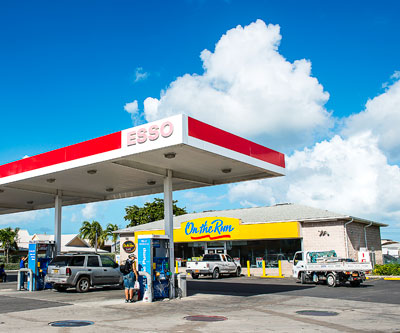

One of the Cayman Islands two major fuel suppliers’ remaining interests in the Caribbean have been sold to a Barbados-based company, Planning Minister Kurt Tibbetts confirmed Wednesday.
Following a parliamentary question asked by Opposition Leader McKeeva Bush, Mr. Tibbetts admitted the sale of Esso’s Cayman Islands interests had gone through this month without formal notification to himself or Chief Petroleum Inspector Duke Munroe.
“The government … learned of this via rumors,” Mr. Tibbetts said.
On its website, the company Simpson Oil Ltd., known as Sol, confirmed that it had acquired ExxonMobil’s fuel marketing business in the Bahamas, Barbados, Bermuda, Dominican Republic and the Cayman Islands.
“Sol entered into long-term fuels supply and brand license agreements with ExxonMobil and, as a result, we will have a continuation of the Esso brand in these countries,” the website statement read.
The sale comes a relatively short time after the sale and rebranding of the Chevron-Texaco owned petrol stations in the Cayman Islands to Rubis.
Opposition Leader Bush asked if government had any discussions with the new company about pricing, environmental concerns or competition potential.
Mr. Tibbetts confirmed that government had spoken with Sol representatives and that it expected competition to continue as normal between Rubis and Sol, the same way it did for years between Esso stations and Chevron-Texaco. In addition, Mr Tibbetts said individual retail station owners would set prices according to standard practice.
However, the planning minister also introduced the notion – when pressed by Mr. Bush – that the government would support efforts of the largest purchaser of diesel fuel in the islands – Caribbean Utilities Company – to seek lower bulk diesel prices from a potential third supplier.
“The competition might well begin at the point at which CUC gets its supply,” Mr. Tibbetts said, adding that talks on this issue were at a very early stage.
CUC officials were contacted for a response to Minister Tibbetts’s comments Wednesday and provided the following statement from CUC chief executive Richard Hew: “What has occurred here is the trend in the region and globally where the big oil companies such as Exxon-Mobil and Chevron, who previously owned the fuel terminals here, are concentrating on the exploration, extraction and refining of oil into the various end products and are getting out of terminal operations, retailing and marketing of the refined products.
“Both terminals and retail operations have been sold to Rubis and now Sol who are established regional terminal and retail operators that compete in many other countries in the region.
“CUC anticipates continued reliable service and competitive pricing from both companies.”
Mr. Tibbetts also said he understood that the terms of ExxonMobil/Esso’s Local Companies [Control] License had been transferred to Sol as part of the sale. Mr. Tibbetts said they did not wish to “disadvantage” one fuel supplier over the other by changing license terms for Sol.
However, the minister noted that it might be “in the country’s interest for there to be a larger supply on hand for fuel, not only for CUC but for local consumption,” but that anything further he might say would be speculative.
The parliamentary debate made vague references to potentially establishing another site – apart from the current location in South Sound – for local fuel storage and distribution. The Caymanian Compass attempted to clarify comments made by Minister Tibbetts Wednesday, but again, received no response by press time.

Related Videos








When poor me tried to sell my little restaurant I was told that the licence was not transferable. So instead of a seamless turn-over of an operating business and the value that this would bring to my sale, the new owner had to re licence before they could operate. These stations not only have a seamless turn-over they did not even notify government. I wish government would speak to things they have control over. The representative statement seem to be out of frustration, and CUC rep very diplomatic. Funny though that a monopoly would put value on competitive pricing. The one thing that government had was its citizens as captive consumers, and still does if they knew how to manage the country we entrusted to them.