Cayman Hazard Management experts are promoting a way residents can get hot dinners and snacks when the power is out and water supplies are low in disasters and emergency situations – add self-heating meal packets to preparedness kits.
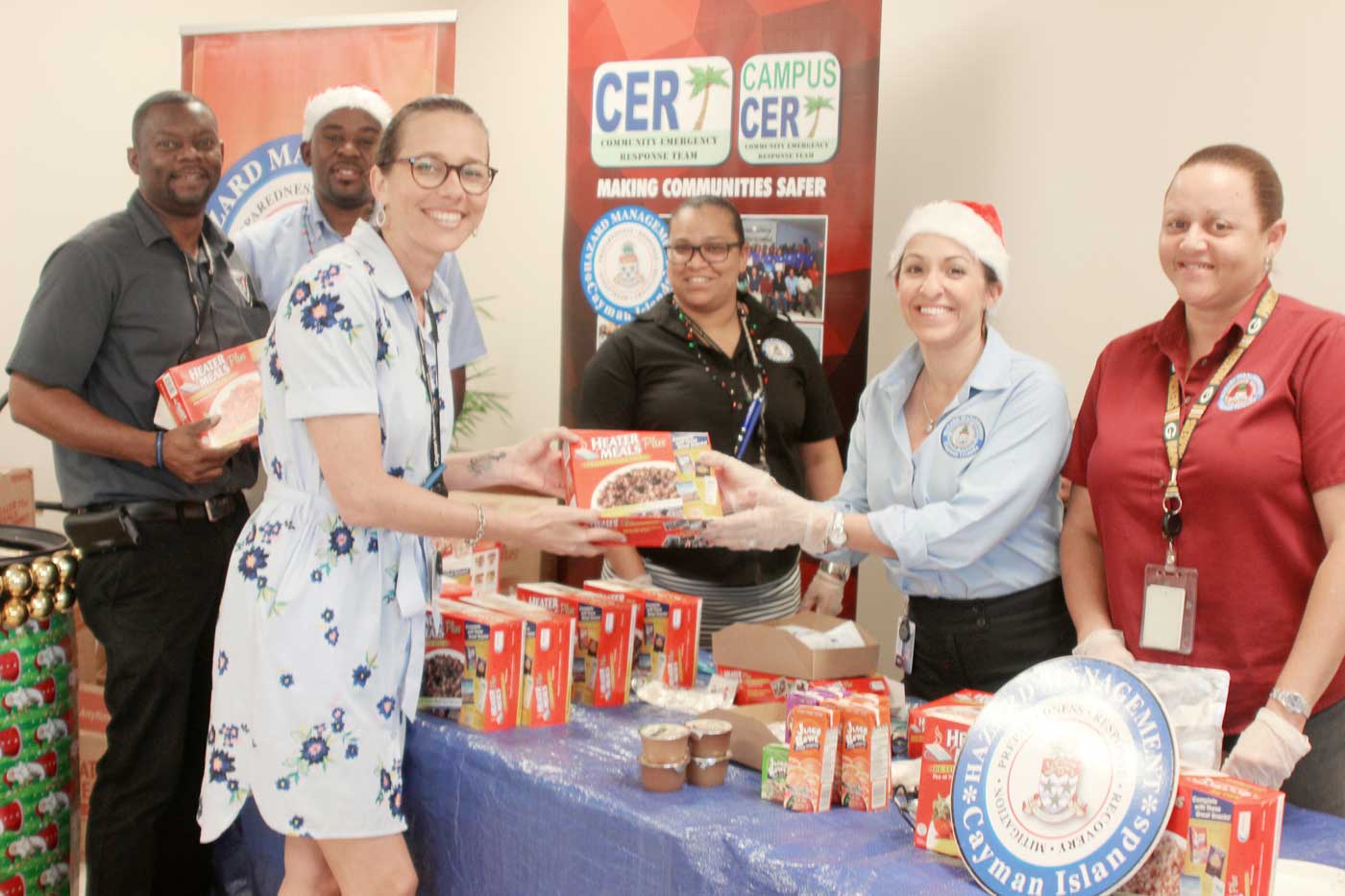
For some, the idea of practically indestructible ready-to-eat meals stored for years might not seem that appetizing, so the Hazard Management team decided it was time for a taste, demonstrate and distribute test.
On Tuesday, the team gathered at the staff entrance of the Government Administration Building. They demonstrated the basics of ripping open the top, inserting the entrée package, and putting in just the right amount of the included salt water solution, then folding the packet and giving the chemicals time to heat the meal. The flameless heater reaches boiling point, and 10 minutes later, dinner is served.
Some observers gave the meals a wry eye and steered away, while others tried the meal-in-a-box and gave it the thumbs up. Others said they would stick to breadfruit and fried fish in the event of emergencies, but most people were curious and interested in this product, which some thought was used only for soldiers in combat, training exercises or NASA space trips.
The self-heating meals come in a number of options, such as potatoes and sausage, Spanish-style rice with spicy beef, Italian chicken pasta, Southwest-style chicken with rice and beans, Tandoori-seasoned chicken with brown rice, oatmeal dishes, snacks, and desserts. They are designed for easy storage with no refrigeration or freezing required.
But what exactly are people getting in the little self-heating packets? “They’re very low in sodium and very high in calories,” said Danielle Coleman, director of Hazard Management. “Each box is about 1,000 calories … in the aftermath [of a disaster], one might need that energy to keep going and to keep moving,” she said.
Although Hazard Management only keeps a stock of ready-to-go meals for the Shelter Management Team and the National Emergency Centre, Ms. Coleman said the organization’s goal is to encourage supermarkets to bring in the “Heater Meals Plus.”
“It’s a great thing to buy,” Ms. Coleman said, adding that they come in handy when there is no food in the house or the gas runs out and you don’t want to cook.
Five years ago, Hazard Management’s former director McCleary Fredrick brought in the initiative. He thought that it was a good idea to have some emergency food supplies available just in case, said Simon Boxall, acting deputy director of Hazard Management.
Mr. Boxall said a few of the meals are stored at hurricane shelters but they do not want to encourage people to depend on them. They are just part of the contingency plan if extra food is needed.
Ms. Coleman said everyone coming into a shelter should bring nonperishable food with them and the Heater Meals would come in handy.
“We wanted to see what was out there by introducing the product,” she said. “We always encourage persons to [assemble] hurricane kits, but again if we can get these on island, we would like to see people get these in their kits because it is such an easy way of cooking in an aftermath of any disaster.”
Related Videos