

The remaining PCR testing kits Cayman sourced from South Korea last year will be donated to Jamaica and the Caribbean Public Health Agency (CARPHA) in Trinidad, the Ministry of Health confirmed Wednesday.
A total of 78,000 of the Seasun test kits will be shared between the two entities.
Cayman dispatched 36,000 tests Wednesday morning to Jamaica, and the remaining 42,000 will be sent to Trinidad shortly, the ministry said in a press release.
The polymerase chain reaction kits, which were acquired in April 2020 from South Korea, will expire at the end of this April.
The health ministry statement, in explaining the decision to donate, said the laboratory at the Health Services Authority will be unable to use the remaining kits before they expire.
Though not providing the total amount of test kits left, the ministry said, “this donation does not create any shortage of test kits for Cayman”.
Chief Medical Officer Dr. John Lee, in an emailed response from the ministry following Cayman Compass queries Wednesday, said he can confirm that PCR test kits “have become standard supply items and are not under particular constraint”.
Premier Alden McLaughlin, commenting on the donation, said it will assist those in need.
“The purchase of these test kits has really helped Cayman in our mass screening programmes enabling us to open up our local economy, getting people back to work, students back to school and people back to living their lives. Sharing these test kits with our friends and neighbours who can use them to help save lives is beneficial to all of us,” McLaughlin said in the statement.
CARPHA was instrumental in assisting Cayman in the early days of COVID-19 testing through confirming local results. It is also conducting genomic sequencing testing on samples of positive COVID-19 cases to determine if the COVID-19 Variant of Concern (UK) – Variant B117 is present.
“CARPHA is the single regional public health agency for the Caribbean and has been a great source of assistance to the Cayman Islands in various aspects of public health over the years,” the statement said.
On Tuesday CARPHA confirmed that the UK COVID-19 variant had been detected in three test samples from the Cayman Islands.
All other variants were ruled out from the samples. At present there are three predominant variants – from the UK, South Africa and Brazil.
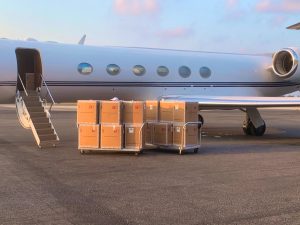
Cayman received around 200,000 test kits which government procured from a South Korean company following collaborative efforts from local businessmen Vernie Coe and Craig Merren who provided the initial contacts for the suppliers.
The logistics were supported by the Dart Corporation which arranged and funded the aircraft charter to fly the consignment from Seoul via Anchorage to the Cayman Islands.
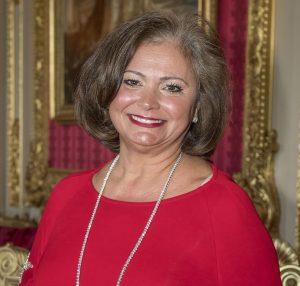
The overall cost of the 200,000 kits was US$4.4 million, or US$22 per kit. Local philanthropist and businesswoman Susan Anne Olde donated half of the cost of the kits.
Health Minister Dwayne Seymour said government remains very grateful to Olde for her help.
“Cayman has been very fortunate to have been able to develop robust and scalable PCR testing capabilities early in the pandemic. This has really helped in our mass screening programmes and our work to keep the threat of this highly infectious disease under control,” Seymour said in his statement.
The minister added that government was “thankful we are able to assist others in the region in their fight against this ongoing global threat”.
Meanwhile, on Wednesday Lee reported one new positive COVID-19 case, out of 244 tests conducted since Tuesday.
The individual is an asymptomatic traveller who tested positive following routine screening, and will remain in isolation until considered recovered.
To date, Cayman has recorded 385 COVID-19 cases, 356 of which have fully recovered. Four people are symptomatic while 23 people are not showing signs of the novel coronavirus.
A total of 66,481 PCR tests have been conducted in the Cayman Islands.
The number of people in isolation, either at a government facility or in their homes, as required by the medical officer of health, is 879.
Related Videos








We have already donated large numbers of test kits to other Caribbean countries, so why did we purchase 200,000 in the first place?