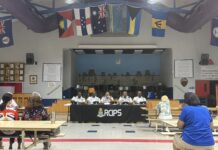
The Royal Cayman Islands Police Association has mounted a legal challenge against Police Commissioner Derek Byrne’s decision to change the work schedules for uniformed officers.
During the single-day judicial review before Justice Kirsty-Ann Gunn in Grand Court on 23 Sept., attorney Guy Dilliway-Parry, who represented the police association, said the commissioner’s decision was “unlawful and irrational” and a breach of a “legitimate expectation”, because it reduced what the association called the legally protected vacation allotment of 22 days to 15 days.
Dilliway-Parry said prior to Byrne’s decision, uniformed officers worked shifts of seven-and-a-half-hours per day, with six days on and four days off; the commissioner changed that to 11 hours per day, with four days on and four days off.
“The then General Orders of 1987 established a minimum of 165 hours’ worth of vacation time for civil servants, which included police officers,” said Dilliway-Parry. “In order to comply with this, the then commissioner divided the 165 hours by 7.5, which resulted in 22 days for vacation. This was the standard which was adopted by each commissioner going forward.”
Dilliway-Parry said because officers were given more days off, which were considered ‘rest time’ under the new schedule, the decision was made to reduce their vacation by dividing the 165 hours by 11, which resulted in 15 days vacation.
“While officers did receive more days off as rest time as a result of the new shift, this is not a question of balancing and compensation, it is a matter of the statute and there is no ambiguity in what officers are entitled to,” said Dilliway-Parry. “By reducing the vacation days, the new policy breached the statute and in doing so became illegal.”
Gunn was told the commissioner acted “irrationally”, because his justification for the policy change was that “it was for the greater good”, and “the uniform shift cycle is a very good thing”.
“The commissioner did not provide any reasonable justification for the decisions,” said Dilliway-Parry. “As the Privy Council recently decided, even a policy decided with the best of intentions can nevertheless be irrational.”
The attorney’s third and final ground for appeal was that because successive police commissioners have for decades calculated vacation allotment by the 7.5 hours for an average work day, the 22 vacation days became a legitimate expectation.
“Terminating a policy that has stood for decades without putting forward any reasons for doing so apart from reasons about the policy is unlawful,” said Dilliway-Parry. “By unilaterally reducing leave which was granted by Parliament, the commissioner has over-reached his authority, which now amounts to an abuse of power.”
When arguing on behalf of the police commissioner’s decision, attorney Jevon Alcock accepted the new policy did result in a reduction of vacation time. However, he said the additional rest days compensated for the decreased vacation.
When questioned by Gunn, the lawyer was unable to provide any written policy which guaranteed the protection of the disputed seven days.
“What the applicants really want is some portions of the new uniform policy and a portion of the previous policy,” said Alcock. “In essence they are cherry picking the sections which they like from both.”
Alcock argued that there could not have been any breach of expectations as the commissioner “did not give any representations, promises, commitments or undertakings, written or otherwise” that he would retain the number of vacation days.
When responding to the ground of irrationality, Alcock said the uniform policy was the product of extensive research and recommendation from senior police officers, and that it was not a unilateral decision.
Related Videos