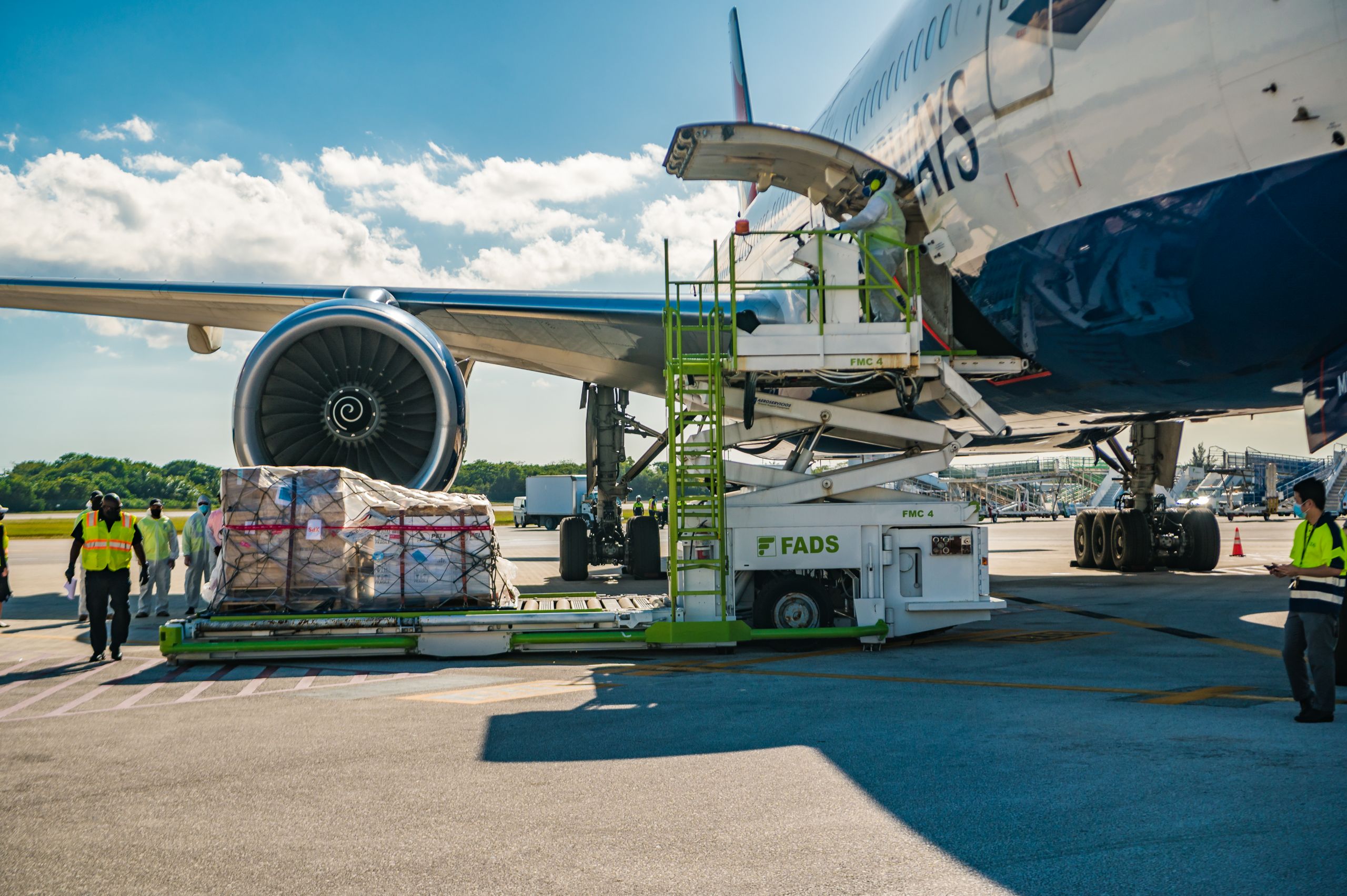
Cayman’s next shipment of COVID-19 vaccines has been delayed until Saturday due to a shortage of dry ice in the UK, the Governor’s Office has confirmed.
The 11,000 doses were expected to arrive Monday on the first of three new weekly scheduled British Airways flights. However, the Governor’s Office – responding to Cayman Compass queries about the expected shipment – said the vaccine delivery is currently being rescheduled for later this week as a result of the aforementioned shortage.
In addition to the Pfizer vaccines a supply of 400 doses of AstraZeneca will also be arriving.
Why this happened
According to a BBC report, CF Industries – which produces CO2 (dry ice) as a by-product of its main product, fertiliser – stopped work at its two main plants on Teesside and in Cheshire due to rises in wholesale gas prices.
“Because the fertiliser factories stopped working, there had been a cut of 60% of the UK’s food-grade carbon dioxide supply,” a BBC explainer report stated.
The UK government, the report stated, said, “It will meet the full operating costs – said to be tens of millions of pounds – of CF Industries’ plant on Teesside for three weeks ‘whilst the CO2 market adapts to global prices’.”
A cap will be applied to the overall cost and, as part of the deal, the report continued, “the food industry will have to pay five times more for carbon dioxide – with prices rising from £200 per tonne to £1,000”.
Some supermarkets in the UK, according to media reports, are already feeling the pinch with supplies of frozen foods and fizzy drinks, which require CO2.
The Pfizer-BioNTech vaccine has strict guidelines on the temperatures that the doses must be stored at in order to maintain its efficacy.
According to the manufacturer’s specification, the vaccine must stored in ultra-cold temperatures between -90°C and -60°C (-130°F and -76°F) with dry ice.
Last year, the Health Services Authority purchased special refrigerators in order to safely store the vaccine.
The BBC report on the CO2 situation said that remaining UK carbon dioxide production is being prioritised for medical uses.
“It is used during some invasive surgeries to stabilise body cavities, to stimulate breathing and to get rid of warts and moles. CO2 is also used by the nuclear industry as a coolant,” the BBC stated.
Meanwhile, Cayman’s Ministry of Tourism has confirmed that BA has resumed its commercial flight schedule and is operating three flights per week (via Nassau), effective 27 Sept.
The BA schedule is currently Monday, Thursday, Saturday, with arrival in Grand Cayman at 4:10pm, departing GCM at 6:05pm to return to the UK.
“BA will assess passenger demand and if warranted, may increase their scheduled service to four flights weekly,” a ministry spokesperson said.
Editor’s note: This story has been updated to reflect a change in date of arrival of the vaccines from Thursday to Saturday 2 Oct.
Related Videos