With Wednesday, 29 Sept., being World Heart Day, the Cayman Compass spoke to a cardiology specialist in Florida who discussed the impact COVID has on heart patients, as well as the way the virus can attack the heart in patients who have no previous cardiac issues.
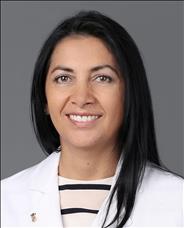
Dr. Sandra Chaparro, the director of Advanced Heart Failure at Miami Cardiac and Vascular Institute at Baptist Health South Florida, has seen a steady stream of COVID patients with severe heart issues since the outbreak began last year.
In the latest wave of infections caused by the Delta variant of COVID-19, Chaparro said she and her colleagues have been seeing a greater number of younger patients, in their 30s and 40s, who prior to becoming infected with the virus, were healthy and had no serious medical history.
While younger patients with previously healthy immune systems and strong hearts have better reserves to fight off the onslaught of health issues brought on by COVID, she says she is nonetheless seeing patients with severe complications and some have died.
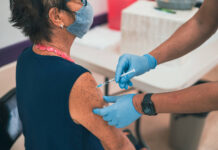
In cases where patients have died or have been critically ill, the majority have been unvaccinated, she pointed out, adding that symptoms are usually much milder for vaccinated patients.
“The benefit that the vaccine gives you is it’s going to allow you to recover better and faster because you already have the antibodies, so the patients don’t end up in such critical situations like the ones who don’t have the vaccine,” she said.
“I’m a heart failure and transplant cardiologist,” Chaparro said. “I usually see the sickest patients.”
She added, “At the beginning of the pandemic, we didn’t know much about the disease or how to treat it, and now we … know how to be aggressive, we have .. a lot of data where we can avoid some of the consequences we were seeing early in the pandemic.”
Most of the patients seen in the earlier days were people in their 70s and 80s, “and we didn’t have a lot of tools to treat them”, she said.
Now, with much more data available, the medical profession has a better understanding of how to treat patients, both young and old, and the survival rate is building.
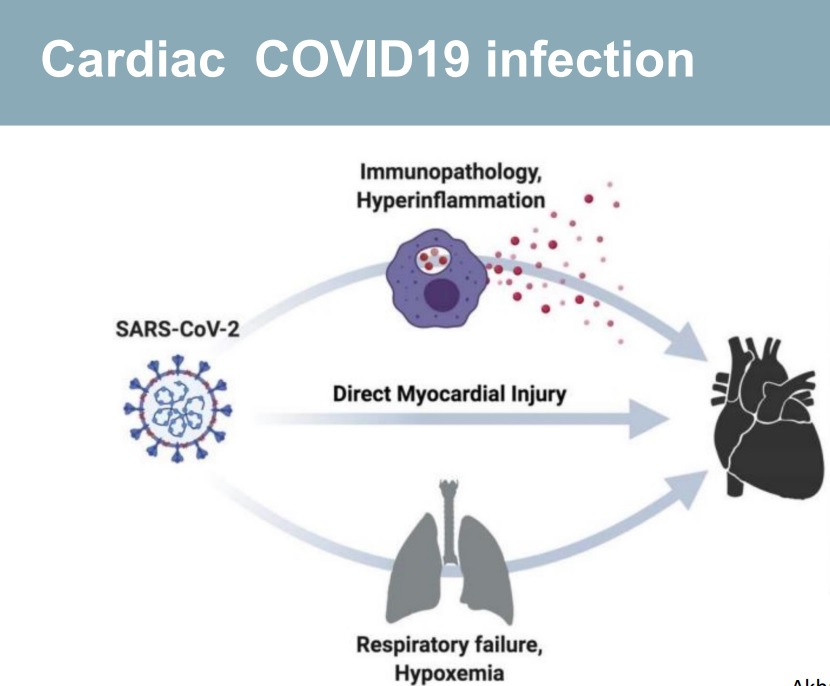 Chaparro explained that the virus’s spike proteins attach to a patient’s ACE2 receptors, which allow them to enter the cell. “What is interesting is that a lot of these receptors are also found in the heart, so that’s why sometimes the virus tends to attack the heart,” she said.
For patients severely impacted by COVID-19, there are usually three phases, Chaparro said.
“Once the virus enters into the body, we have what is called the viral response, the early infection,” Chaparro said. “That’s usually the most common presentations – the typical upper respiratory symptoms, the fever, the cough, the diarrhoea, the malaise; all the symptoms that are common to all the viruses. When we do bloodwork on those patients, we can find out they have some specific signs, for example, they may have low white [blood cell] count. …
“Then we have the second phase, which usually involves an impact on the lungs. The patient has shortness of breath, the oxygen level drops, and we can see the damage of the virus on X-rays. We can see that it is starting to affect the other organs.
“That’s when we go into the inflammatory phase, the hyper response – that’s the third phase. Usually that’s where we see all the other organs being affected, the heart, kidneys, liver. The immune system is so hyperactive that it’s out of control and that’s when we have to give medicines to decrease the immune system to allow for healing.”
How does COVID affect the heart?
There are a number of ways the virus can impact the heart.
COVID can directly injure the heart because it contains ACE2 receptors to which the virus cell can attach. And when the body is experiencing low oxygen levels due to a failing the respiratory system, known as hypoxemia, that also leads to heart problems.
At the hyper-response stage, when the immune system is hyperactive, the associated inflammation can also affect the heart
Once a COVID patient with heart issues is admitted to hospital, bloodwork is carried out to check biomarkers; electrocardiograms (EKG) are done to see if there are any arrhythmias; and other tests are completed to determine if there is a blockage in the arteries “to get a sense of the damage the virus is causing”, she said.
“Generally, there are different presentations of COVID in terms of cardiovascular problems. One is the typical heart attack, so significant blockages. The patient comes in, usually with specific symptoms, such as chest pains, shortage of breath, and we do an electrocardiogram that will give us some clues, and send the patient to the CAT lab, and do a coronary angiogram and we see the vessels and see if there is any blockage. That’s one presentation. It’s usually very dramatic, and then we have treatment actions for that.”
In some cases, myocarditis – inflammation of the heart muscle – is found and an aggressive treatment approach is required. However, Chaparro said, “It’s sometimes tricky to find out if this is truly something coming from the heart, or something related to a super-imposing infection. Sometimes, the bacteria takes advantage of the fact that the immune system is very low and it starts attacking.”
Another, and less common, effect of COVID on the heart is the inflaming of the pericardium, the membrane on the top of the heart, which leads to an infusion of fluid around it which compresses the heart. In those cases, “We have to quickly remove that fluid so the heart does not collapse.”
Chaparro added, “One of the last presentations that we see in patients is clots … in the lungs, in the brain, in the kidneys, in the spleen, everywhere. This systemwide clotting, what we call a pro-thrombotic state, is quite common with patients with COVID.”
She said these various presentations “can happen to patients without any prior cardiac history. As you can imagine, if you have a cardiac history and you get a hit from COVID, obviously those patients are impacted worse, you don’t have that reserve.”
She is appealing for anyone who is reluctant to get vaccinated to seek advice from a doctor they trust and get their questions and concerns about the vaccine answered by him or her, rather than getting information from social media.
Related Videos