The Department of Environmental Health (DEH) has issued a cautionary warning to the public, urging extra care when disposing of lateral flow tests.
The tests are now widely used locally, as many, including students, are required to undergo regular testing for COVID-19 and travellers are now subject to tests on day two, five and ten upon arrival.
In a statement on Tuesday, the DEH advised that although the testing kits for COVID-19 are not considered clinical waste requiring special collection, “they should be disposed of correctly and not be recycled”.
“The DEH recognized that as the introduction of these self-test kits is becoming increasingly common at workplaces, schools and homes, used LFT become household waste and they should still be handled with care, whether the result is negative or positive. Same principle also applies for disposable masks, face covering and gloves,” it said in the statement.
As the DEH addressed the concerns with lateral flow tests, there were also concerns raised last week over the rising number of disposable masks being discarded in public spaces, which has become a problem globally.
A recent study posted on the Science Direct platform entitled “COVID-19 pandemic and healthcare solid waste management strategy – A mini-review”, found that test kits and waste generated from different diagnostic methods for COVID-19 “are another additional type of healthcare waste that has been generated in substantial amounts during the COVID-19 outbreak, as global transmission and prevalence have necessitated the detection of infections to aid with appropriate social distancing and quarantine measures”.
It warned that, if not properly handled, the waste could increase the spread of the virus.
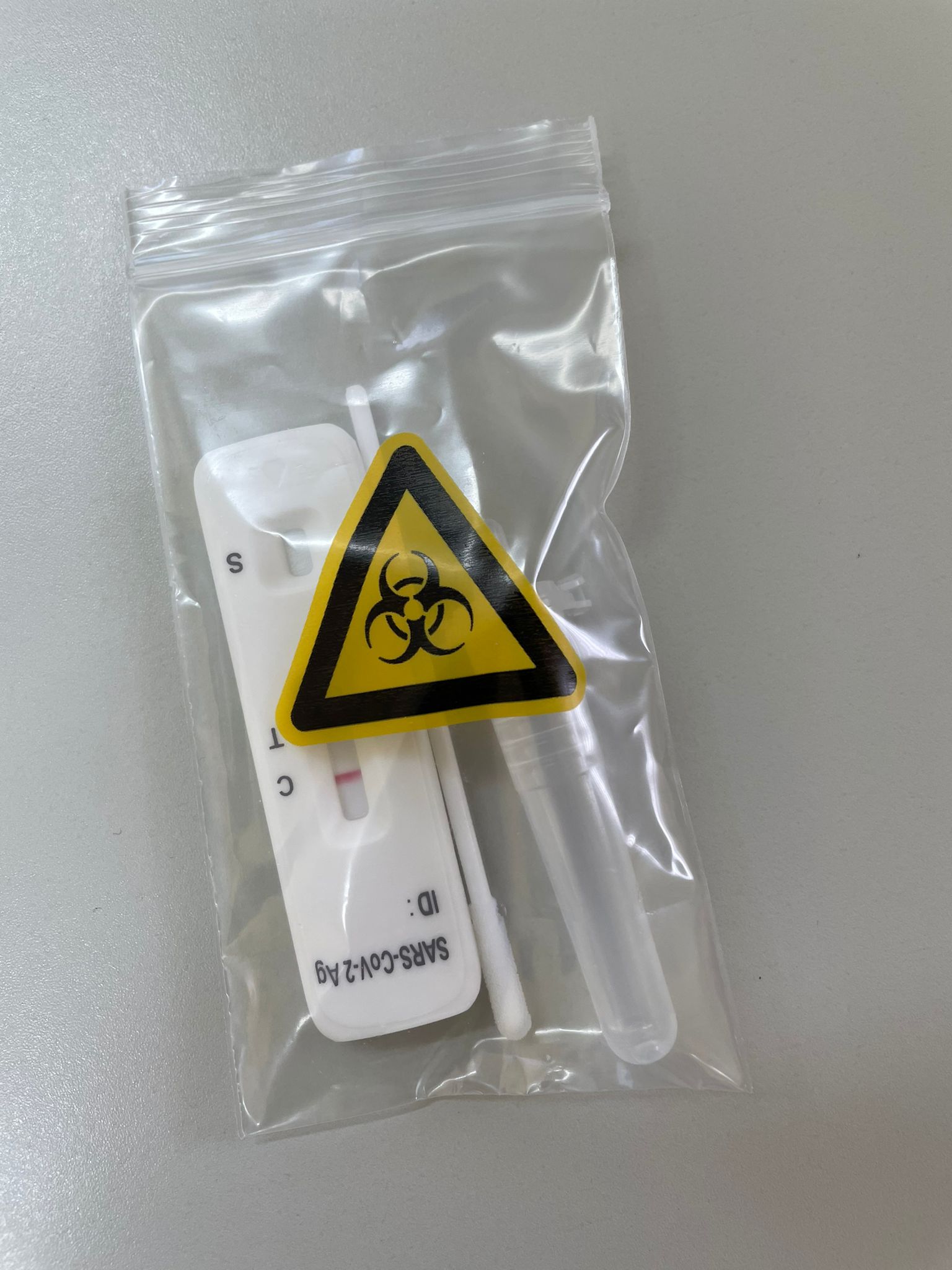
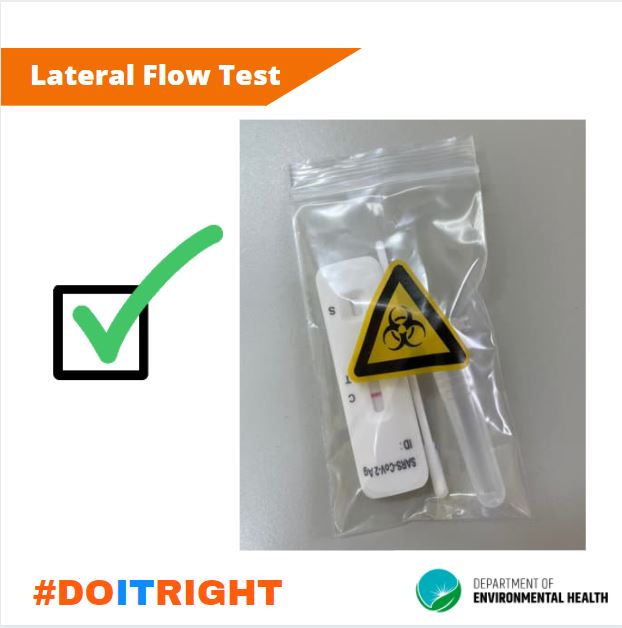
The DEH, in its statement, advised that once used, the testing kits must be disposed of safely by placing all of the items from the testing kit and the plastic packaging into the bag provided and marked with the biohazard symbol (yellow triangle).
“Then put this bag in the general garbage bin for disposal, as indicated in the instructions provided with the kits,” the statement said.
Additional information is available from the DEH at 949-6696 or [email protected].
Related Videos