

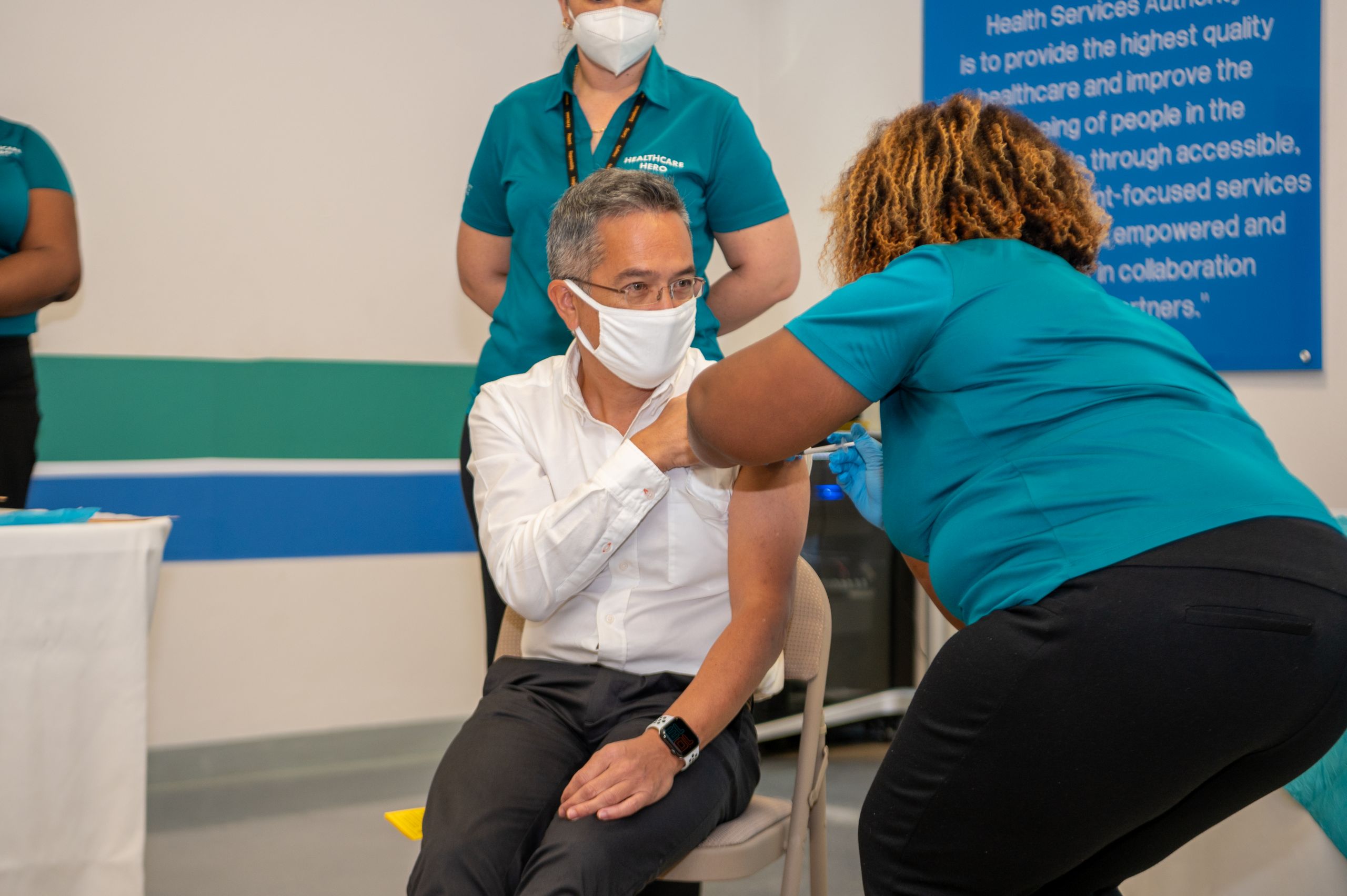
The feared Omicron variant of COVID-19 is “knocking on the door” and will be difficult to keep out of the Cayman Islands, Chief Medical Officer Dr. John Lee acknowledged, as he urged residents to get their booster shot.
Currently only 16% of the island’s population has had the third shot of the COVID-19 vaccine. And public health chiefs believe improving that ratio is key to protecting individuals and the wider community from the threat of the virus.
Despite many unknown factors about the latest variant – first detected in southern Africa – Lee said the vaccine still represents the best way for people in Cayman to stay safe.
“Another factor at play in the public’s concern is fear itself,” said Dr. Lee, “When we don’t have many facts, we almost always worry more about possible scenarios that might not turn out to be true. Look at ‘living with COVID-19’ – we were tremendously worried, but now it’s something we accept and deal with.”
Today we look at some of the key questions around boosters, Omicron and the ongoing threat from COVID-19 in Cayman.
How important is the booster shot to remain fully protected against COVD-19?
The data and the medical evidence suggests that your initial two-jab dose of the Pfizer-BioNTech vaccine will provide enough protection to keep you alive and out of hospital, even if you contract COVID-19.
There are exceptions to that, however, and studies have shown that the protection provided by the vaccine does wane over time. Someone who had the jabs in January, for example, is more likely to catch the virus now than someone who was immunised in August.
The protection, does not diminish completely, however.
“The evidence suggests that two doses will protect you against serious illness and death and it is likely that this will be the case with the Omicron variant too.”
The third shot, says Dr. Lee, ensures 96% protection against symptomatic disease with the delta variant of COVID.
Will there be a point when people who have had only two jabs are reclassified as not “fully vaccinated”?
Cayman has reached a target of 79% of the population being “fully vaccinated” – defined as having had two doses of the jab. There has been speculation that the waning immunity concerns could see the definition of “fully vaccinated” altered to incorporate the third booster shot. That is not going to happen in the short term, says Dr. Lee.
As explained above, two doses provide enough protection against serious illness and death that those people would not be considered “high risk”.
Why does the protection provided by the vaccine wane over time?
Multiple studies have now shown decreased antibody production in several COVID-19 vaccines around six months after the second dose.
A study in England found the Pfizer-BioNTech vaccine’s effectiveness at preventing symptomatic infection drops from 90% to 70% within five months.
Different research has shown slightly different timelines, but consensus is forming around the principle that protection against infection decreases over time. The same studies show the vaccines remain highly effective in preventing hospitalisation and death.
So how important is the documented decline in antibody production among people who have been vaccinated?
It is significant, says Dr. Lee, but not fatal to the performance of the vaccine. The shots work on two levels – one stimulates virus fighting antibodies – the other stimulates a longer term “T cell” response. While antibodies do decline with time after the jab, the T cell response provides longer term protection.
“The T cells are not that great in preventing an infection but absolutely crucial for terminating an infection,” said Alessandro Sette, an infectious disease and vaccine researcher at the La Jolla Institute for Immunology, speaking to the Smithsonian magazine. “If you have a good T cell response, you’ll have less severe disease.”
So why get the booster?
Getting the booster makes you less likely to get COVID and less likely to spread it, says Dr. Lee.
If you don’t want to get it for yourself, he suggests, you should get it for the benefit of the community, particularly the elderly and vulnerable who are more at risk of dying from breakthrough infections.
“You might think it is not necessary for yourself, but it might save the life of the person standing next to you in church or in the supermarket.”
In simple terms, the 16 % of Cayman’s population that has had the booster are the least likely to catch COVID. If they do catch COVID, they are less likely to have symptoms and to be contagious.
For purely selfish reasons, those people are least likely to suffer the inconvenience of missing work, being isolated or unable to travel because of COVID.
If more contagious variants emerge, potentially including Omicron – then Lee believes those who have had the booster will be the safest.
“Omicron is knocking at the door. Get the booster in your arm and protect yourself,” he said.
Does the Pfizer vaccine protect against Omicron?
Data is still emerging on the threat posed by Omicron and the extent to which the existing battery of vaccines will protect against it.
Global health experts still advise that a full course of vaccination plus the booster is expected to keep people safe from illness and death. But there remains the possibility that a new shot could need to be developed to specifically target this variant – especially if it outcompetes Delta to become the dominant form of COVID.
Both Pfizer and Moderna have indicated it would take less than two months to reformulate the existing vaccines to roll out an Omicron specific booster.
Dr. Lee urged patience, as much remains unknown about Omicron including the virulence and its potential resistance to vaccines.
“It is very likely that it is going to give protection against serious illness and death, but we would like clear, incontrovertible proof of that before we start to relax.”
Are boosters or new shots likely to be an annual requirement?
Again, the science is still emerging here. As COVID mutates and new variants emerge, it is possible that tweaked versions of the vaccine may need to be rolled out at intervals to keep people protected. There is, however, a base level of protection covered by the initial vaccines and it may be that boosters or annual “top-ups” are targeted at specific sectors of the population only.
Dr. Lee expects a combination of vaccines and emerging anti-viral drugs will be used in Cayman to keep people protected, as the virus continues to evolve.
Are people responding to calls to get the booster?
Uptake of the booster shot has not been as swift as public health officials would like.
“A lot of people are reluctant,” Dr. Lee acknowledged.
The public campaign and pressure from employers helped Cayman hit a remarkably high percentage on the first two jabs.
But complacency about the virus and an easing of that pressure around the booster has meant the numbers are not yet where Lee would like.
He added, “having a booster shot is like getting your annual ‘flu jab, or taking a course of boosters when you are a child. We all understand the concept that the strongest protection from immunisations falls off with time. It’s no different for this disease although we are all learning about it remarkably quickly.”
Where can you get it?
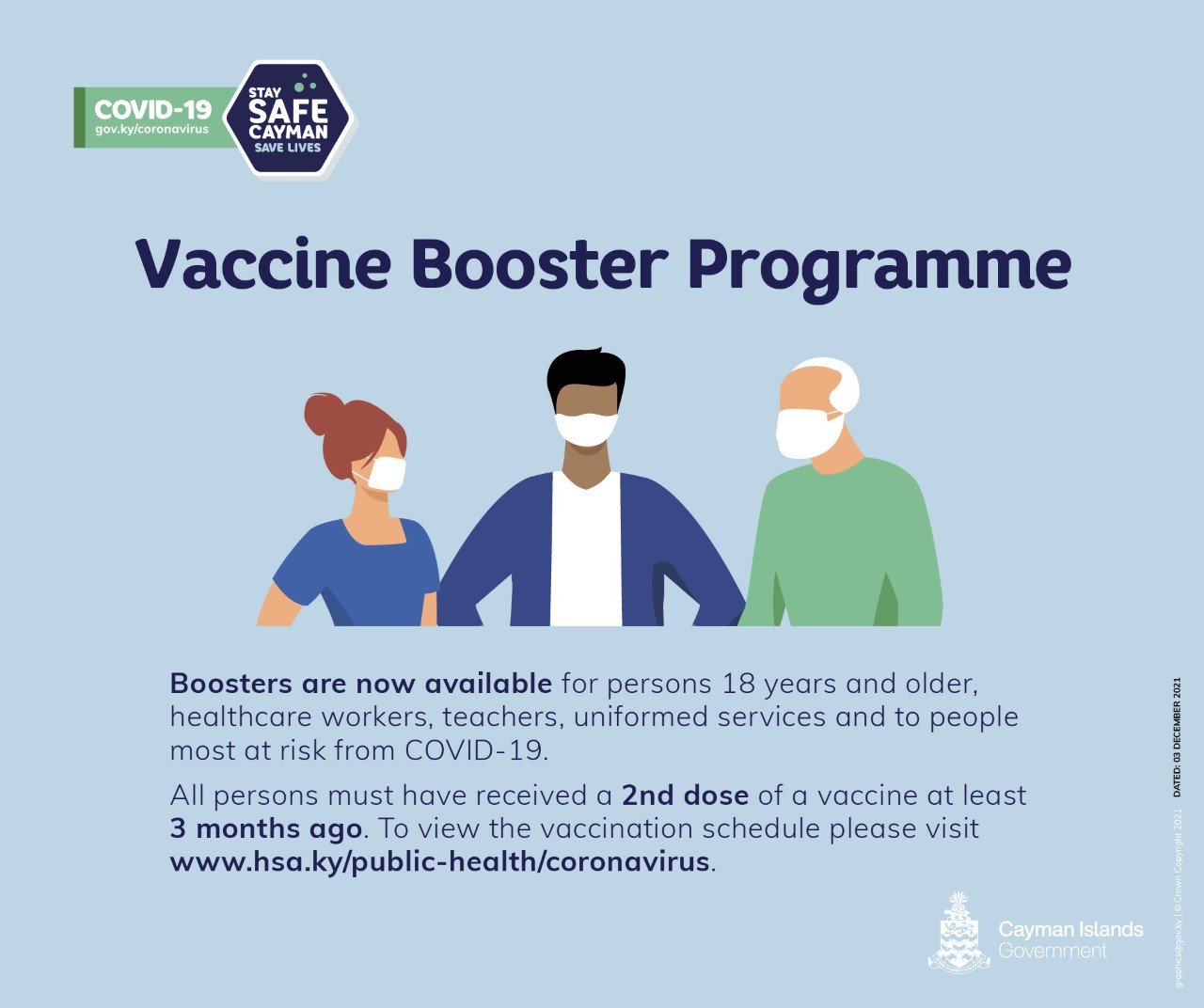
Currently Camana Bay is the main vaccination location. A new centre behind Price Right will soon open to allow more people to receive the vaccine.
The booster will also be available to anyone who had their last shot more than three months ago.
“The booster is going to give you improved protection against symptomatic illness and improved protection against transmission. That means greater protection for the whole community,” said Dr. Lee.
Related Videos









A very well-written article in which Dr. Lee explains in detail about the Omicron variant and what we can and cannot expect in regard to transmission and the benefits of initial vaccination and then getting the booster. This is a LOT more than we have gotten from the Premier or the Tourism Minister.
Dr. Lee ought to consider running for Premier at the next election.