


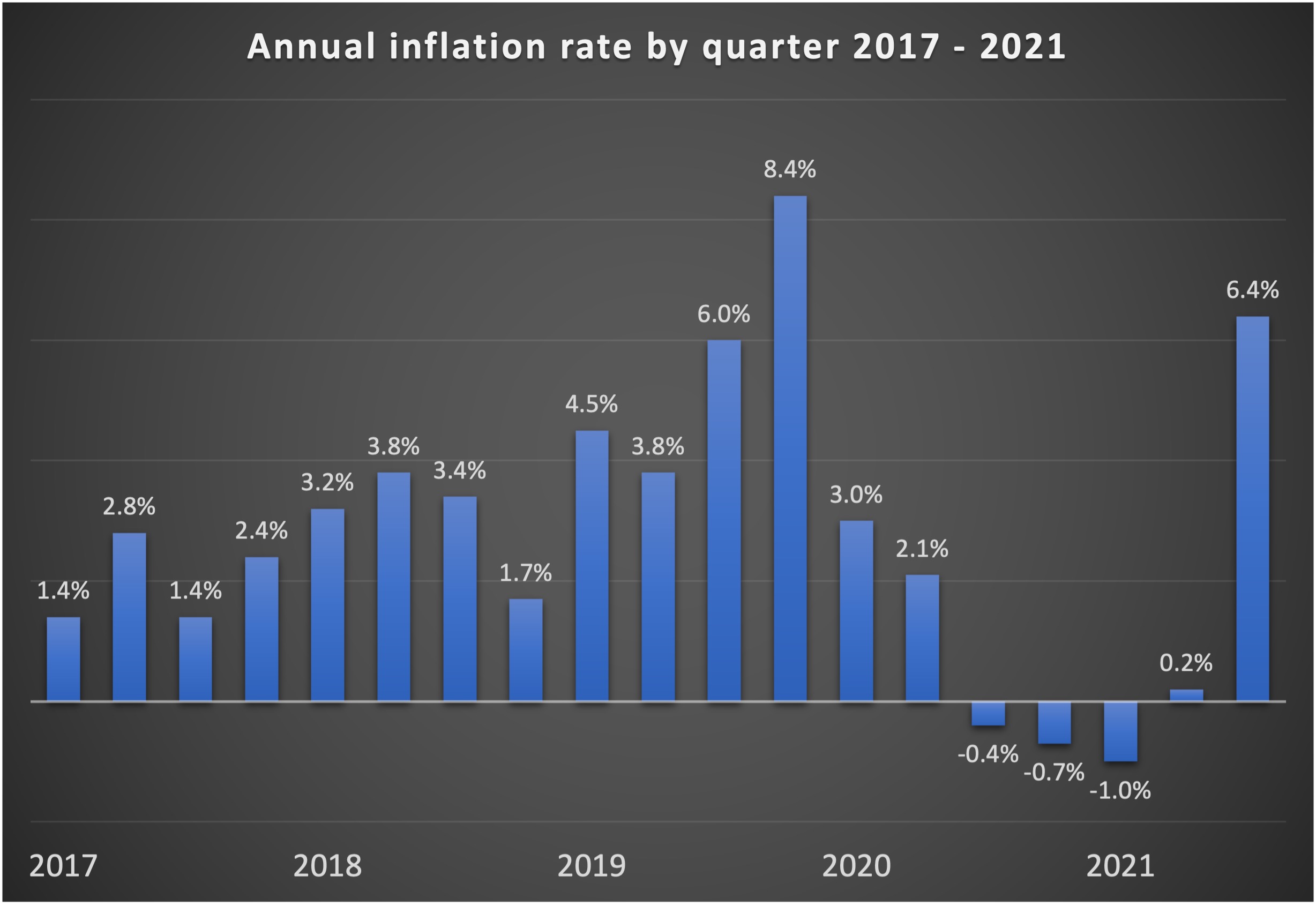
 Consumer price inflation returned to the islands with a vengeance in the third quarter, after one year of flat or falling overall prices.
The Economics and Statistics Office reported that consumer prices increased by 6.4% on average, compared to the same period a year ago.
The uptick in prices comes as governments around the world are concerned about surges in inflation as their economies rebound from pandemic-induced shocks.
Consumer prices in Cayman increased across the board in the third quarter.
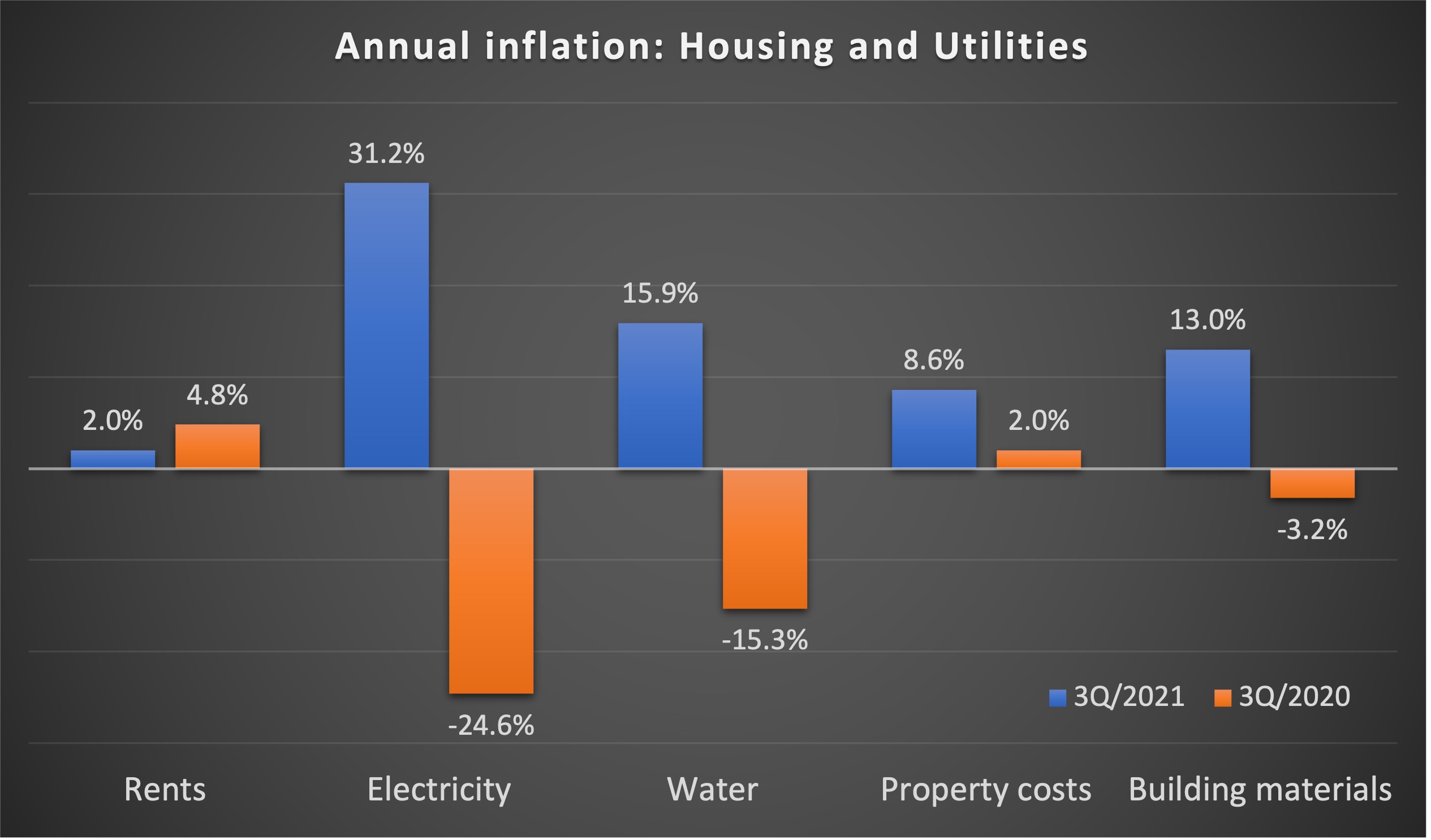
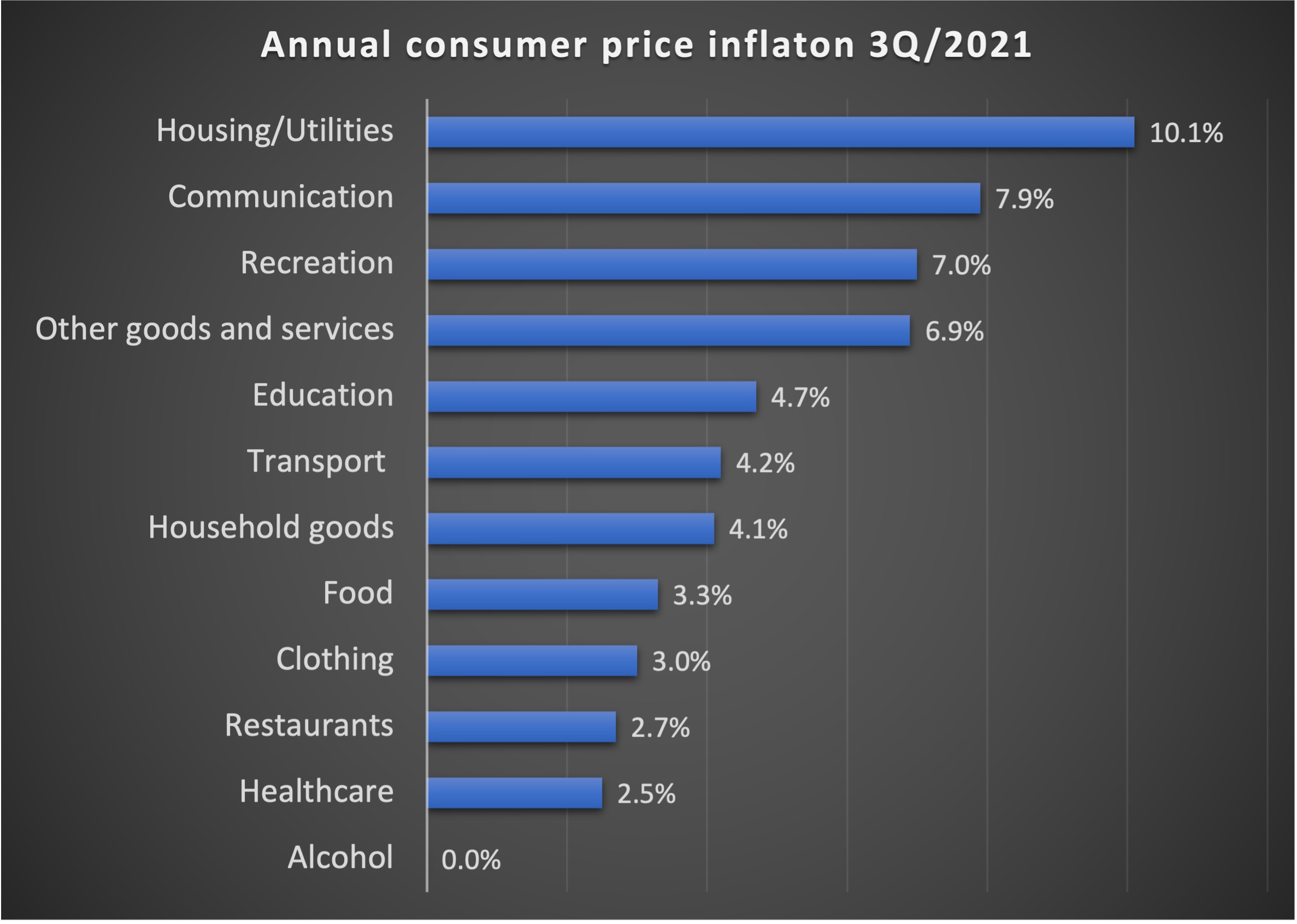 Led by an annual rise in electricity costs of 31.2% and water supply, up 15.9%, as well as higher rents (2%) and property-related costs (8.6%), the housing and utilities component was the main driver of consumer prices.
However, it should be noted that the massive increase in utility costs followed a period of significant price drops during the pandemic one year earlier.
Many goods are subject to international supply chain and shipping bottlenecks, which pushed up prices both this year and in 2020. The cost of building materials, for instance, increased by 13%.
 The prices for pets and pet-related products are up 11%.
At the same time, the cost of services is also rising. The recreation and culture component of the CPI basket jumped by 7% overall.
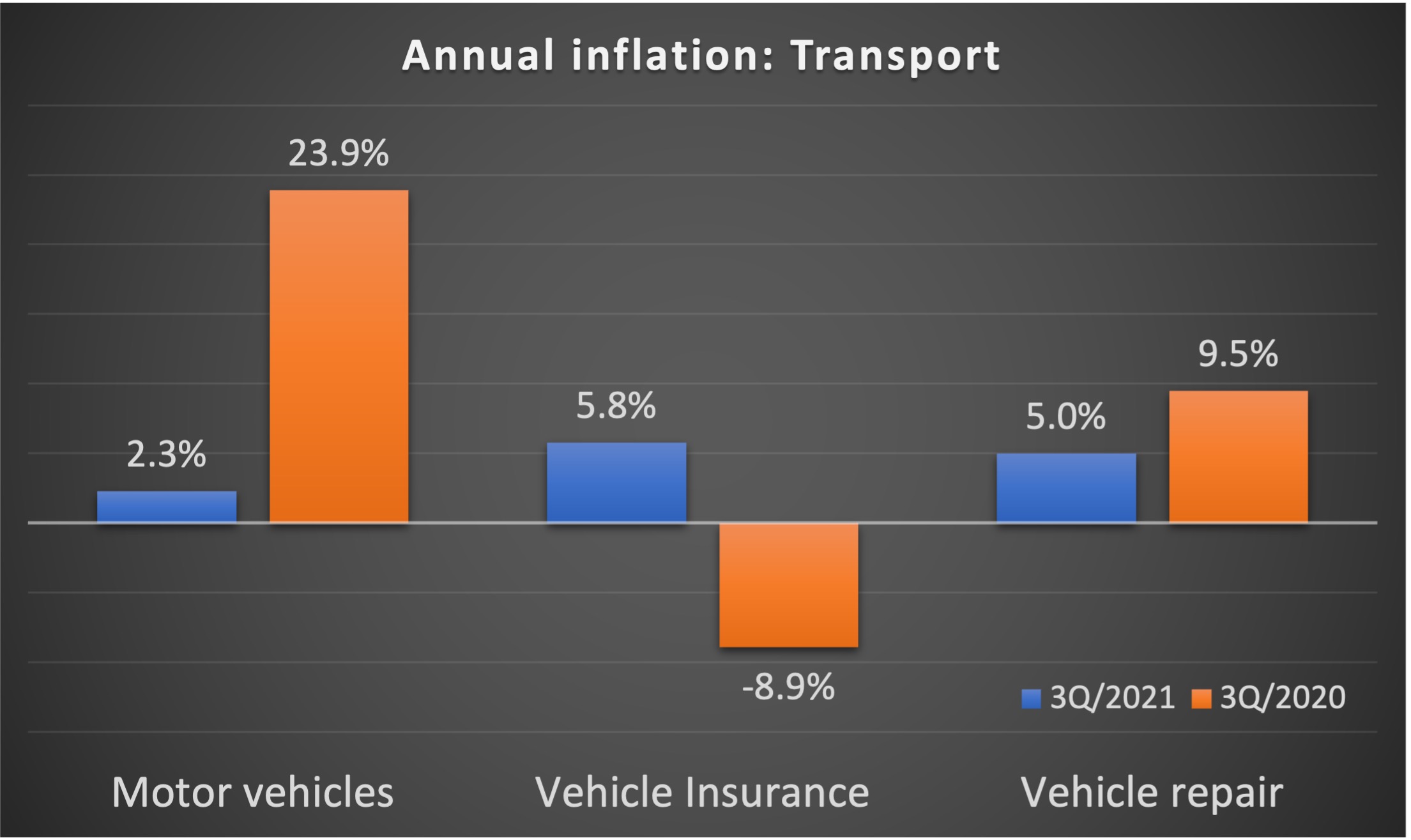
Transport costs are up 4.2% in the wake of rising oil prices globally, which increased the cost of fuel locally by 20.6%.
In addition, new and used car prices are on the rise (2.3%), albeit less than last year when motor vehicles on average cost 23.9% more, according to the ESO.
Vehicle insurance (5.8%) and vehicle repair (5%) costs also saw significant increases.
 Consumers are generally paying more for education (4.7%) and healthcare. Although the health component in the CPI increased by only 2.5%, important categories such as the cost of pharmaceuticals (7.2%) and health insurance (4.5%) have been rising for the past two years.
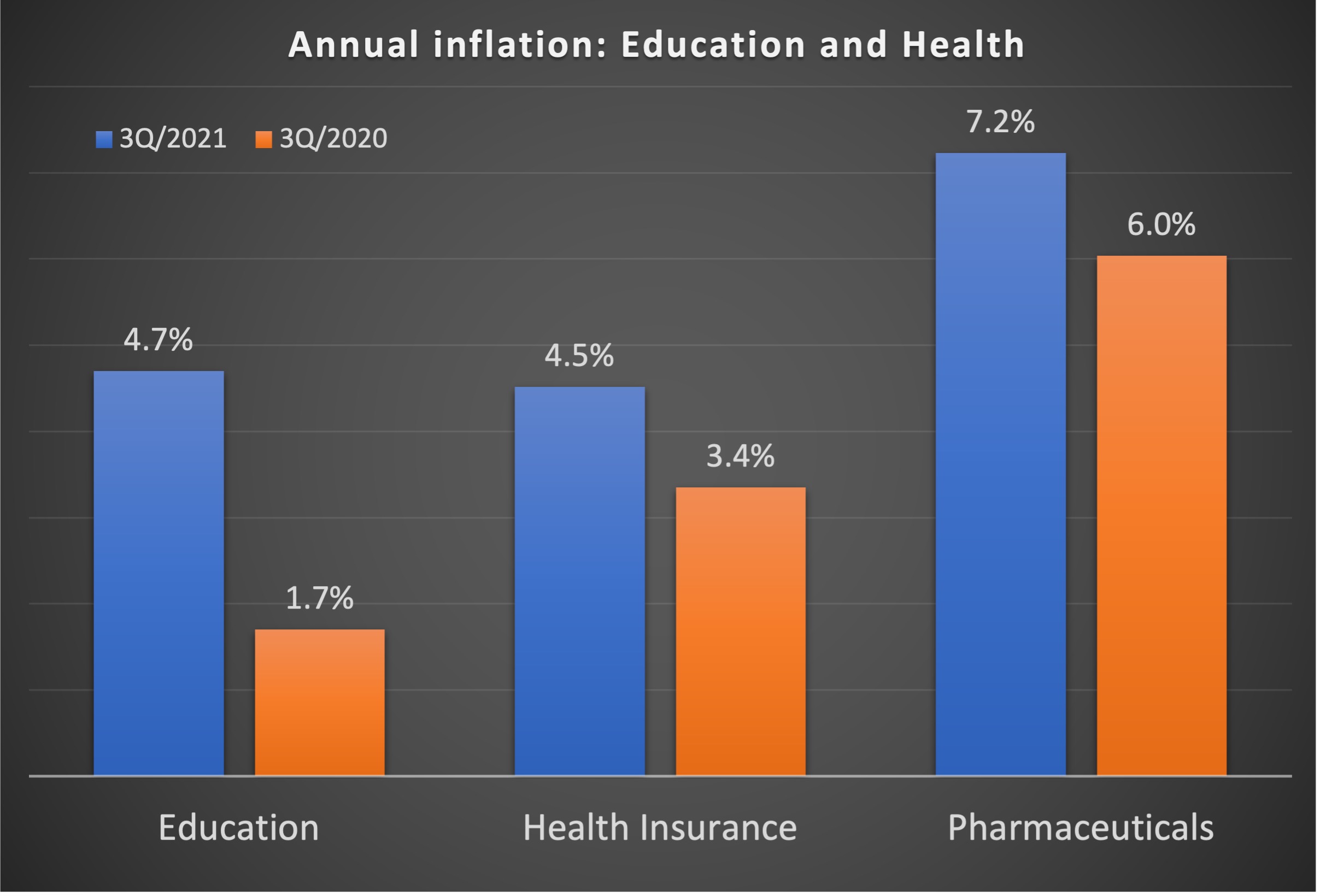 Even before the latest jump in consumer prices, many categories in the basket of goods and services used to calculate inflation had been rising.
In the second quarter of this year, for example, overall prices were up a mere 0.2%.
But, at the time, the declining cost of housing and utilities – the largest component in the weighted CPI basket – masked that prices had, in fact, been rising in almost all other categories.
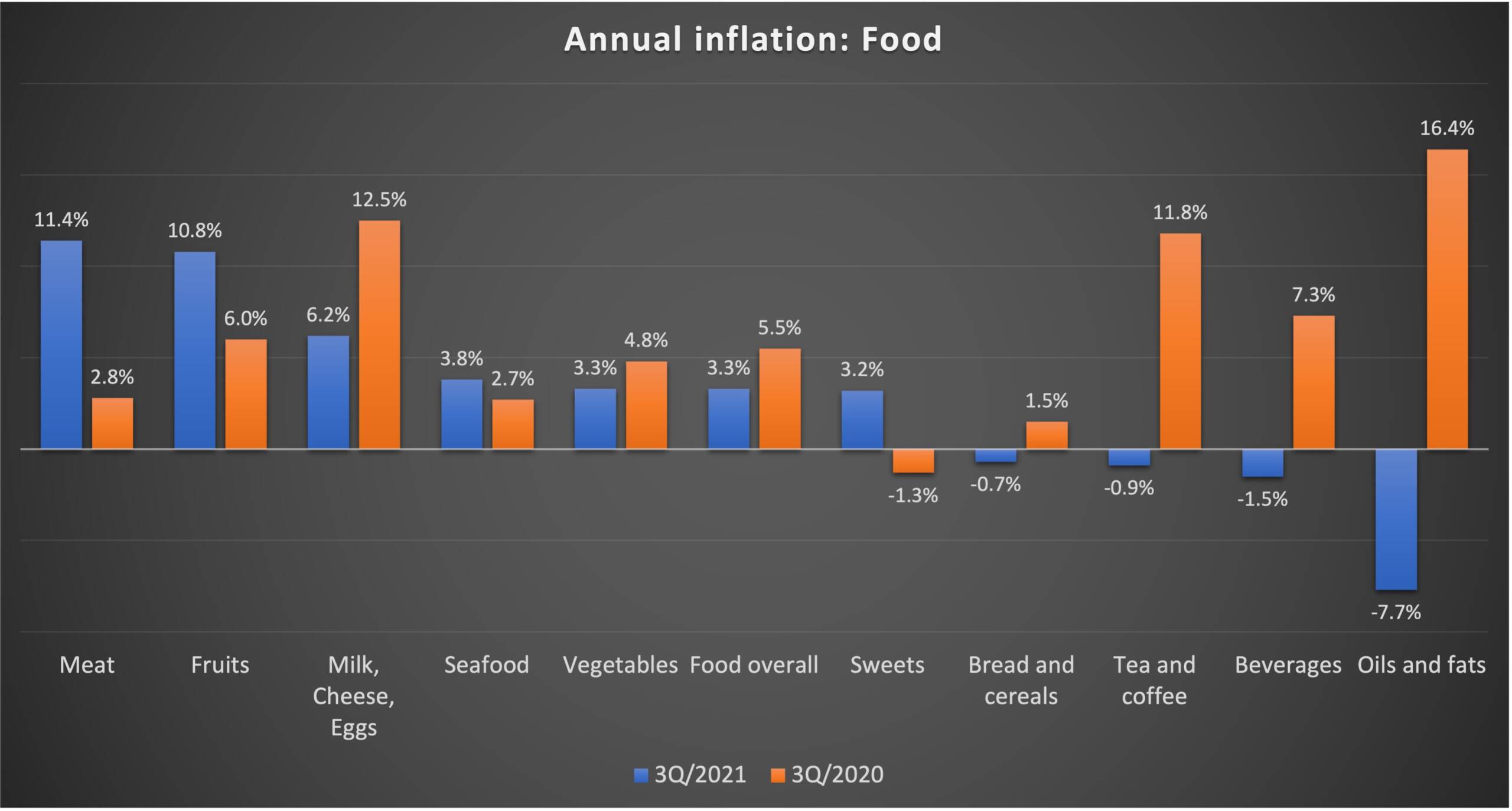 Food prices in the third quarter were up 3.3% compared to one year ago, after rising by 5.5% over the previous 12 months.
Grocery shoppers will find that meat (11.4%), fruit (10.8%), and milk, cheese and eggs (6.2%), have become more expensive over the past 24 months.
Some categories, such hotel accommodations, air travel or package holidays, faced a massive fall in prices since the start of the pandemic, but this was of little benefit to local consumers, who were largely unable to travel.
Now that travel restrictions have lifted somewhat, the industry is trying to make up lost ground. Package holidays abroad are 49.8% more expensive and tourism accommodations cost on average 14.4% more.
Annual forecast
Earlier this year, government revised its average consumer price index (CPI) inflation forecast up to 1.3% for the year 2021.
While depressed energy and rental cost outweighed demand pressures in the first half of the year, government expected the continued increases in international food and energy prices to add upward pressures on inflation in the latter half of 2021.
Now it looks as though these inflation estimates are too low.
In the US, the source market for more than 80% of imported goods to Cayman, annual inflation rose to 6.8% in November. It was the fastest annual pace in four decades and another increase from 6.2% in October.
US government officials, who are clearly concerned by inflation growing much faster than the economy, tried to downplay the surge, stating that petrol and natural gas prices had moderated, and that this was not yet captured in the latest data.
However, in the US, price increases in November were broad based across most CPI components, with gasoline, housing, food, and new and used vehicles as the largest contributors, the US Bureau of Labor Statistics said.
Related Videos












What’s that going to cost Govt. (and the taxpayer) in their annual COLA adjustment to civil service pensions?