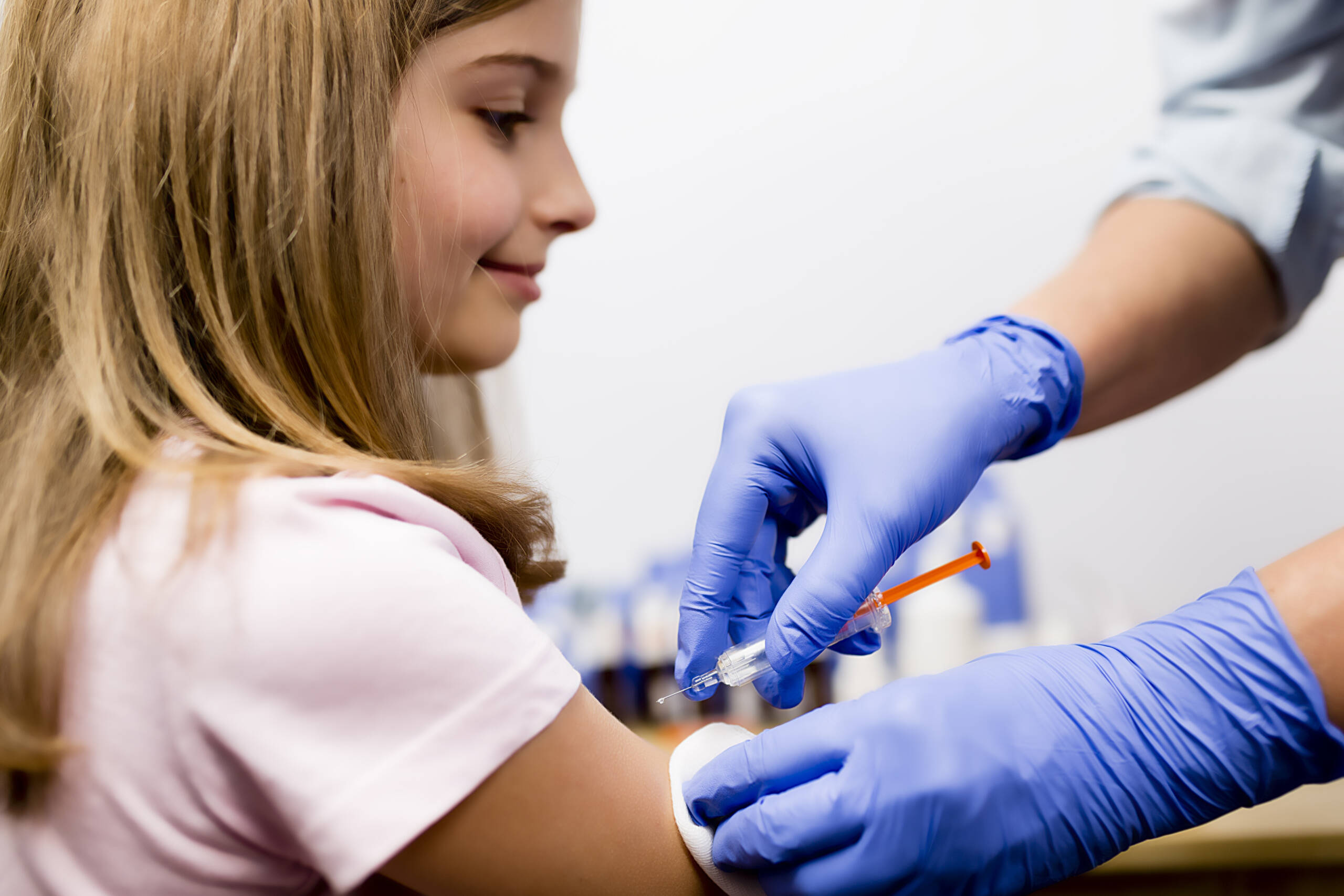
Medical Officer of Health Dr. Samuel Williams-Rodriguez has said vaccinations for children aged five to 11 will be here in “a few weeks”.
Vaccinations for this age group have, so far, been limited to those who are considered at-risk.
He said he is hoping more parents will come forward to utilise the vaccine to protect their children against the coronavirus, when it is incorporated into the regular vaccination clinic.
“We are expecting the vaccine to be here in a few weeks and, of course, we will announce it and we will make it available to the public as soon as we get it,” he added.

Williams-Rodriguez said interim Chief Medical Officer Dr. Autilia Newton and the Governor’s Office have been in communication with the United Kingdom to receive the paediatric preparation of the vaccine which Public Health can then provide to all children in the 5-to-11 age bracket.
“We hope and expect and encourage parents to bring their kids to be vaccinated,” he said.
Meanwhile, he confirmed that none of the 48 at-risk children who were inoculated on 29 Jan. have reported any issues.
The 48 children, all between the ages of 5 and 11, were the first to receive the kids’ dose of the vaccine, which is currently only available to those with vulnerabilities.
“We haven’t received, as far as I am aware, any complaints, or any concerns or serious side-effects from the vaccine [administered] to these kids,” he said while speaking on the 2 Feb. episode of the Cayman Compass weekly talk show The Resh Hour.
Williams-Rodriquez said he was not expecting such a low turnout for the kids’ vaccine, as the Health Services Authority had received a lot of emails and calls requesting the vaccination.
However, he said, he was “happy that we were able to provide the vaccine to those kids [who attended].”
Reported adverse reactions remain low in Cayman
With Cayman’s vaccination programme now in its second year and over 80% of the population considered fully vaccinated, having received two doses, Williams-Rodriguez said adverse reactions remain low.
“The side-effects in the Cayman Islands are consistent with the side-effects worldwide… Comparably we have very few reported side-effects here in the Cayman Islands compared with the number of vaccines we have given,” he said.
Back on 7 Jan. 2021 Cayman became the first British Overseas Territory to receive a shipment of the Pfizer-BioNTech two-dose vaccine. Then-premier Alden McLaughlin, Chief Medical Officer Dr .John Lee, former Health Minister Dwayne Seymour and Governor Martyn Roper were the first to be inoculated.
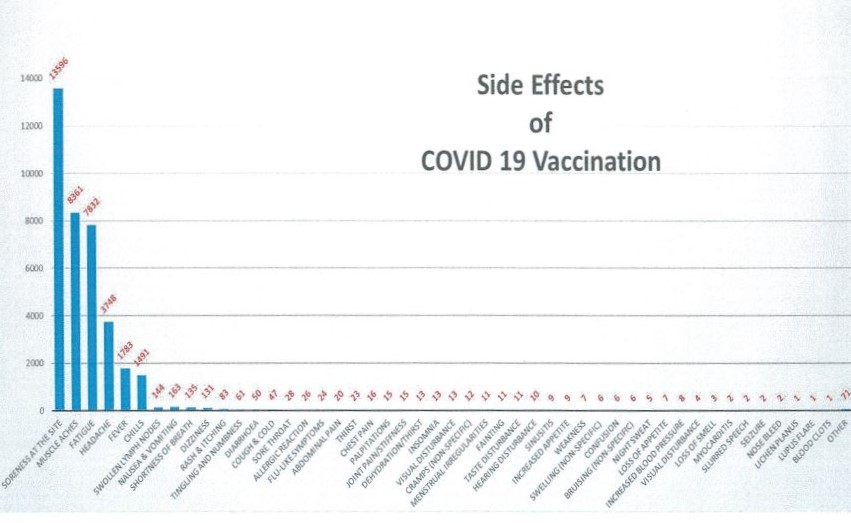
According to figures released to the Compass through a Freedom of Information request, the most frequently reported side-effect from the vaccine, according to records from between January and October 2021 has been soreness at the injection site.
A total of 13,596 people registered this side-effect.
The second most commonly reported side-effect was muscle aches, with 8,361 people experiencing this issue.
Fatigue was reported by 7,832 people, and 3,748 reported headaches.
Some 24 people reported allergic reactions.
Close to 1,800 reported having a fever and nearly 1,500 reported chills.
Other side-effects reported included nausea, vomiting, dizziness, swollen lymph nodes and various muscular pains.
There were 11 reports of menstrual irregularities.
These side-effects, he said, are consistent with adverse reactions noted globally.
“We are confident that the vaccine is safe and that’s why we continue to promote the vaccine. We won’t be promoting something that we think is unsafe to our population… our community,” he added.
Williams-Rodriguez encouraged those who have experienced serious side-effects to go to the hospital, not only for them to be managed but to report them.
Public Health, he said, has a responsibility to international organisations to report the side-effects and, on a weekly basis, it reports to Public Health England and the Pan American Health Organization.
“They collect data worldwide and then they analyse that data and make changes as needed,” he explained.
Related Videos