


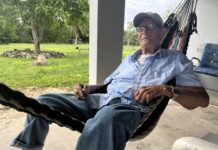
Caymanian student James Green has set his sights on changing global misconceptions about the Cayman Islands.
“This is less of an academic goal and more of an existential goal,” Green said in a recent interview with the Cayman Compass.
Green has been accepted at both of the UK’s oldest and most well-known universities; at Cambridge to earn a master of philosophy in economics and social history, as well as at Oxford for a master of science in economics and social history.
The 23-year-old has yet to choose which programme he will be entering later this year, but he is clear on what he expects to result from his studies.
“If I can get to the point where I’m able to credibly publish papers or do my own research about Cayman and continually put out literature that I think is reflective of the country or the jurisdiction… I’m happy,” he said, adding that his goal will be a greater appreciation for Caymanian culture and its true identity.
Green said he also intends to use his passion for the study of Cayman history to “hopefully bolster the education about Cayman taught to Caymanians”.
Challenging ‘wives’ tales and semi-myths’
Green came to Cayman as a toddler. He studied at Cayman International School before heading off to boarding school in the US at age 11.
“When I got to the States to study I was immediately confronted with a lot of, what I thought at the time, were suspiciously inaccurate stereotypes about Cayman… the classic money laundering, banking hub where people hide their money. I was like 11 or 12 at the time so I knew it was counter to my actual real experience of Cayman because I lived there… that’s not my experience,” he said.

He continued his studies in the States, focussing on the ethics of offshore financing at the University of Texas. In addition, he said, during that four-year degree, he was accepted for a period of study at Oxford as a visiting student (similar to an exchange programme) “so that I could leverage the unique resources found there to better research my thesis”.
Green said his affinity for the islands triggered his fierce defence of the community in which he grew up.
He said the inaccurate story of Cayman that he encountered fuelled his drive to immerse himself in local culture and history, to correct the misperceptions.
Following in his father’s footsteps, Green has already passed his Solicitors Qualification Examination. Though he has additional tasks to complete – two years of work experience, and an oral exam – before becoming a lawyer, Green said he wants to fulfil his passion for Cayman history first.
“[I] have a bone to pick academically,” he said, adding that he was on “somewhat [of] a mission to better inform the discussion about Cayman and maybe in some ways clear its name”.
Everything he learned in the overseas schools he attended, Green said, has been a combination of “wives’ tales and semi-myths” and he wants that to change.
“I kept coming across books, articles, interviews from very established academics who just seem to be completely misinformed about the way of life in Cayman and the history of Cayman, and that inspired me to study [it],” he said.

As he embarked on his research and delved into the way Cayman was portrayed, it bothered him, Green said.
“It was pretty pejorative. It was like a classic kind of European conception of the Cayman Islands as basically like modern pirates… I would be assigned some of these readings and I’d find them to be infuriating at times, because I know this place and I know that that’s not the genuine way that Cayman exists in the world,” he said.
Green also pointed to occasions during his academic life where he encountered lecturers who would make casual quips about Cayman and that was “super frustrating”.
“I would be in a class and the professor would make very personal jokes about everyone in the Cayman Islands living on megayachts and hiding money, and I would be very upset about this,” he said.
Cayman history should be widely explored
Cayman has a story to tell to the world and he wants to be a part of that process.
He said he has chosen to study Cayman history from 1962 onwards.
Green said, under the programme, whichever he chooses, a supervisor will be assigned to him to essentially guide the research over the course of nine months or two years, depending on the course.
“Then you produce a body of work… I think it’s around 15,000 words, but it’s a relatively sizeable thesis on your findings. It’s basically going to involve me… sitting in a library and trying to find books that… people [have] written about Cayman to learn from,” he said, noting that the lack of such books makes it a difficult process, “but that’s why I want to do it”.
He said finding Cayman-specific courses was a challenge since only universities like Oxford and Cambridge offer students the freedom to study any area of interest they want.
Green said he was able to make it work for him, but he would like to see more local students pursue Cayman history because he believes it’s not sufficiently explored in schools here.
“If we can get enough students from Cayman as a whole, interested in [Oxford and Cambridge and] talking to [these] institutions, just by virtue of doing that they’ll be more receptive to future applicants. They’ll be more receptive to these research projects so it’s super important that people understand that this is a possibility,” he said.
His advice to Caymanian students is to “leverage your uniqueness”.
“Cayman is unique, historically, it’s unique, demographically, and what these universities want is someone who’s different, and just by virtue of being from Cayman people are statistically very different. So work hard and take pride in being from Cayman and use that to your advantage in these applications,” he said.
Related Videos









The fact that Cayman history is not taught in our local schools is a huge disservice to the island and a failure of our education system. It is difficult to have pride in your culture and to defend it when you have no knowledge of it’s history. Exposing children to our history will instill more pride in who we are as a people and that knowledge would have more people like James speaking up and providing the world with a more accurate illustration of The Cayman Islands and its people.
As a finance professor of UCCI on leave to teach at the top public business school in New England, I, too, have enjoyed great interest in what our off-shore industry really does in the modern era and how I, unlike a mere visitor to Cayman, find our great uniqueness as a very diverse population coming together to form an intentional community.
I truly hope that we can continue to withstand the pressures in the world to divide people. Nowhere else in the world do I feel welcomed as I do among our people with such beautiful souls.
Although I wandered far,
My heart enshrines thee yet.
Homeland, fair Cayman Isle,
I cannot thee forget.