

Walk down any street in Cayman and you’re bound to meet an Ebanks, a Bodden or a Smith. These surnames are threads woven through the fabric of local history, etched into road signs, laws and family stories passed down for generations.
But where did they come from? Who were the first Boddens? How did Ebanks become Cayman’s most ubiquitous surname? And what about the Jacksons and the Whittakers?
The Compass researched Cayman’s most common surnames, using data from Surnam.es and historical records such as A Brief History of the Cayman Islands by David Wells, and unearthed the stories behind some of the most popular names that have shaped these islands for centuries.
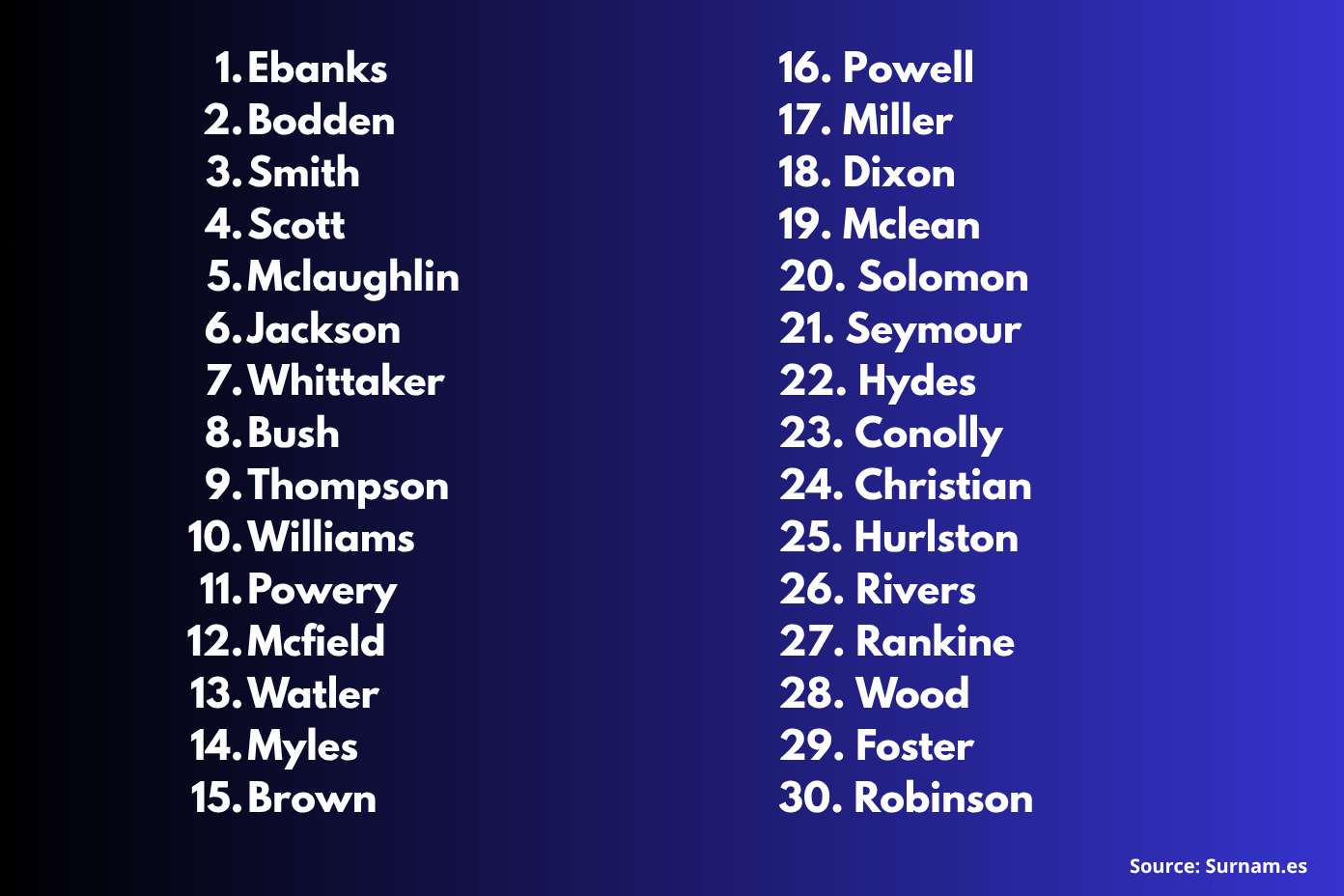
Ebanks: The people’s surname
With about one in 16 Caymanians bearing it, Ebanks is by far the most common surname in Cayman. A 2015 family reunion traced the lineage of Ellen Marie (‘Gramma Ellen’) and James Albert (‘Grandpa Jim Jim’) Ebanks, both born in the 1870s.
Some believe the name originated as a variation of ‘Eubanks’ or ‘Ewbanks’, brought over by early settlers from Jamaica or England. But historian Wells suggests a different origin: an enslaver known as ‘E. Banks’ may have given his name to those he enslaved – making the name uniquely Caymanian in a very different way.
From Premier André Ebanks to the late Georgette Ebanks, a national hero in the fight for women’s suffrage, the name has become a powerful symbol of heritage, resilience and pride.
Bodden: Cayman’s first family
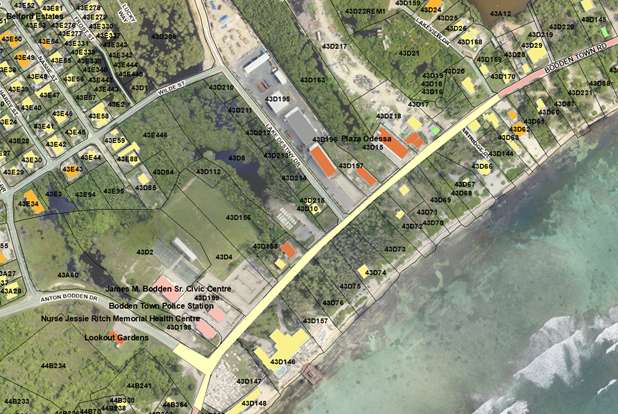
Before cruise ships and condos, there were Boddens.
Cayman’s second most common surname traces its roots to Isaac Bodden, born around 1700 – the first recorded native-born Caymanian.
The Bodden lineage is believed to stem from settlers originally named Bawden, who arrived from Cornwall or Somerset in the mid-1600s. Their descendants helped found Cayman’s first capital and largest district, Bodden Town, and the name now graces everything from roads to schools.
Jackson and Smith: Cayman’s colonial connection
Like many local surnames, Smith and Jackson are tied to Cayman’s British colonial heritage. These are the kinds of surnames that arrived via seafarers and soldiers, embedded in parish registers and marriage certificates from the 1800s.
The surname Smith, Cayman’s third most common, didn’t appear in the 1802 census but soon after left its mark – literally – on the coastline. According to history, a shipwrecked carpenter named Smith salvaged timbers and built a vessel near Smith Barcadere, leaving both a name and a story behind.
Jackson, Cayman’s sixth most common surname, does appear in the 1802 census. The first known arrival, John Shearer Jackson of Chatham, Kent, came to Cayman around 1770. The name, literally meaning ‘son of Jack’, has since flourished across the islands.
Scott, McLaughlin and Thompson: Celtic connections
Cayman’s ties to Scotland and Ireland run deep, seen in names like Scott, McLaughlin and Thompson – now the fourth, fifth and ninth most common surnames, respectively.
The McLaughlins, descendants of ‘Lochlann’, began appearing in local records by the mid-1830s. The name is thought to be an alternate spelling of the Irish MacLachlan.
The Scotts likely arrived in the early 1800s, possibly from northern England or Scotland. One story suggests that the first Ritch and Scott on island were half-brothers. Another holds that William Robert Scott, from Scotland, founded the Cayman branch of the family.
The Thompsons are linked to Elizabeth Eden, who married Scottish settler Thomas Thompson in the late 1700s. His cousin, William Thompson, later arrived and established another branch of the family.
Whittaker: A name rooted in North Side
Though absent from the 1802 census, Whittaker – Cayman’s seventh most common surname – has strong ties to North Side.
According to oral history recounted by members of the family, Whittakers were once enslaved and adopted the name after emancipation.
However, records show Lucy Jane Whittaker, born in Cayman in 1862, was the daughter of Joseph Sligo Whittaker, who was born in 1838, and was the son of James Whittaker Sr., born in 1800, suggesting that there were Whittakers on island before emancipation in 1838.
Bush: The name that hid in the bushes
The Bush family, Cayman’s eighth most common surname, is said to descend from a man known as Charles Christopher, a British Army deserter stationed in Jamaica who jumped ship in the 1750s and hid in the bushes of Grand Cayman’s south side.
His children were nicknamed ‘the Bushers’, and the surname Bush stuck with the family ever since.
Williams: A legacy of emancipation
Though Williams doesn’t appear in the 1802 census, it’s now the tenth most common surname in the Cayman Islands.
It is widely believed to have emerged during the post-emancipation period, when many formerly enslaved people adopted the surnames of their enslavers.
Common across the Caribbean – particularly in Jamaica – Williams means ‘son of William’ and reflects the legacy of colonialism and slavery.
Surnames as a connection to Cayman’s history
Some names don’t make the top 10 but still hold deep historical significance.
Watler, now ranked 13th, is considered one of Cayman’s founding surnames. History holds that a Welshman named Walters arrived in 1658 alongside Bodden. Over time, Walters became Watler. The Watler legacy is quite literally set in stone at Watler Cemetery in Prospect, where the graves are known for their house-shaped headstones.
Other names like Powery (11th most common), McField (12th), Myles (14th), Brown (15th), Powell (16th), Miller (17th), Dixon (18th), McLean (19th), Solomon (20th), Seymour (21st), Hydes (22nd), Conolly (23rd), Christian (24th), Hurlston (25th), Rivers (26th), Rankine (27th), Wood (28th), Foster (29th) and Robinson (30th) are also deeply woven into the fabric of the islands.
Today, Cayman’s list of surnames is also becoming more diverse. Migration from the Philippines, India, Honduras and other parts of the world has brought names like Ramos, Patel, Singh, Guerrero and Martinez into classrooms, churches and wedding announcements. These names now live side by side with Cayman’s founding families, writing a new chapter in the islands’ story.
Related Videos








Very informative piece and what DNA work has been done to track haplogroups and surnames? My 5 year DNA project is showing that only haplogroups As to Es can connect back to Europe/ UK since the planet was black/ melanated 250 years ago before the arrival of the meadow babies in the 1800s. Dr McDonald II, Esq.