Ancient records tell stories of “monstrous crocodiles” and “strange beasts” that came “shooting out of the water”.
The earliest known maps of Cayman contain reference to them and bones and fossils tell their own stories, but the creatures that gave these islands their name unlock some of the mysteries about how the islands eventually got their current name.
What’s in a name?
One year prior to their official ‘discovery’ by Christopher Columbus in 1503, the Cayman Islands makes their first appearance on a map. This map, called the 1502 Cantino planisphere, clearly shows Cuba and Jamaica, and off to the west of Jamaica, there is a small group of islands that are almost certainly the Cayman Islands.
The islands are not given a name on this map. Later, on his fourth and final voyage to the Americas, Christopher Columbus and his men, aboard the ‘Capitana’ and ‘Santiago’, came across two rocky islands on 10 May 1503. Astonished by the vast numbers of turtles swimming in the warm, clear waters of Cayman Brac, they called the Islands ‘Las Tortugas’.
That name did not appear to take hold. Instead, in what may be the first time the Cayman Islands was named on a map, in 1506 in the Pesaro Planisphere we see ‘Deaconca’ which could be translated to mean the island of conchs.
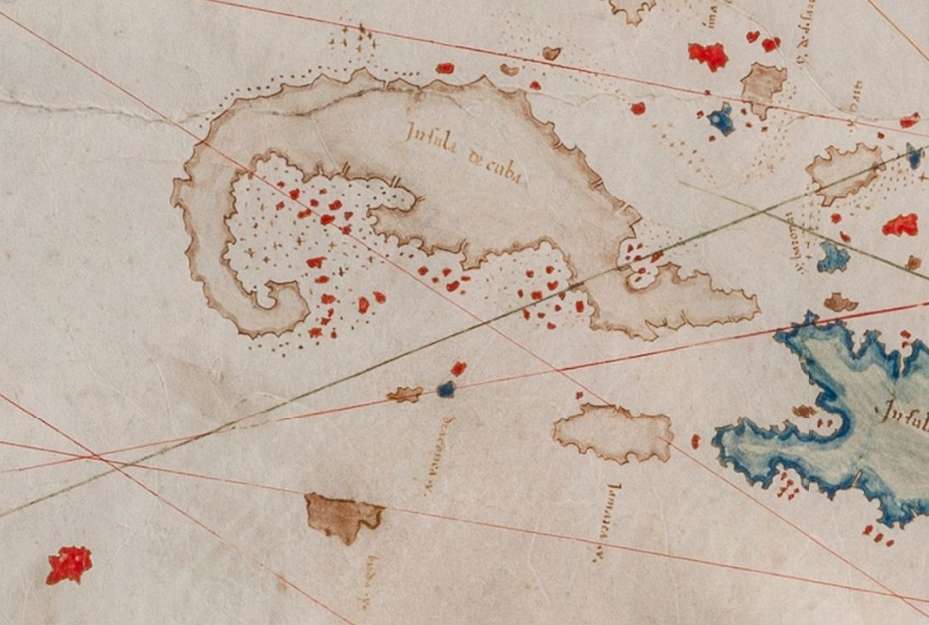
Within two decades of being encountered by Columbus, another title had been given to the Islands: ‘Lagartos’ as appears on the Turin map of 1523.
It’s not until 1526, in the Vespucci world map, that we encounter the first known cartographic representation of the Cayman Islands with a semblance of their modern name – ‘Caymanos’.
‘Cayman’ is originally an Arawak/Taino Indian word meaning caiman, or crocodile.
There is no confirmed archaeological evidence of their settlement, however. the Arawak Indians certainly made long journeys, including up wind and up current between Jamaica and the Dominican Republic.
“They came to us in ships,” wrote Columbus on his third voyage, describing their canoes, “in boats which are made of a trunk like a long boat and all are in one piece. They are wonderfully carved…”
Discovery in Savannah
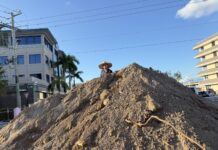
Several years ago, Otto Watler was digging out a pond in Savannah and he found numerous crocodile bones. Additional evidence from the fossil record has been found and it shows that the Cuban crocodile was once abundant in Cayman.
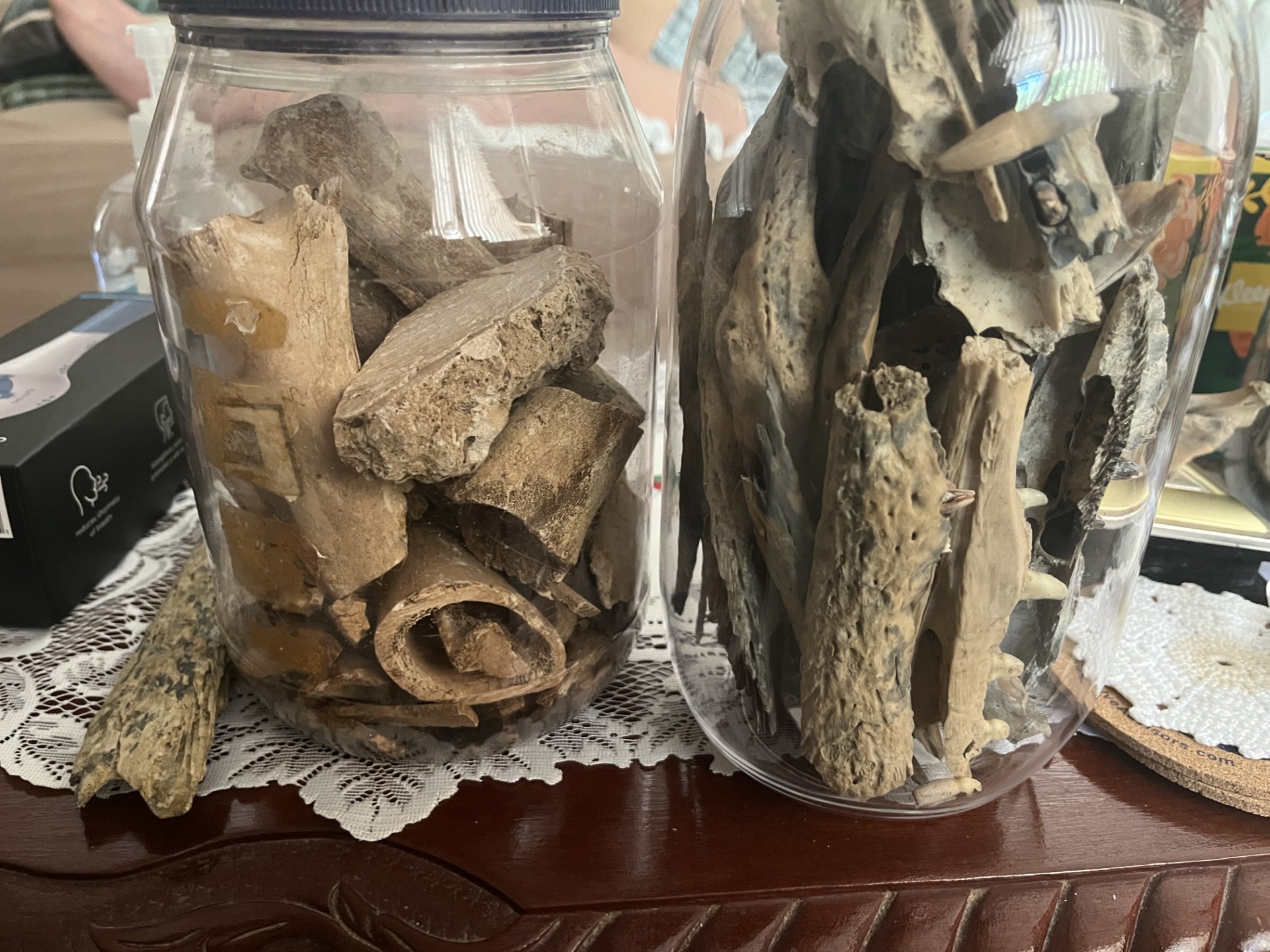
Historical accounts flesh out the fossil record.
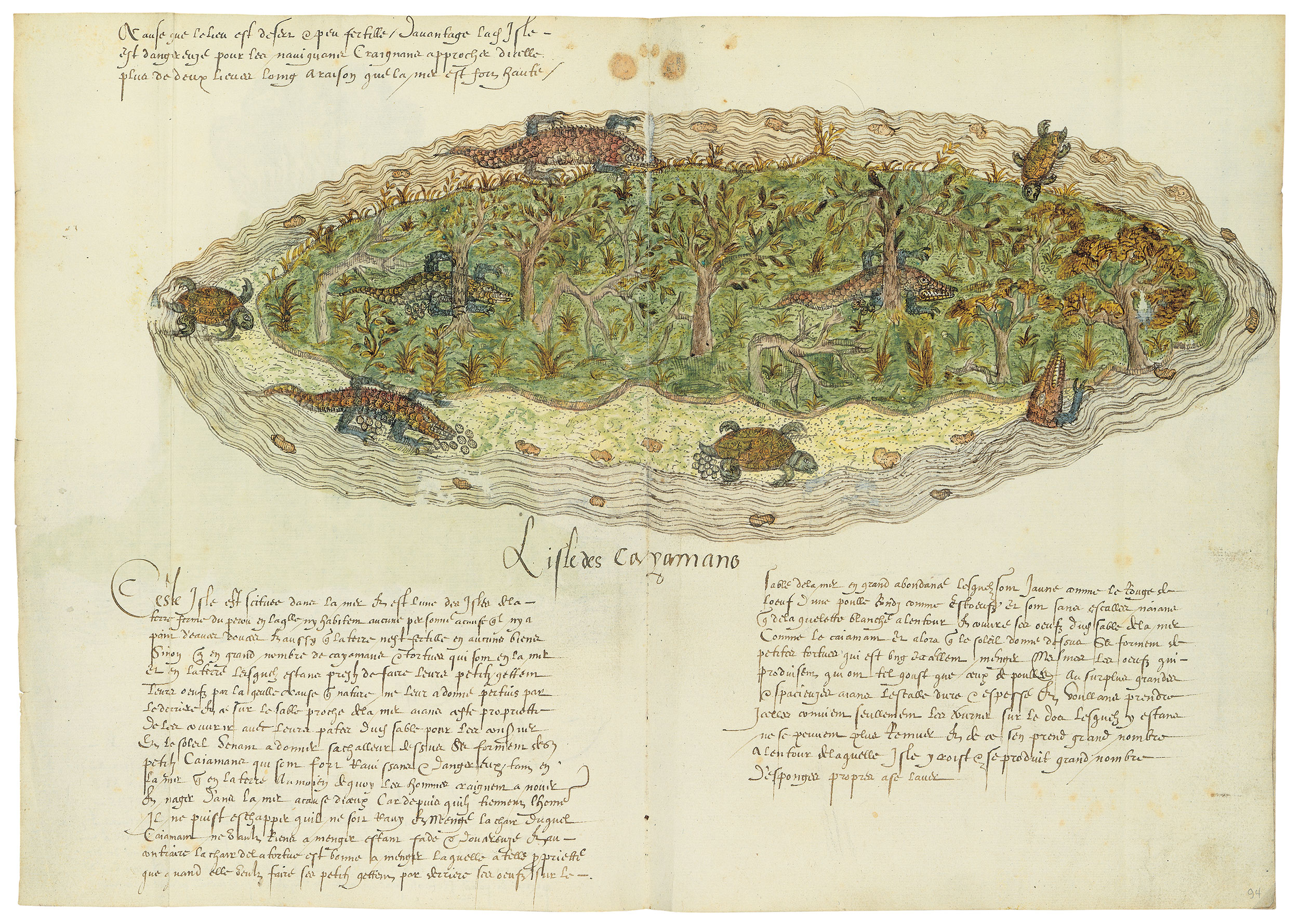
The earliest known map, specifically of Cayman itself, is found in the c. 1590 Peck Manuscript held in the Pierpoint Morgan Library in New York. It’s the main image on this story.
Accompanying the map, a description reads: This is an island “on which nobody lives because there is no fresh water and also the soil does not produce any goods except a great number of caymans and turtles which live in the sea as well as on land”.
Sir Francis Drake and the ‘giant reptiles’
An early reference to crocodiles in Cayman occurs in the West Indian voyage of Sir Francis Drake in 1586.
Roger Smith, who wrote the ‘Maritime History of the Cayman Islands’, states “[A]fter successfully sacking Santo Domingo and Cartagena, Drake’s hungry veterans searched the shores for fresh water and victuals. After sunset they noticed a series of shadows creeping stealthily out of the jungle towards the water’s edge.”
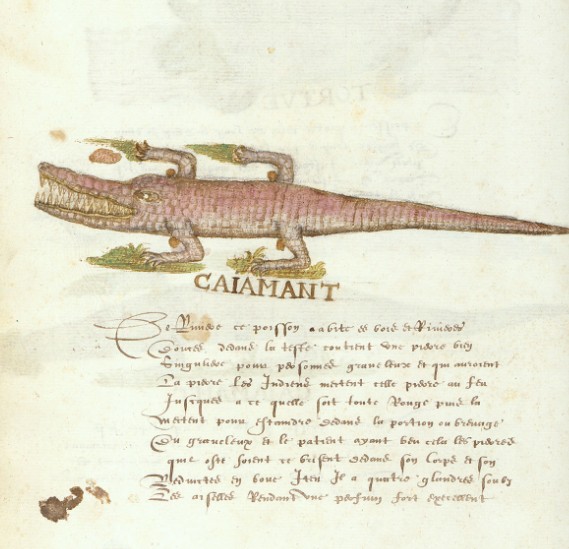
“They watched in the darkness as giant reptiles clawed in the sand and devoured clutches of eggs laid by female sea turtles. Drake’s privateers set upon the crocodiles with muskets and pikes, killing more than 20 in two nights, which they in turn devoured.”
A chronicle of the Drake expedition includes one of the first descriptions of this curious Caymanian creature:
“(This) strange beast…is called by our English mariners Aligarta, by the Spaniards Caiman, which liveth both at sea and land, he watcheth the Tortoise when she laieth eggs, & when the Tortoise is done from them he will hunt them out, & devour them all that he findeth. He hath been seene by the Spaniards to take hold of an oxe or cow by the taile and so to them forcibly into the sea, and there devour them: & so likewise a man whom he hath surprised a sleepe or otherwise unawares…In the Islands of Caimanes…we killed also many Aligartas aforesaid, & therwith refreshed our people greatly.”
Historical accounts describe fear, food and foes
Marina Carter who wrote ‘Pirates of Cayman’, noted that in 1612 the Dutch privateer Everts Sybrants van Staveren recorded in his journal that he arrived at the middle Cayman and sent some of his people ashore “to examine the island and see if anything good can be found… but because of the multitude of caymans or crocodiles which were on the beach and came shooting out of the water and were terrible to see they were worried to be bitten”.
In November of 1653 a Spanish expedition of five vessels and four hundred infantry was sent to attack the buccaneer stronghold of Tortuga according to account of the historian Jean Baptiste Du Tertre. The buccaneers surrendered shortly after the troops landed. The inhabitants were then given three days to prepare two ships to leave the island and, according to the account, the strong and the healthy were separated from the weak and the ailing. The latter were offloaded in the Cayman Islands.
According to Du Tertre, the men and women were left at the mercy of the islands’ crocodiles, whilst the remaining people on board continued in the ship and returned to France. What happened to the group abandoned in Cayman is not known.
Charles de Rochefort noted in 1667 that, “There are…an abundance of monstrous crocodiles in the islands… the crocodiles come in groups during the night to feed on the intestines and carcasses that are left on the sand. Those (turtlers) that are supposed to watch for turtles to turn are obliged to carry a large wooden club to fend against these Cayemans, which they frequently overpower, and subsequently break their backs with the clubs.”
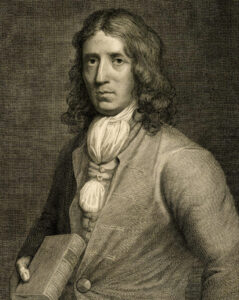
In 1675, the privateer William Dampier and his men anchored at the west end of Grand Cayman, Dampier noted that they “saw many Crocodiles on the Bay, some of which would scarce stir out of the way for us. We kill’d none of them (which we might easily have done) though Food began to be short with us.”
Journey towards the brink of extinction
Based on the fossil record, the endangered Cuban crocodile (Crocodylus rhombifer), which primarily lives in fresh or brackish water, was by far the most common species of crocodile living in Cayman. It is considered to be a significantly more aggressive type of crocodile than the American crocodile.
At some point, the earlier mariners appear to have hunted the local crocodile population close to extinction. Historian Roger Smith says that, based on the evidence of the fossil record, “they were prevalent in the islands until the twentieth century, when they began to disappear.”
The crocodiles, however, have never completely disappeared and, from time to time, a few still migrate across the water, most likely from the southern shores of nearby Cuba.
Smith notes that, “In 1938 Captain James Banks of Little Cayman sent to the Institute of Jamaica the head and feet of one of two crocodiles he captured at Charles Bay on the south side of the island.”
In 1959, another crocodile was shot in Little Cayman.
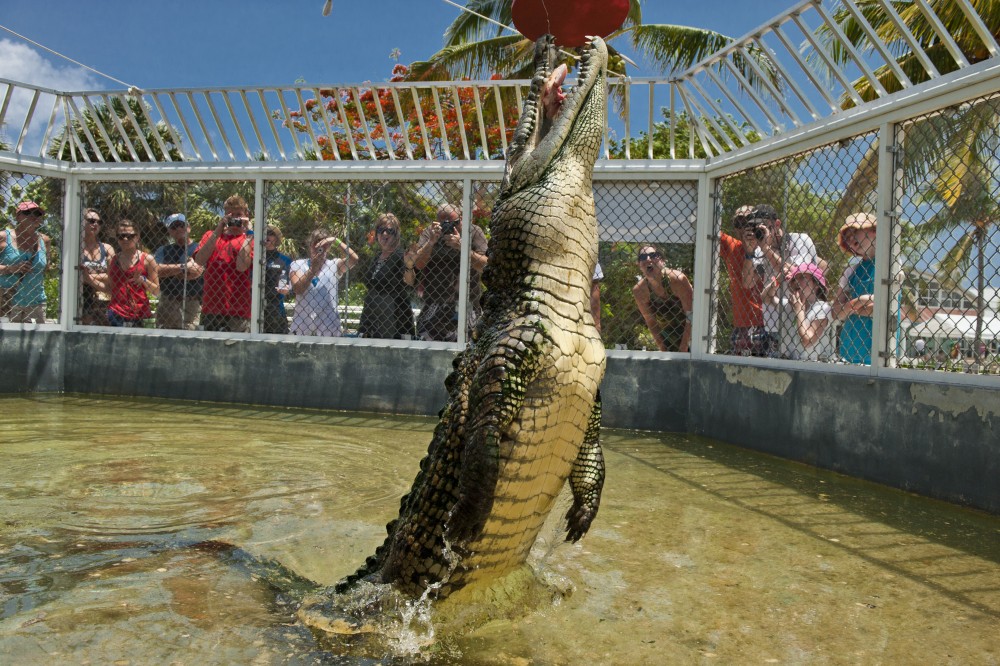
More recently, a crocodile was spotted in the waters off Old Man Bay in North Side in 2006, and a local fisherman shot it with speargun. It was rescued, renamed ‘Smiley,’ recovered, and is now living at the Cayman Turtle Centre.
Numerous other sightings occurred in recent years, including in 2009, when visitors spotted two crocodiles in the waters off Seven Mile Beach and, separately, in the Shores community in West Bay.
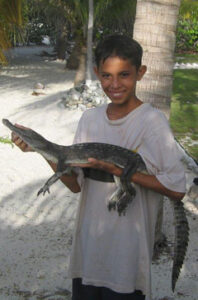
Also, that same year, a three-foot crocodile was netted in Prospect Park. Department of Environment staff retrieved the animal and then released it into the wild.
In 2011, a visitor from Belize found a small crocodile on the ironshore at Old Man Bay.
Another little croc was found in the back of the Sunrise Landing development in Newlands in 2010 with a large metal hook stuck in its throat. Vets saved the crocodile and the Department of Environment released it.
Related Videos