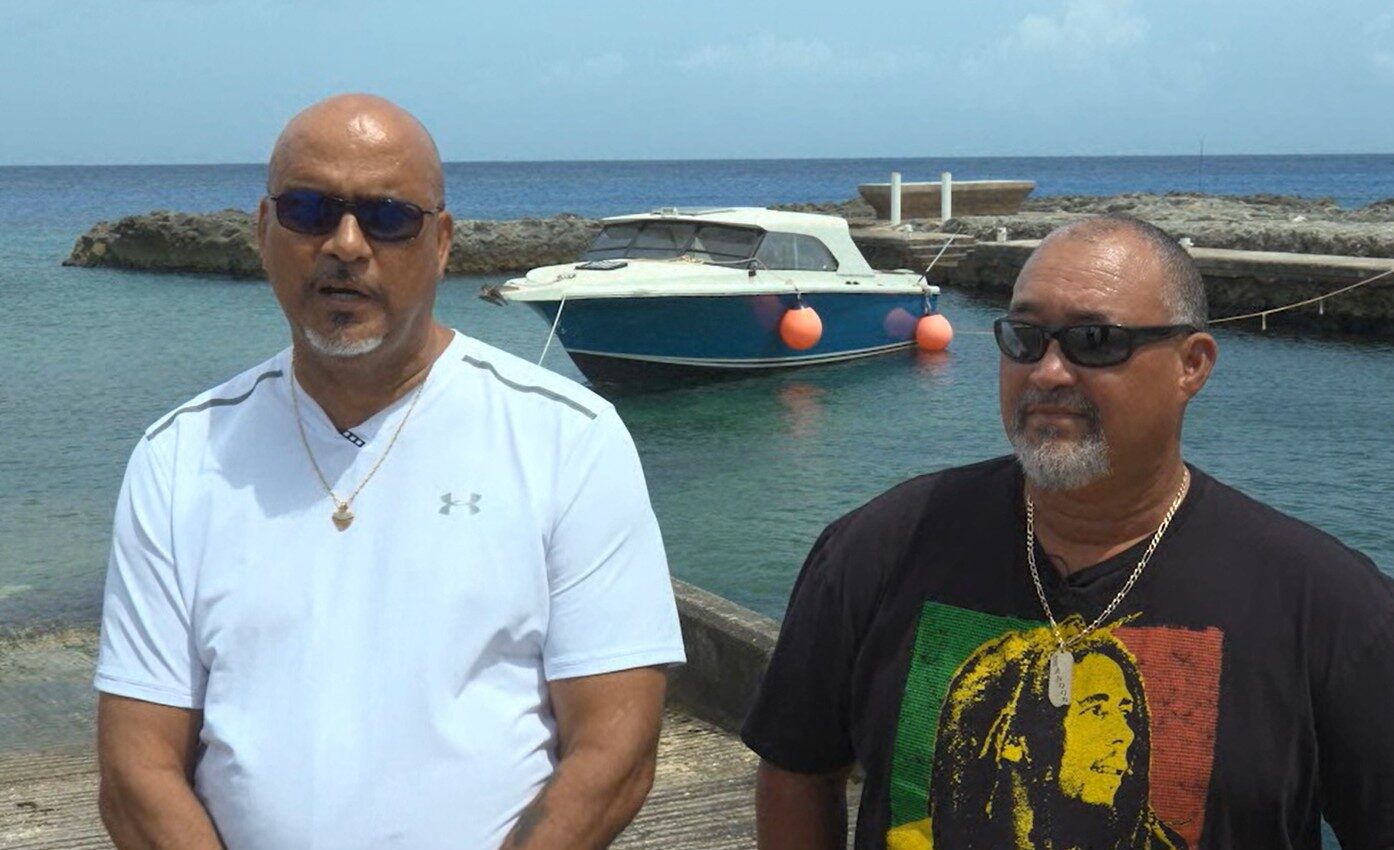
A recent story in the Cayman Compass, ‘How Cayman got its current name‘, triggered a memory for two men, Lenord Powery and Kevin Brandon, about their own unusual Cayman crocodile experience 35 years ago.
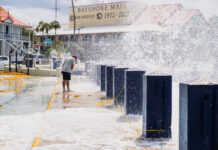
Their strange crocodile encounter was preceded by a significant weather event on 23 Dec. 1989, when a powerful nor’wester impacted the Cayman Islands with very strong winds and enormous waves.
At the time, the Cayman Turtle Centre was known as the Turtle Farm and was located on the seaside of the road, rather than across the road where it now stands – primarily because of this storm.
Huge waves that accompanied the nor’wester seriously damaged the facility, destroying buildings and washing over half of the entire herd of adult green sea turtles out of the farm and back into the sea. With them, one of three crocodiles that were exhibited at the farm also managed to escape into the water.
At first, nothing much was heard about the crocodile and only a few of the large sea turtles were recaptured. Sometime after this storm, however, the two friends, Brandon and Powery, were out spearfishing outside the reef by Barkers when Powery’s cousins, Junior Ebanks and Gordon Smith, pulled up alongside their boat and told them they had just spotted a huge crocodile.
“Understandably, we became more concerned about the crocodile than catching fish,” Powery said.
The two men started to search in the direction where Powery’s cousins said they had seen the animal, and they eventually came across the 11-foot-long reptile from the Turtle Farm in the shallow water outside the North Sound reef.
“We spoke to the police on the radio, and we told them we had found the crocodile, and we were following it and they said they didn’t want us to kill it, that we should shoot it in the tail if we tried to capture it,” Powery said.
That is not quite how things worked out. As they followed the crocodile for the next 45 minutes, they noticed a lone woman snorkelling in the water up ahead off Pappagallo.
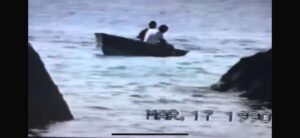
Powery recalled, “It was swimming in her general direction, so we positioned the boat between the woman and the crocodile, and we called out to her, and told her that she was a little too far out and that she was in dangerous waters at that time. We didn’t tell her we had a crocodile to deal with, but we just made her know she had to go back in.”
Shortly after, both men took turns trying to capture the crocodile, but each time their spears bounced off the thick skin of the huge reptile as it swam along the surface of the water.
Eventually, the crocodile headed into the shallow water inside the reef and then descended underwater to the sandy bottom of the bay.
With Powery at the helm, the boat was positioned so that it had drifted over the crocodile. At just the right moment, Brandon braced his foot against the boat, leaned over the side with his upper body underwater and let off another shot with his speargun.
“This time it ended up that I shot it in the back of the head,” Brandon said. “It was still alive, and we were able to tie it up and secure it with a rope, and then we brought it into the public launching ramp near Ronald Martin’s house on North West Point Road.”
A huge crowd gathered at the ramp when the crocodile was brought ashore, and while the scientists and the veterinarians at the Turtle Farm tried their best to save it, the crocodile succumbed to its injuries.
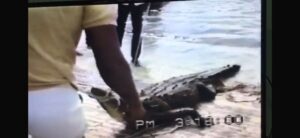
During a post-mortem, it was found that the female crocodile was pregnant and holding 250 eggs in her womb.
“They tried to incubate the eggs, but they didn’t make it,” Brandon said.
Powery said that while it was sad that the crocodile didn’t survive, it was probably for the best.
“If we hadn’t captured this crocodile 35 years ago, where would Cayman be with that crocodile having 250 eggs?” he asked.
Brandon agreed with his friend.
“If she had got up in that Barkers swamp, there may have been a few people go missing who were out looking for crabs,” he said.
Crocodiles have not been seen in Cayman waters for several years now, but a couple of small crocodiles have made it here over the past 30 years, likely from neighbouring Cuba.
One crocodile that was captured was named ‘Smiley’, who now lives in an enclosure at the Cayman Turtle Centre. There is no record of anyone ever being injured or attacked by a crocodile in the Cayman Islands.
Related Videos