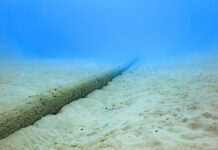
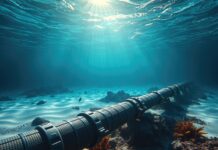
The Cayman Islands government, through the Ministry of Infrastructure, has contracted advisory firm Grant Thornton Specialist Services to carry out a formal feasibility study into the modernisation of the Islands’ submarine cable infrastructure.
This follows a selection exercise initiated in December 2021, which attracted extensive international interest from several professional services and specialist submarine cable consultancies. It also builds on industry and stakeholder consultations by the government over the past 18 months.
The feasibility study, to be prepared by subsea systems experts Pioneer Consulting, will be used to guide government’s decision-making around moving forward with a major submarine cable infrastructure investment project.
Minister of Infrastructure Jay Ebanks said the study reflected government’s approach to transforming the international connectivity of the Islands. “We are bringing in world class experts to help analyse the options and identify the best approach to take in regard to this major infrastructure project. This initiative forms a key pillar of our strategy to ensure the Cayman Islands benefit from world class connectivity in order to underpin a transformation of our economy and society into a thriving digital future,” he said in a press release.
Will McWilliams, partner and head of public services at Grant Thornton, said the firm would bring “the benefit of both our own global experience on major infrastructure projects and the specialist submarine cable expertise of Pioneer Consulting as part of our team”.
In its 2022-2024 Strategic Policy Statement, the Cayman Islands government highlighted that one of its broad outcomes is to build a modern infrastructure which includes providing funding for the implementation of a new underwater communications cable to ensure that the Cayman Islands remain connected to the world.
In its two-year budget, government has allocated $15 million for a submarine cable in 2022 and another $15 million in 2023.
Should the study conclude the feasibility of a new subsea cable, the project cost would likely be much larger – up to five times as much as the allocated $30 million.
So far Cayman is connected to Miami via the Maya 1 subsea cable and to Jamaica and the rest of the world via the Cayman Jamaica Fiber System (CJFS), owned by Cable and Wireless.
In April 2022, C3 announced that it became the second telecommunications provider, other than Cable and Wireless, with direct access to the Maya 1 landing station in High Rock and the CJFS in George Town.
The company said gaining access to the landing stations would improve customer connectivity and increase access for new and existing customers. Being able to negotiate directly with other consortium members for capacity would mean that consumers will pay less for internet, C3 said.
A third subsea cable would give Cayman additional redundancy and capacity. It is also hoped that more competition would lead to lower prices. But a third subsea cable is not expected to result in materially faster internet speeds.
A Strategic Economic Advisory Council set up to find economic opportunities in the wake of the COVID pandemic concluded that Cayman should aim to create the fastest, best and cheapest internet that is accessible by everyone.
Higher internet capacity at a lower price and redundancy was seen as one of the elements necessary to attract large tech companies to the island.
Related Videos