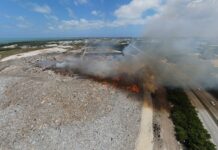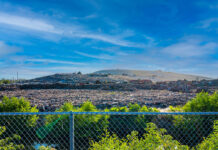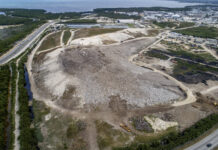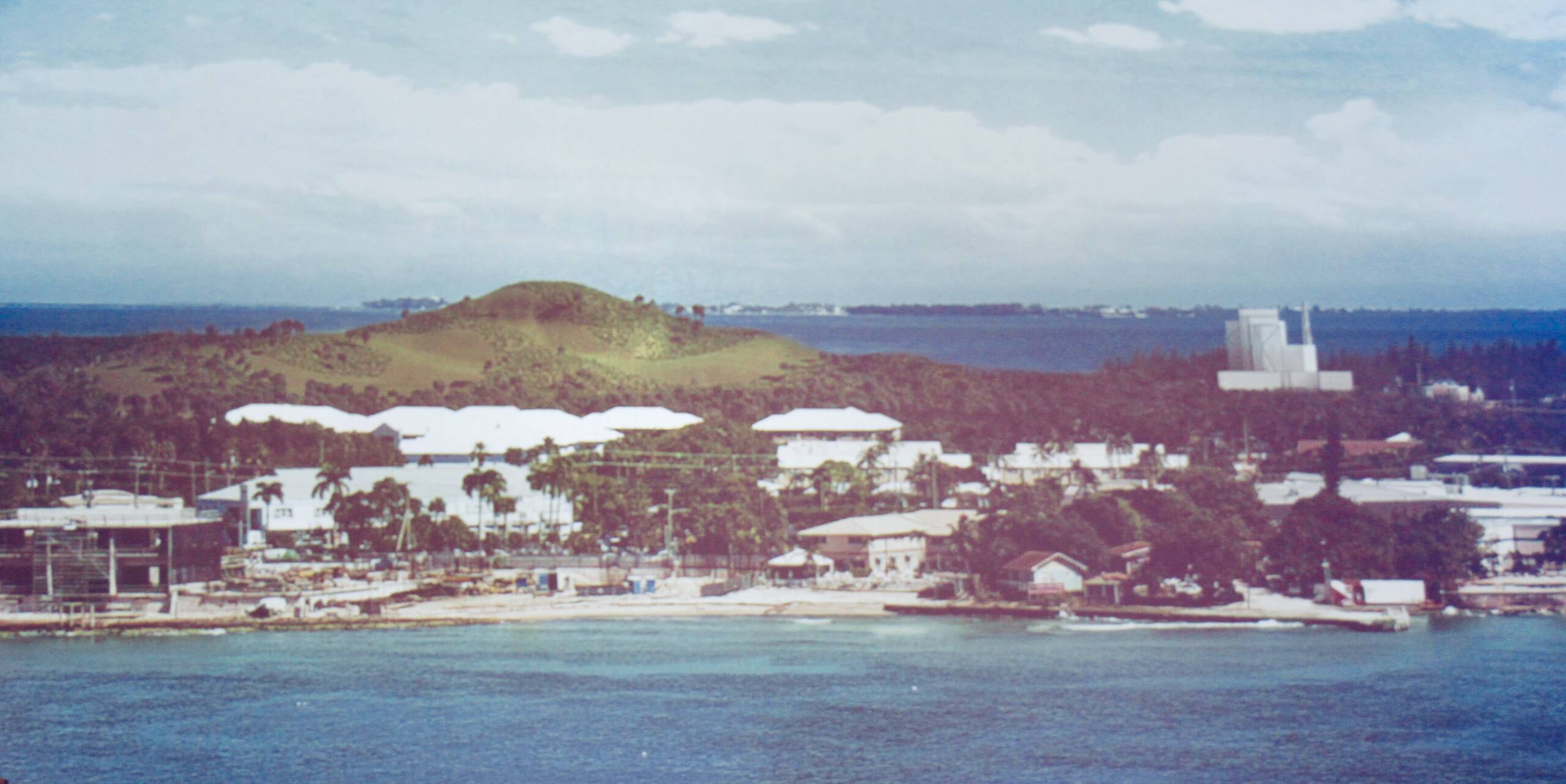
A verdant hill, dotted with native trees provides breathtaking vistas over the North Sound. Day-trippers spread picnic blankets on its grassy slopes, as tourists ride bikes, join zip-lining tours or enjoy the 360-degree views from Grand Cayman’s highest vantage point. Could this really be the future for the island’s most notorious eyesore?
The details of the vision – outlined in sketch form in a PowerPoint presentation from a senior Dart official – are still being filled in.
It could take another decade and $200 million dollars for it to become a reality.
But leaders of the ReGen partnership are confident that they can transform the unsightly mounds of Mount Trashmore into a recreational area for future generations.
The ambitious plan involves covering the piles of waste with layers of crusher-run and geotextile lining and planting grass and vegetation on top.
Landfill gas collection wells will be used to capture methane and divert it towards energy-creation.
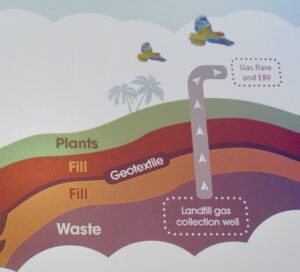
A waste-to-energy facility, the height of a 10-storey building, located close to the existing landfill is scheduled to be operational by 2026.
That plant will incinerate trash, using the heat created to drive steam-powered turbines generating around 10% of the island’s daily electricity supply.
Richard McAree, Environmental Social Governance Program Manager at Dart Enterprises, which is leading a consortium of private sector partners on the project, outlined the vision at the Cayman Islands Property and Construction Conference hosted by the Royal Institution of Chartered Surveyors at The Ritz-Carlton last week.
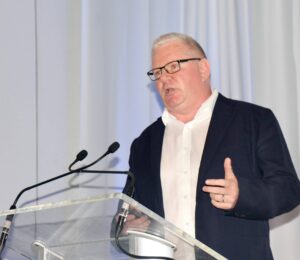
Standing in front of an artist’s impression of Mount Trashmore’s idyllic hypothetical future, he said, “If I get invited back in 2027 or 2028, I might be able to bring you a real photograph.”
He acknowledged that even that extended timeline was ambitious.
Dart and government have yet to ink in the final details of the deal, which was first announced almost five years ago.
Under the deal, Dart owns the remediated site and the Cayman Islands government owns the operational George Town Landfill.
Some elements of the project – including remediation of part of the landfill site – are already under way. The northern side of the site, furthest from the road, is already hidden under fill-material.
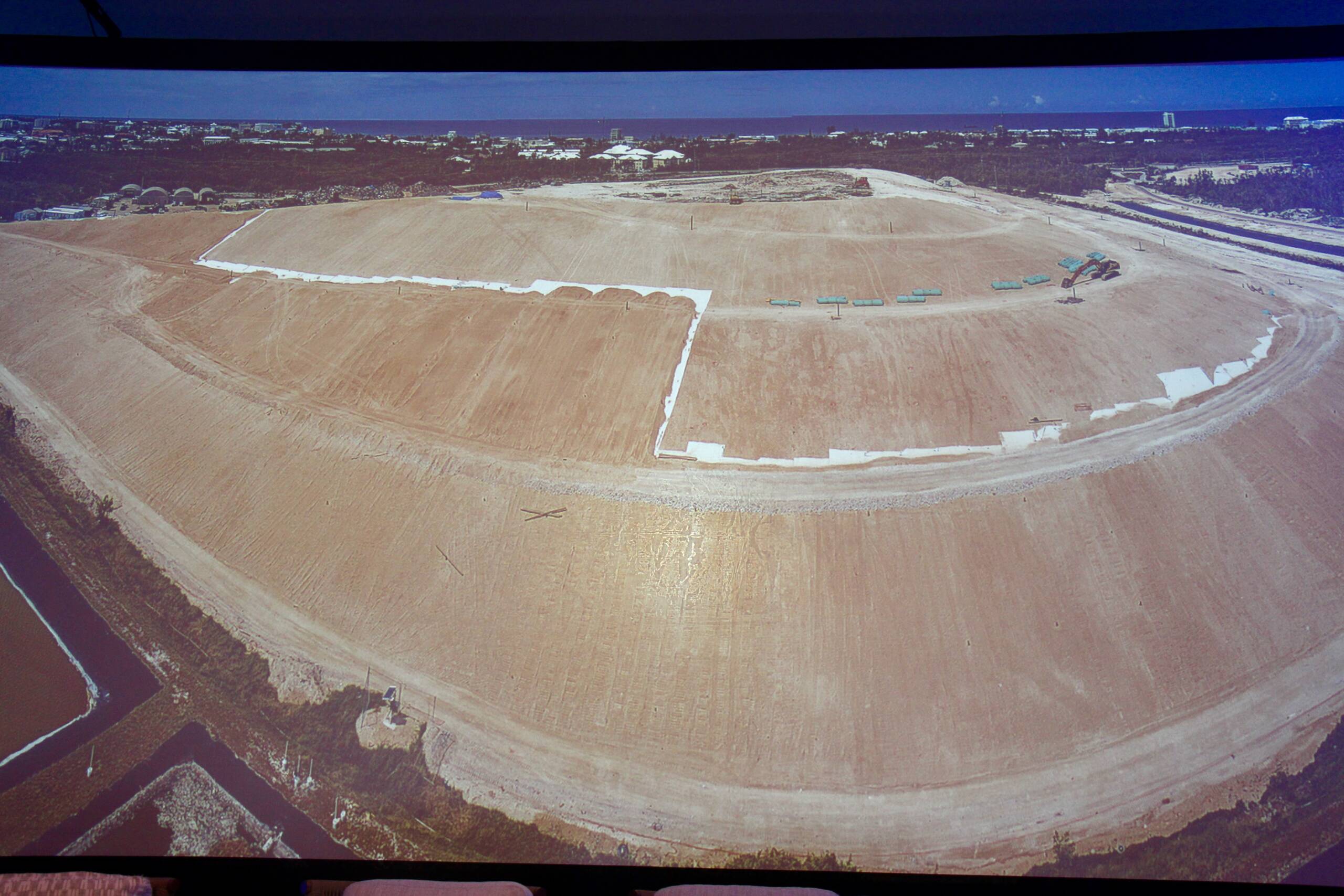
Even when the full site is completely covered and grassed over, it will still be some time before it is turned over for public use.
McAree said the first priority would be to make it “aesthetically pleasing” after which it would need to go through a “period of stabilisation” as the trash compacts. A gas capture and management system will also need to be in place before public access is possible.
Zip-lines and bike trails
Beyond that, he said the site had huge potential as a national recreational area.
“There is a land use study that’s going to look at everything from mountain bike trails… people have talked about zip-lining, there’s a broad spectrum of things.”
He added that building on remediated landfill was “very challenging” and the current thinking was geared towards creating new public open space.
School children are being invited to play a role in deciding how it will be used.
Landfill space running out
One complicating factor is that, as the project negotiations drag on, Cayman is running out of landfill space. The waste-to-energy plant, along with a suite of other facilities, is expected to reduce the amount of trash going into landfill by 95%.
But until it is operational, the George Town site will continue to expand.
He said the mantra of ‘reducing, reusing and recycling’ would be vital over the coming years to protect the “valuable void space” left at the site.
“This is absolutely critical with regards to ensuring we’ve got safe waste management for Cayman in the interim years before the new infrastructure is commissioned,” he added.
He suggested that mentality shift was important to the whole new approach to waste management and would be part of the policy even after the plant is commissioned.
Responding to concerns that a power plant, equipped to handle 120,000 tonnes of trash per annum, would need a steady supply of waste to consistently produce electricity, he acknowledged “things have to be considered in balance”.
But he suggested that even with an education campaign and recycling and composting facilities, Cayman’s growing community would likely provide enough trash to keep the turbines spinning.
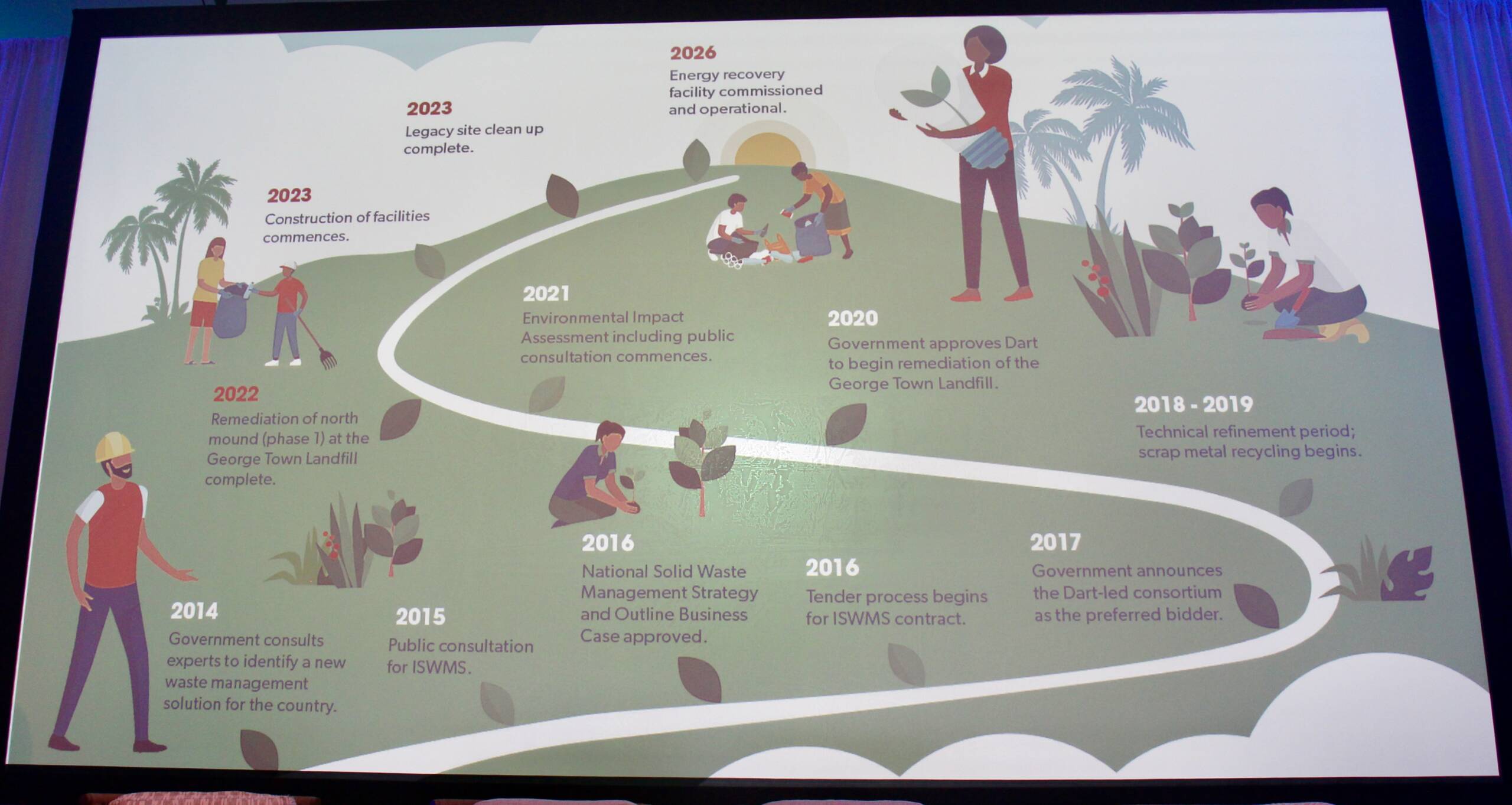
He said the project negotiations had been complex and the target of 2026 for completion of the $200 million suite of facilities would be challenging.
“That is going to be a tough ask. And it really needs a lot of stars to align, but it is currently still achievable,” he said.
Related Videos