Developer Morne Botes has won a preliminary hearing in a libel suit against Linda Clark for comments the environmental activist made on Facebook about him.
Grand Court Judge Alistair Walters, in his judgment on the preliminary hearing issued this week, ruled that two posts written on 12 May 2021 by Clark on the Cayman Development Watch Facebook group, of which she was an administrator, had defamed Botes.
Based on the Compass’s review of libel case judgments in Cayman, this ruling appears to be the first relating to comments made on Facebook posts.
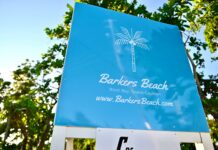
Botes sued Clark over comments she wrote in response to a post by a member of the Facebook group, referred to in the judgment as ‘JW’. That original post, accompanied by an image of a rendering of Botes’s planned Barkers Beach Resort, criticised the development.
Clark, who has also been involved with Plastic Free Cayman and the Cruise Port Referendum groups, argued in her defence that her individual comments on that Facebook post did not specifically name or identify Botes, and that they were general comments about certain types of developments.
However, the judge found that the comments should not be taken as standalone statements, but rather as part of a thread, in which a reasonable reader would conclude the comments were referring to Botes.
Walters wrote in his judgment, “When reading the thread of posts and comments as a hypothetical reasonable reader, it seems to me that I can only do so by reading them as a whole. They were all published on the same day and I think that it would be artificial and contrary to clear authority to break the posts and comments down by the words or phrases used in them or to read posts or read comments in isolation to the remainder of the thread in which they appear.”

The court heard after Clark posted the first comment, another member of the group, called ‘AM’ in the judgment, posted a screenshot to the group of a message Botes had sent to her which asked if she believed Clark’s comment to be true, along with a link to Facebook posting that showed what Clark had said.
Clark then posted her second comment. Botes’ lawyers claimed in their submissions that both comments libelled the developer and that anyone reading the statements would have concluded that Clark was referring to him.
Clark argued that her comments were not about Botes, and that she was not responsible for what AM had posted. She contended that, if AM had not posted the screenshot of Botes’ message, readers would not have concluded that the comments were referring to him.
According to the judgment, Clark had argued that if Botes had not sent that message to AM, “the AM post would not and could not exist. She says that it would be contrary to principle and wrong in law for the AM post to be used against her”.
However, the judge noted that as Clark was an administrator of the Facebook group, she had the ability to remove AM’s post, but had not done so.
According to the written judgment, Clark also contended that it was not “common knowledge known to everyone” that Botes was the developer behind the proposed Barkers Beach Resort.
But Walters, in his judgment, stated that, considering the Cayman Development Watch Facebook group was intended for a small group of like-minded people with an interest in local development projects, and because of the “small community” on island, it was reasonable to assume that those reading the post and subsequent comments would have known that Botes was the developer of Barkers Beach Resort.
The court had heard that at the time the comments were posted – six days after the Cayman Development Watch Facebook group’s page was first set up – its content on Facebook was public and accessible to anyone. The Facebook group’s settings were later changed to private, in July 2021, the court heard.
In his ruling, Walters wrote: “There is no reasonable alternative interpretation of who and what is being spoken about in the context of the discussion of the developments being depicted by name and image.”
No damages were awarded in this ruling, as the judge stated that he had asked both parties to address the court separately on the matter of costs.
Editor’s note: This story has been amended to reflect that the judge’s ruling was in a preliminary hearing to determine if the words in the Facebook post could be considered defamatory.
Related Videos