

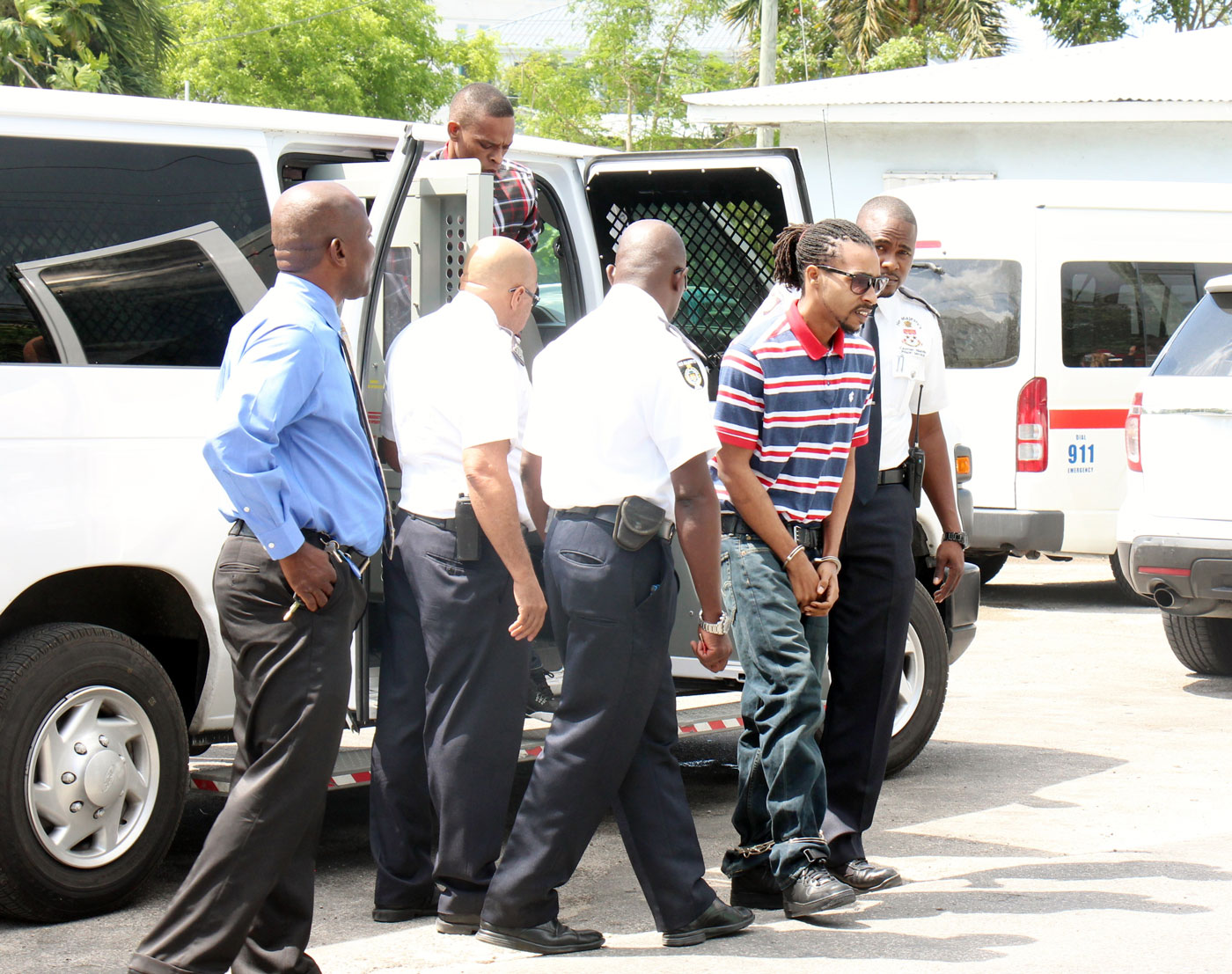
It is seven years since Jason Powery was shot and killed, and almost five since the men convicted of his murder were transferred to the UK to serve out their sentences in high security prisons.
The key milestones and significant arguments in the complex, ongoing proceedings are outlined in the timeline:
1 July 2015
Jason Powery, 20, is shot and killed in an alley outside the Globe Bar in central George Town. Justin Ramoon and Osbourne Douglas are arrested shortly afterwards.
26 May 2016
Ramoon and Douglas are convicted of murder after a Grand Court trial on the basis of eyewitness testimony.
19 Dec. 2016
The brothers are sentenced to life in prison with a minimum of 34 years for Douglas and 35 years for Ramoon (later reduced to 30 and 33 years).
June 2017
After representation from the Governor’s Office, UK ministers sign off on a decision to transfer the brothers to London. Governor Helen Kilpatrick argues, in letters to UK officials, that the move will loosen Douglas’ grip on his “criminal network” and prevent Ramoon from taking over leadership of the Central Military Killers gang.
22 June 2017
Orders of removal are signed by the UK Secretary of State for Foreign and Commonwealth Affairs and Notices of Concurrence are signed by Kilpatrick. Douglas is transferred to Belmarsh Prison on a British Airways flight.
29 June 2017
Ramoon is transferred to the UK in the same fashion under the Colonial Prisoners Removal Act 1884.
September 2017
Ramoon and Douglas launch judicial review proceedings stating they were given no notice or reasons for the decision to transfer them out of Cayman and were not able to speak with their lawyers or families for weeks afterwards. Separate writs filed with the Grand Court suggest they will argue that their constitutional rights have been violated.
7 Dec. 2018
The brothers are unsuccessful in a separate effort to have their conviction overturned or their sentence reduced. The Court of Appeal rules that the crown presented a “strong case” which was “left wholly unanswered” after the men failed to give evidence at trial.
2 July 2019
Justice Marlene Carter rules that the majority of evidence in the case is subject to Public Interest Immunity – meaning the governor does not have to disclose information to the brothers, their lawyers or the court.
2 July 2019
In the same ruling, Carter indicates that a Closed Material Procedure – a behind-closed-doors hearing often used in terror cases in the UK – is not available in Cayman.
2 July 2019
But Carter rules that the Cayman Islands does have jurisdiction to decide the case, shooting down an argument from the governor that it should be held in the UK.
28 May 2021
Justice Michael Wood dismisses the appeal against the transfer, meaning Ramoon and Douglas must remain in the UK. His decision and written judgment are not published until the following January.
January 2022
The Court of Appeal hears arguments on both sides against elements of Wood’s decision. Lawyers for the brothers argue that the withheld evidence can’t be presumed to reinforce the governor’s case and that the men should be allowed to come home. The Attorney General’s Office, representing the governor and director of prisons, doesn’t seek to defend Wood’s decision in its entirety, acknowledging that important issues were left undecided.
January 2022
After submissions on both sides, the Court of Appeal bench retires to consider multiple questions including whether Cayman’s Constitution can be applied to a British act (the Colonial Prisoners Removal Act 1884 removing the brothers from Cayman), whether Justice Carter was right to rule that closed-door hearings can’t be held in Cayman, and if the decision to dismiss the appeal against the transfer was correct.
April 2022
In a comprehensive written judgment, the Court of Appeal decides the case cannot be dismissed at this stage. The justices rule that the Bill of Rights does apply to prisoners removed from Cayman under the 1884 act and that the brothers have a right to have the decision properly reviewed on the basis of all the evidence. Perhaps most crucially, the decision indicates that a Closed Material Procedure is an option available in Cayman.
What happens next?
Preparations are under way for a closed-door hearing where a judge would get access to the withheld evidence, but the prisoners and their lawyers would not. It remains possible that lawyers for Ramoon and Douglas – who want the case heard in open court – could appeal all the way to the UK Privy Council.
Related Videos











One thing for sure the lawyers in this never ending case will certainly end up as the winners.