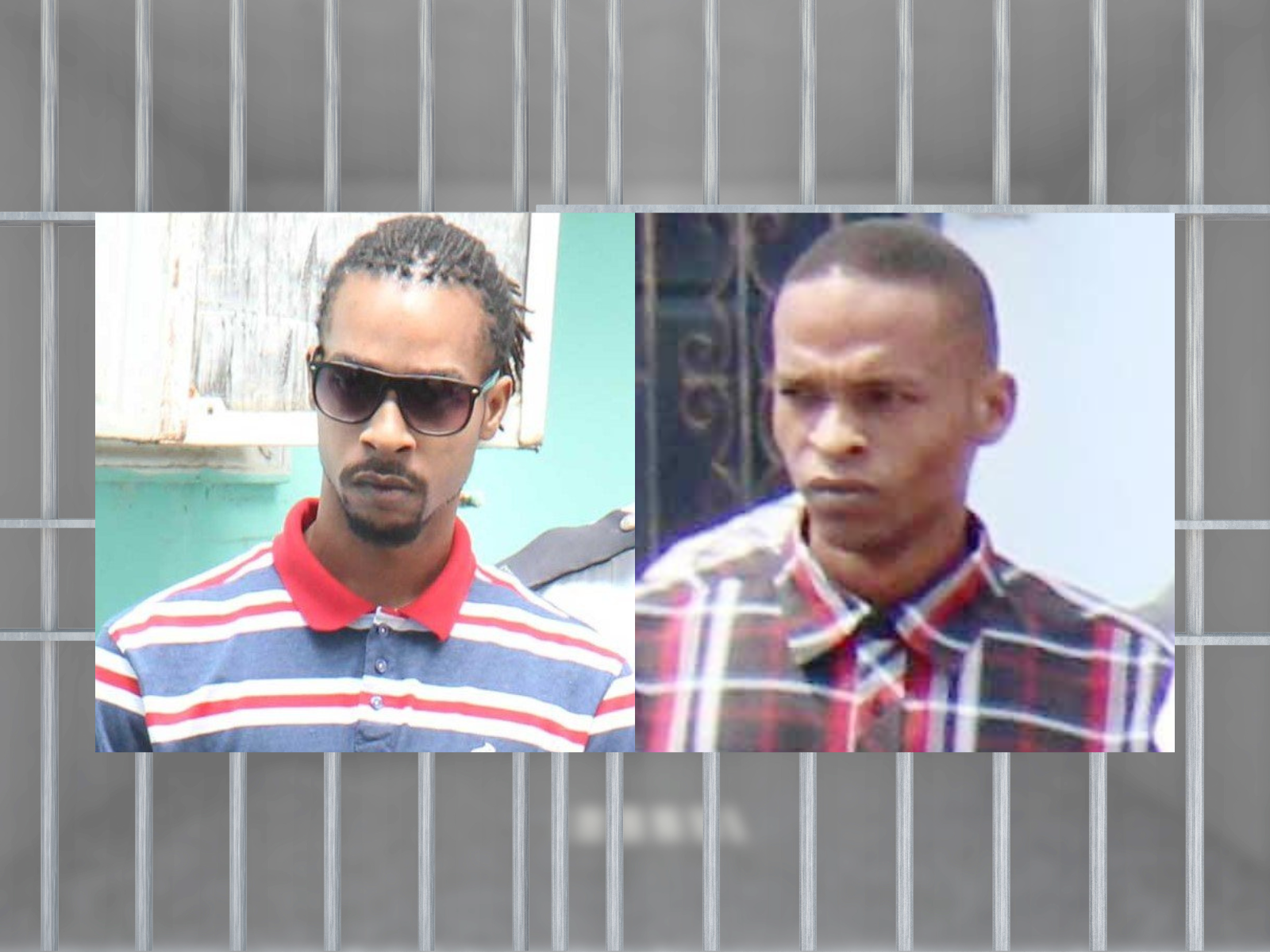
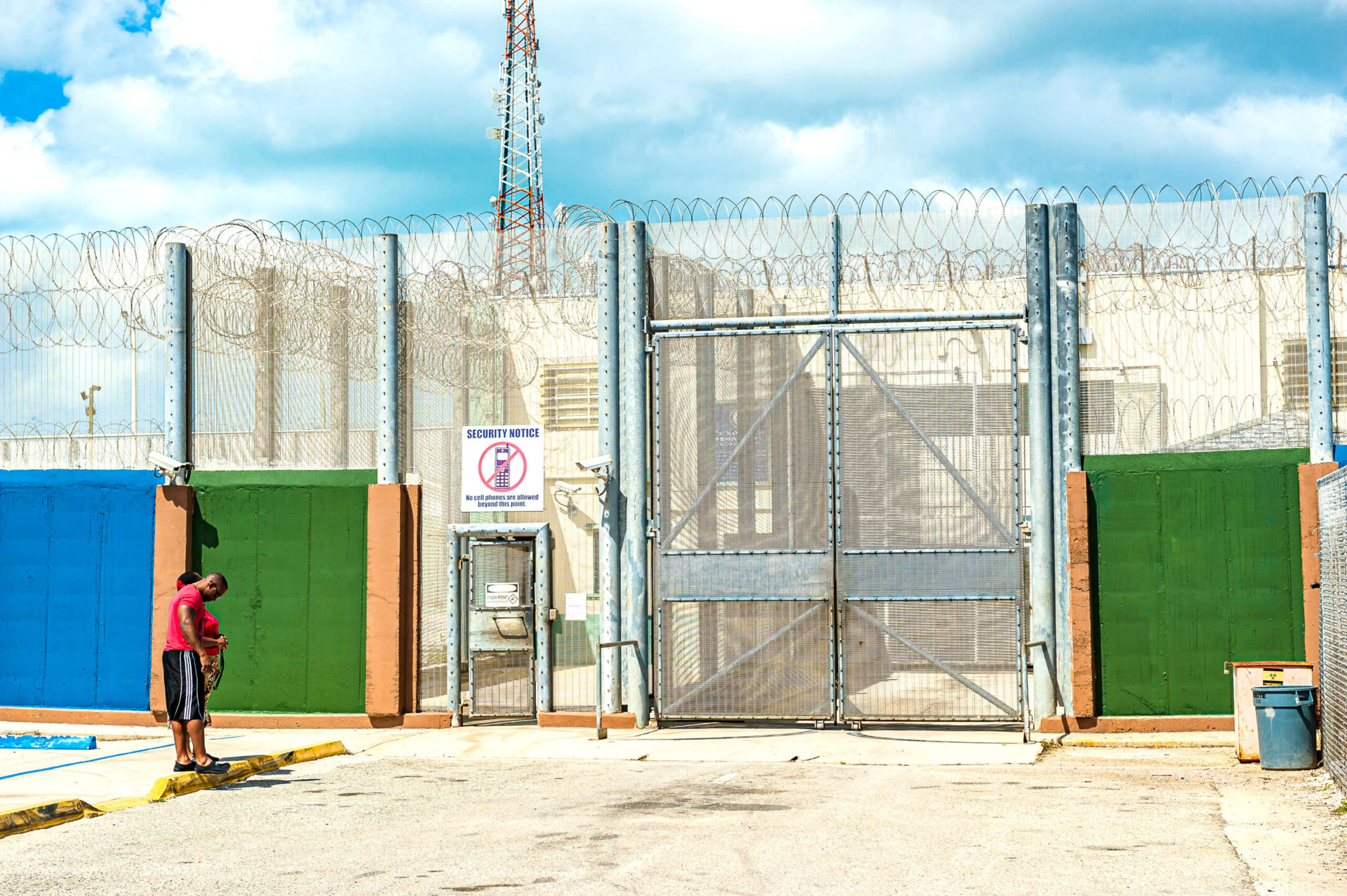
 A five-year case has sought to determine if the governor of the Cayman Islands, acting on advice from police, prison and national security officials, was right to transfer two convicted killers to serve their sentences in high-security facilities in the UK, thousands of miles from their homes and families.
Much of the legal argument has been heard in closed hearings, while large amounts of evidence were submitted through affidavits, referenced in court, but not read out in full.
The case touches on important issues of national security, human rights, the sufficiency of the islands’ prison facilities, and the justice system’s capacity to assess the credibility of classified material.
The Cayman Compass obtained a judgment from the Court of Appeal granting access to the court files and opening up some of the details of the story to the public for the first time.
‘Call my mum and tell her I am being shipped off to the UK’
On 29 June 2017, Justin Ramoon was roused from his cell in the high-risk unit at Northward Prison and brought in cuffs to the reception area to receive a phone call.
When he got there, there was no call.
Instead, he was told he was being transferred to the UK to continue serving his life sentence in a maximum security facility.

Seats had been booked on the British Airways flight that night.
He tried to protest, but was told he had no choice.
Ramoon got word to his family through an inmate cleaner.
“Call my mum and tell her I am being shipped off to the UK,” he instructed as he passed him in the corridor.
The message travelled fast through the prison grapevine, and when he arrived, flanked by security guards, at Owen Roberts International Airport, his mother, and other family members were there.
They weren’t close enough to speak, but he shouted “I love you” as he was hustled
through security and on to the waiting plane.
It would be over a month before he spoke to them and more than three years until he
saw any of his family in person again.
National security threat
There was an exception. His brother, Osbourne Douglas, had been transferred to London’s notorious Belmarsh prison in similar circumstances, a week earlier.
The only explanation the brothers were given at the time was that there was intelligence they were being targeted for assassination. Their mother’s house had been shot up in an apparent gang-related incident earlier that month.
Ramoon says a senior prison official told him, “Someone was coming to kill me, and he did not want anyone to jump his fence and potentially harm his staff.”
The prisoner claims he thought this was a joke as he was confined to his cell 22 hours a day.
In fact, the explanation was not accurate.
The brothers were not moved for their own protection, it soon emerged, but because of the serious threat they were said to pose to national security.
‘Notorious’ gang leaders
As leaders of a ‘notorious gang’ called the Central Military Killers, it was alleged, they had been orchestrating criminal activity, including planning gang hits from prison.
There was intelligence that they were aiming to smuggle high-powered weapons into Northward and could launch an audacious armed escape attempt.
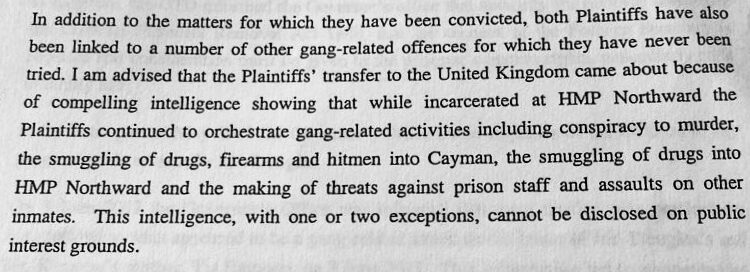
Only a sliver of the evidence for such claims has been made available to the brothers, or to the courts, in a long and complex case, during which they have sought to contest the transfer, authorised through an obscure 19th century British act, on human rights grounds.
Much of the on-record information is being made available to the public for the first time today following a significant judgment granting the Compass access to the case files.
But greater intrigue, and perhaps the key to the case, lies in the undisclosed files – a secret dossier filling ‘three lever arch files’ the court was not able to see, kept in a secure location under the authority of the governor.
The Court of Appeal, in a ruling handed down on 27 April, decided that an unprecedented behind-closed-doors hearing, known as Closed Material Procedure, could be used to allow a judge – but not the brothers nor their lawyers – to see these files.
The substantive question for the court to answer, if and when the judicial review eventually proceeds on that basis, is this:
Are the brothers simply common criminals who, despite their crimes, deserve, like other inmates, to have their constitutional rights as Caymanian citizens protected?
Or, are they hardened, incorrigible gangsters who present such a serious threat to national security that they cannot be safely held on the island?
‘A public execution of the most evil nature’
The story began on a warm Wednesday night in July 2015. A group of friends, many of them suspected to be involved in the Birch Tree Hill Gang, were drinking and smoking in an alleyway outside the Globe Bar in Central George Town.
Graffiti adorned the walls of the buildings around the bar, the scene of previous shootings – ‘Thug Life’, ‘Make dat money’, ‘RIP Chunks’, ‘Life, Love, Liberty’.
There was no immediate sign of conflict when Ramoon and Douglas arrived on the scene just after 10pm. Witnesses at trial, some of them involved in gang activity themselves, testified they weren’t aware of any animosity and didn’t perceive immediate danger.
Nonetheless, the same witnesses said Douglas pulled a 9mm firearm, later identified by ballistics reports to be a Luger, from the front of his pants and handed it to his brother.
Moments afterwards, Ramoon walked up to 20-year-old Jason Powery and shot him in the face.
He raised the weapon again, pointed it at another young man and pulled the trigger. But the weapon misfired and the witness survived to give evidence that helped to convict both brothers.
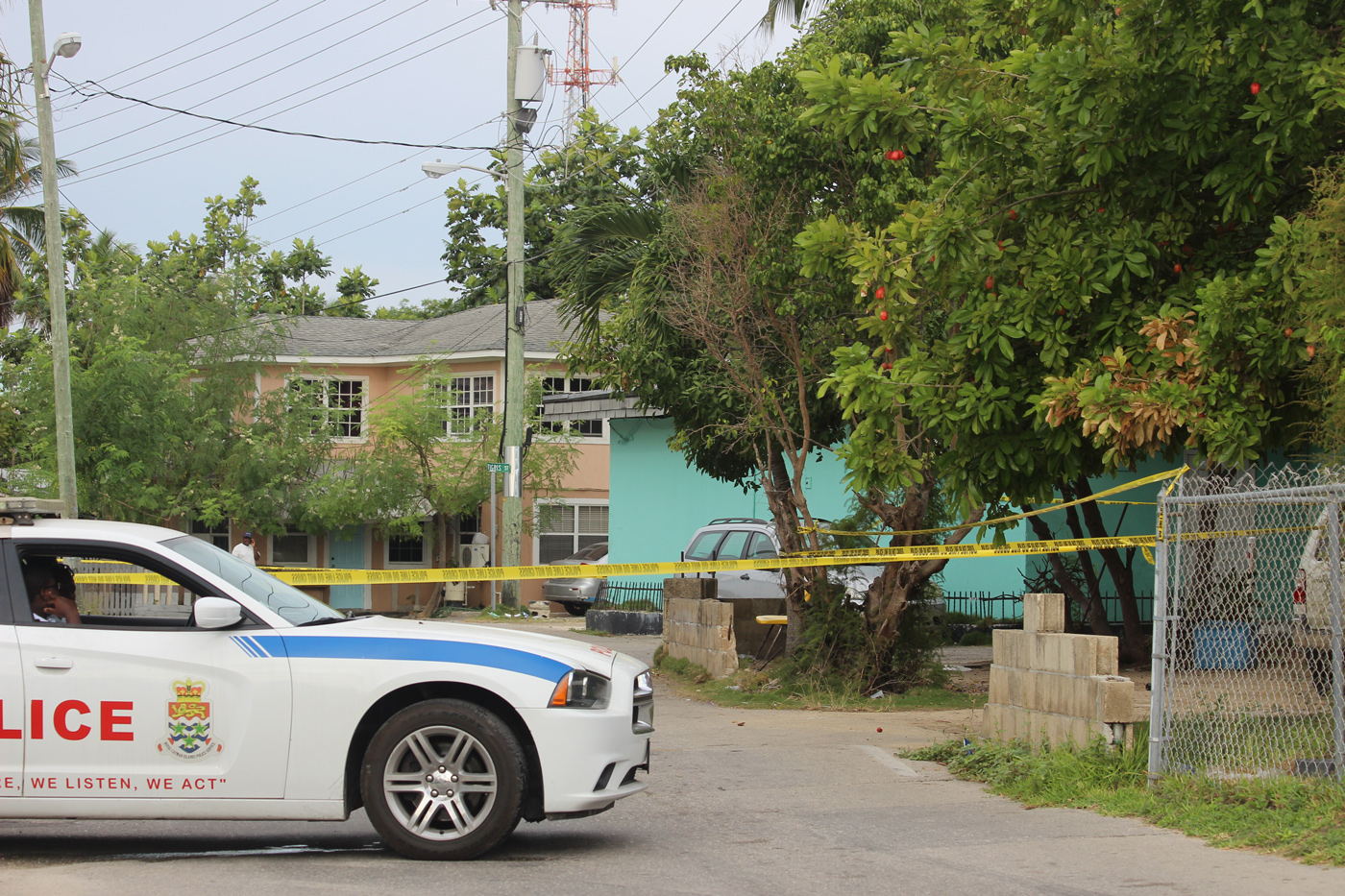
Ramoon was transported to and from the scene of the crime in a silver Honda by Douglas, now alleged to be the senior partner and the leader of the Central Military Killers gang.
“This was a very public execution of the most evil nature and it could be accurately described as chillingly clinical in its planning and execution,” Justice Charles Quin concluded in his original judgment.
The brothers accept they were on the scene but have denied involvement in the murder. They didn’t speak in their own defence at trial, however, and their convictions were upheld on appeal.
Sentences of life in prison, without the opportunity of parole, for 34 and 35 years (later reduced to 30 and 33 years), respectively, were handed down. They were classified as ‘category A’ prisoners and held in the High Risk Unit, segregated from the general prison population and, according to their testimony, kept locked down for the bulk of the day. This was said to be insufficient to curtail their criminal activity.
‘Guns, drugs and hitmen’
On 27 April 2017 – four months after the brothers had first been incarcerated – a high-level meeting was held at the Governor’s Office to discuss an urgent national security concern relating to the prison.
Senior police officers presented information, “which showed that Mr. Douglas was orchestrating serious gang-related offences from the prison, namely the ordering of guns, drugs and hitmen from Jamaica”, according to an affidavit from an unnamed official, who was present at the meeting.
On the same day, Douglas had threatened to harm prison officers during a search of his cell, telling them he had staff “mapped out” – understood to mean he “knows where they live”, according to the separate evidence of a prison official.
It took three guards to restrain him and recover an illegal cell phone on that day, the testimony indicates.
Several months earlier, Douglas had assaulted another prisoner – one of the witnesses in the case against him.
In that meeting at the Governor’s Office in George Town, police representatives presented a case that the situation was becoming impossible for prison staff to contain. Allowing Douglas to remain in Cayman, they argued, presented an “unacceptable risk” to national security.
A request was made that the Governor’s Office “explore the possibility” of moving him to a prison in the UK.
Initial inquiries revealed an order of consent would be required from the British Foreign Secretary under the Colonial Prisoners Removal Act of 1884.
The Foreign and Commonwealth Office made it clear at this stage, the official claims in his testimony, that the prisoner’s right to a family life – still constitutionally protected in spite of his crimes – would have to be considered.
‘Gang tension was particularly high’
The situation escalated in June when the Governor’s Office was informed that “gang tension was particularly high” after an attack on the home of Douglas and Ramoon’s mother. There were concerns they would retaliate.
The possibility of moving one or both of the brothers to Bermuda was briefly discussed and dismissed as unworkable.
An option of bringing UK officers to Cayman to manage Douglas was also contemplated, but was considered impractical because of the sheer numbers needed to achieve the goal of keeping him “completely separate” from all staff and prisoners at HMP Northward.
The bulk of the initial concerns seem to centre on Douglas. Ramoon would opine in a later affidavit that he was being persecuted based on complaints about his brother.
As discussions over Douglas’s transfer gathered pace, police and prison officials expressed concern about his younger brother.
In another meeting with staff from the Governor’s Office, they cautioned against “leaving Ramoon at HMP Northward given his senior position within the CMK Gang, his violent offending and the risk that he would take over the criminal operations, including intimidation of prison staff on behalf of his brother”.
A case was made to the UK secretary of state for justice and authorisation was granted for the men to be sent to the UK.
Weeks later, they were gone.
Risk to confidential informants
Nothing in the records released to the Compass includes specific evidence of any of the threats alleged.
This is by design. Senior police, prison and national security advisors successfully argued that sharing the evidence – even with the court – would risk identifying confidential informants, jeopardise ongoing investigations and put prison officers and the public in danger.
A judge granted a Public Interest Immunity Certificate exempting the governor from the usual rules of disclosure, which entitle the opposite side to a full view of the case against them.
Neither the judge who heard the judicial review nor the Court of Appeal justices had seen these documents either.
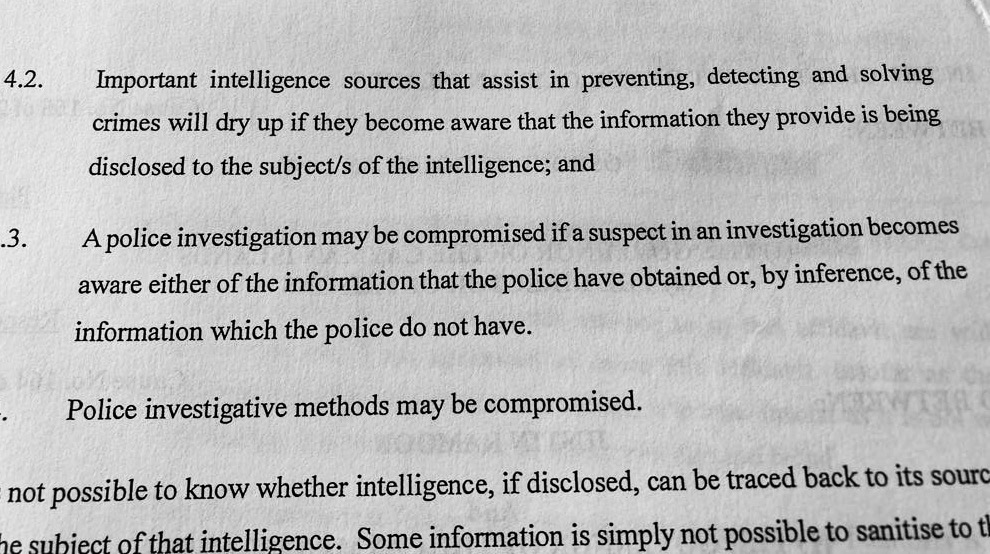
What was put into evidence, in a series of anonymous affidavits, paints a picture of gang kingpins whose reach and influence extend far beyond the razor wire fences of HMP Northward.
With the exception of Governor Martyn Roper – who defended the decision to deport the men, which was made by his predecessor Helen Kilpatrick – none of the official witnesses are named.
A typical affidavit, which appears to be written on behalf of the Royal Cayman Islands Police Service by a senior officer, begins with the claim, “The security risk posed by [Douglas and Ramoon] is so grave that I am concerned about my personal safety if my name is disclosed.”
Officials from the police, prison and Governor’s Office make broadly the same arguments, which are most dramatically outlined by Roper.
‘Credible intelligence they were planning an escape’
In one of five affidavits placed before the court, Roper describes the duo as a threat to “the peace and security of this small island nation”.
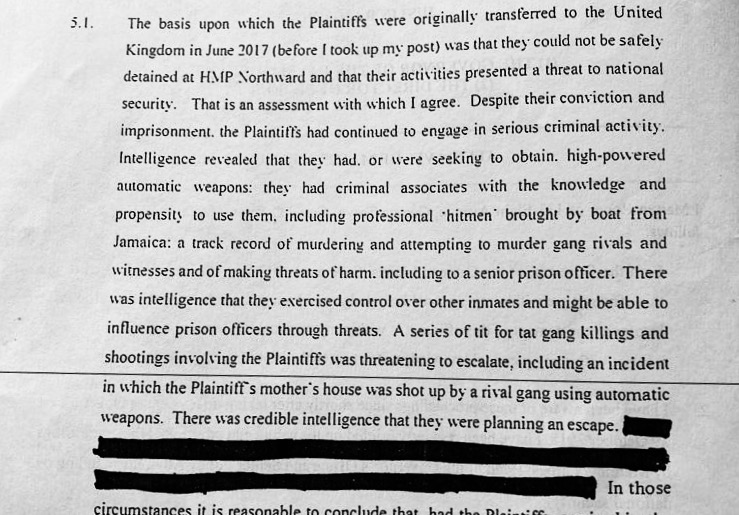
He stated, “Intelligence revealed that they had or were seeking to obtain, high-powered
automatic weapons; they had criminal associates with the knowledge and propensity to use them, including professional ‘hit men’ brought by boat from Jamaica; a track record of murdering and attempting to murder gang rivals and witnesses and of making threats of harm, including to a senior prison officer.”
He cites further “intelligence” that they exercised control over other inmates and may be “able to influence prison officers through threats”.
He added, “There was credible intelligence that they were planning an escape.”
Roper goes on to describe a scenario that officials believed to be plausible and were keen to avoid.
“There could have been an escape attempt involving the smuggling of firearms into the prison, perhaps supported from outside by gang associates armed with automatic weapons; more retaliatory or other gang-related incidents involving the use of automatic weapons on both sides that could temporarily have overwhelmed the resources of the RCIPS and led to significant loss of life.”
‘The allegations against me are absurd’
Both men maintain they are not members of any gang and deny they pose a threat greater than that of any other prisoner.
Ramoon argued in a video statement from HMP Frankland in Durham, England, that it is
fanciful to believe he could have orchestrated the crimes alleged, given the conditions of the unit he was on at Northward.
“I am portrayed as a senior member of a gang with enormous influence. This is an assertion I totally reject,” he argued, according to a transcript of the testimony.
“If it were true, would there not have been a major reduction in criminal activity in Cayman after I was removed to the UK?” he asked.
His transfer, in fact, had “zero impact”, Ramoon claimed.
He added that he had been housed in a single cell in a “prison within the prison”, with no access to the general population. Any calls were made on a phone passed through a hatch, he was searched on an hourly basis, and allowed only one hour exercise a day, supervised by guards.
“The conditions on the high risk unit were such that it would have been impossible to
conduct the kind of complex and organised criminal activity alleged,” he insisted, claiming the conditions were “stricter than Belmarsh” – a reference to the high-security London prison where he was initially sent.
“The allegations made against me are absurd,” he said. “The High Risk Unit was carefully
designed to prevent an inmate from being able to have any communication with the general population or the outside world. The design achieved its aim.”
He said he did not recall threatening a guard as alleged, but claimed this was part of the “reality of prison life” and something that happened all the time, without any intent to carry it through.
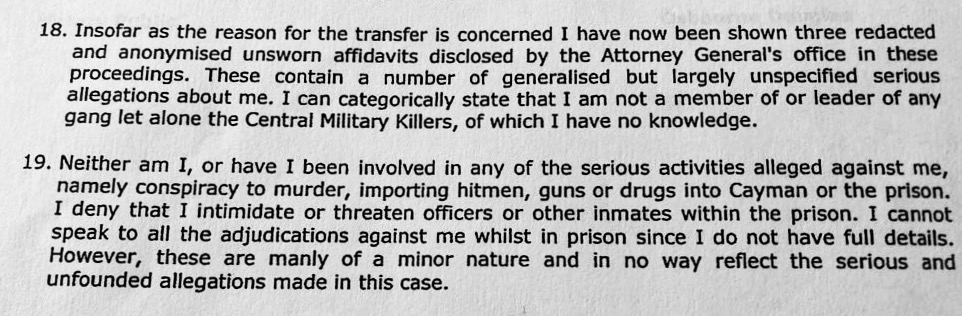
Douglas also complained that the allegations against him were non-specific and made a blanket denial of any involvement in conspiracy to murder, importing hitmen, or running guns and drugs into the prison.
“I can categorically state that I am not a member or leader of any gang, let alone the Central Military Killers, of which I have no knowledge,” he wrote.
He accepted he had punched another inmate on one occasion, while they were both being transferred from their cells under guard, but characterised this as a spur-of-the-moment encounter which was over within seconds.
The inmate had given evidence against him at trial and he said he was “angry at the lies he told in court”. No charges were brought as a result of the incident.
He said his prison disciplinary record involved relatively minor offences that did not reflect the “serious and unfounded allegations” made to justify his deportation.
He insisted it would have been impossible to commit the alleged crimes from a high-security cell.
Prison unsuitable for ‘Category A’ offenders
Despite those protestations, prison officials testified that both men had been caught with illegal cellphones. They argued that Northward Prison was not secure enough to hold them.
A senior prison official, whose name was withheld, testified that HMP Northward was unsuitable for prisoners of their type – deemed Category A offenders.
A multi-million dollar investment is needed in new facilities before Cayman would have the capacity to house the most serious offenders. And even that might not be enough to contain the two brothers, according to an affidavit from the prison official.
“The critical risks in this particular case are not only about the physical and dynamic security deficits of [Cayman’s prison service] but also the capability of these two men to cause significant harm to those working and living in the prison system, and also to those
members of the community who could be affected by their presence,” he stated.
Again, substantiating specifics are not included because of the perceived risk of threat to witnesses and ongoing investigations.
‘Vast majority’ of evidence withheld
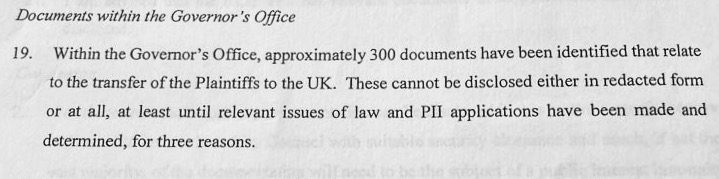
The Governor’s Office acknowledged that the “vast majority” of the evidence was being withheld.
Approximately 300 documents were essentially classified because of their sensitive nature.
This approach was accepted by the court after advocacy on both sides. But it was acknowledged, even by the attorney general’s legal team, that it could make elements
of the case difficult to assess.
The brothers claim the idea that they are a national security threat on the level alleged is “absurd” and have demanded to see proof.
The governor has argued that key evidence cannot be shared without putting the lives of
informants, prison officers and the broader public at risk.
In essence, the argument is that evidence that the brothers pose a national security threat cannot be revealed, because of the national security threat the brothers pose.
It is a riddle that the courts have been trying to solve over multiple hearings, many held behind closed doors, over the past five years.
In a case where hundreds of documents have now been released, the truth may lie in the pages of those that remain under lock and key.
In the latest twist in the saga, the Court of Appeal has now paved the way for a new court hearing, to be held behind closed doors, with limited access granted to those secret documents.
Related Videos