


A pair of gang killers exiled to maximum security prison in the UK have lost their legal fight to come home to Cayman.
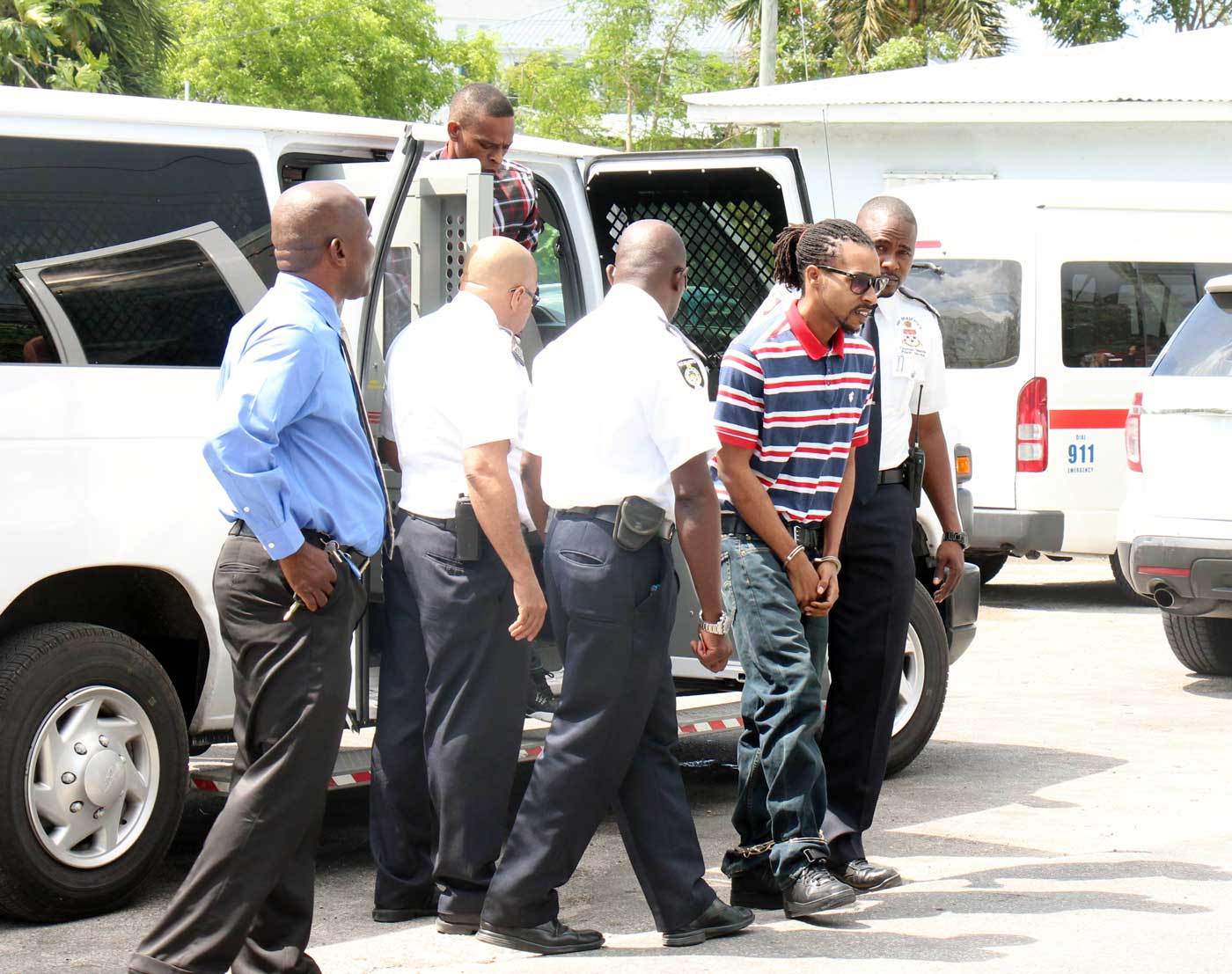
Justin Ramoon and his brother Osbourne Douglas are serving life sentences for what a judge described as the “chilling public execution” of Jason Powery in 2015 outside the Globe Bar in George Town.
They were transferred to London’s Belmarsh high-security prison in 2017 amid claims they were planning an armed jail break, and remain incarcerated in the UK.
The pair, said to be leaders of the Central Military Killers gang, was also accused of orchestrating criminal activity from prison in Cayman.
Both men dispute those claims and have challenged their removal from Cayman on human-rights grounds.
The legal fight was spotlighted by the Compass in a 2022 investigative series, which saw this publication successfully appeal to the courts to obtain hundreds of pages of documents in the long and complex case.
The judgment on the substantive issue was finally considered by the Grand Court of the Cayman Islands late last year, following a protracted and complex case that has already gone all the way to the UK’s Privy Council.
In a judgment published last week, Acting Grand Court Judge Marva McDonald-Bishop ruled that then Governor Helen Kilpatrick was entitled to make the decision to send the two men to the UK under the 1884 Colonial Prisoners Act.
She decided that the governor had properly balanced the impact on the men and their young children with the threat they posed to the community.
Neither the men nor their lawyers were allowed to see the intelligence reports that led to the decision to remove them from the islands, as the documents were deemed to be classified material.
Decision justified
The Prison Papers
However, the judge ruled that the gist of those reports – presented in a series of affidavits from senior national security figures – was enough to justify the governor’s decision.
One such affidavit, from Kilpatrick’s successor Martyn Roper, summarised some of the more serious concerns in the report including “credible evidence” they were planning an escape.
“Intelligence revealed that they had, or were seeking to obtain, high-powered automatic weapons; they had criminal associates with the knowledge and propensity to use them, including professional ‘hitmen’ brought by boat from Jamaica; a track record of murdering and attempting to murder gang rivals and witnesses and of making threats of harm, including to a senior prison officer,” Roper testified.
The judge ruled that Kilpatrick was not obliged to verify those claims. The court simply had to be satisfied that the governor could have reasonably concluded that the facts presented to her were “possibly true” when she made the call to deport the men to UK prisons.
“There is no onus on her to prove that those undisclosed underlying facts are, in fact, true,” the judgment states.
Unsuitability of Cayman’s prison
The unsuitability of Northward to house Category A inmates was also a factor.
“It was perfectly legitimate and appropriate for the Governor to consider the state of HMP Northward in the risk assessment and to conclude that it was inadequate to securely house the plaintiffs in the light of all the information.”
McDonald-Bishop said she did not accept the argument presented on behalf of the two men that the evidence pointed to “ordinary criminality” rather than a threat to “national security”.
“The measure undertaken under the 1884 Act to transfer the Plaintiffs to the United Kingdom was in pursuit of a legitimate aim or objective, which was to secure the Plaintiffs’ safer custody in the United Kingdom in the interests of national security and public safety in the Cayman Islands.”
The ruling indicates the men have a right to a family life under the Cayman Islands Constitution, particularly to contact with their young children. However, this is a qualified right, McDonald-Bishop indicated.
“I find that the interests of the children in having their fathers remain in the Cayman Islands must give way to the overwhelming weight of the interests of national security and public safety that required their removal.”
A series of earlier hearings focused on the challenges of fairly assessing the case in circumstances where the Governor’s Office was exempted from disclosing much of the evidence supporting its decision on national security grounds.
Ultimately, the Privy Council ruled that secret hearings, known as Closed Material Procedure, could not be held in Cayman under the law at that time, and the case was sent back to the Grand Court for a hearing on the available evidence, culminating in last week’s judgment.
Related Videos











How much has all this protracted legislation cost the public purse?. Are their families still allowed to visit them, and who pays their expenses?.