

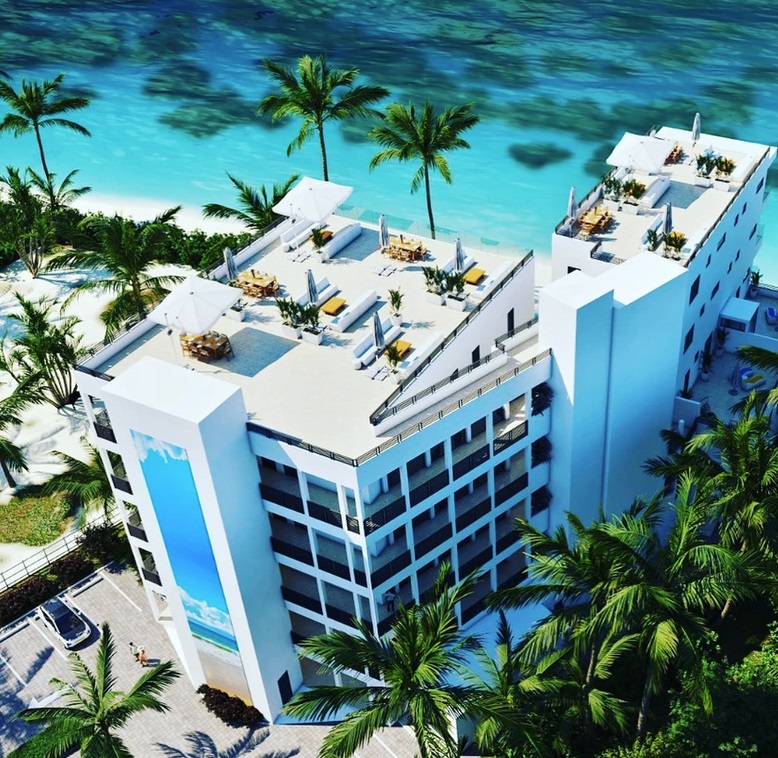
Development company Coe Group Ltd is returning to the Central Planning Authority seeking permission to build a five-storey hotel called Barkers Beach Resort in West Bay, more than a year after its previous application to erect a hotel on the site was rejected by the planning board.
The Coe Group, owned by Joseph Coe and Morne Botes, is bringing a revised version of the plan to the CPA, which is scheduled to hear the application on Wednesday, 4 Jan.
In September 2021, the CPA refused planning permission for a previous application by the Coe Group to build a hotel on the site – located east of Spanish Bay on Conch Point Drive, which leads to Barkers Beach – because it did not comply with minimum required setbacks from the sea. That application cited a cost of $118.5 million, while the new one lists a price of $12 million.
The proposed building size of the latest application is 35,804 square feet, more than 10,000 square feet smaller than the original.
The Department of Planning, in its comments on the application, noted that the setbacks for the planned hotel do not meet the minimum requirements, and that the developer was seeking a variance to those setback requirements.
The earlier rejected applicated involved three five-storey buildings connected by walkways, and three cabanas. The new application proposes erecting a five-storey building with hotel units, and renovating the existing two-storey apartment building to include a bar/restaurant on the ground floor, as well as two hotel units on the second floor. There would also be a pool and a 74-square foot freestanding sign.
The Department of Planning noted that the existing building is located 66 feet from the mean high-water mark, and therefore does not comply with the required setback of 130 feet. It also stated that a side setback requires a minimum of 20 feet, but the two-storey building is set back only 15 feet.
Coe Group has applied for a variance, citing an existing public right of way along the west boundary of the neighbouring property which, the company says, makes the effective setback 21 feet. The Department of Planning pointed out that the CPA had “rejected this concept when the previous application was refused”.
The Department of Environment, in its submission in response to the new plan, said the environment at the site “may not be fitting for a hotel” due to the topography of the natural rock/rubble beach, which is located on an exposed coastline and lacks the protection of a reef offshore.
“Although the current proposal does not appear to include a request to modify or groom the shoreline, we wish to highlight that grooming this beach will not result in a ‘Seven Mile Beach’ sandy aesthetic,” the DoE noted.
It added, “The DoE has previously expressed its concerns with managing expectations of new developments and reiterates them for this proposal. Much of Grand Cayman’s advertising is based on the Seven Mile Beach experience but this facility will not provide the same sandy beach entrance and easy wading and swimming. In addition, due to the rocky shoreline, the feasibility of operating watersports from the property, as is often done in hotel establishments, will be difficult.”
The department, noting that the site is located by a marine protected area, directed the CPA to only grant permission to the application if all construction materials is stockpiled a minimum of 50 feet from the high water mark, to prevent run-off and debris from entering the water, causing turbidity and impacting sensitive marine resources.
The DoE also recommended that the natural profile of the beach ridge should be maintained in order to increase the resiliency of the site against wave overtopping during storms and hurricanes and climate change. The plan includes basement-level parking, which the DoE said will necessitate full excavation of the beach ridge, which was a “major concern, as, in the absence of an offshore fringing reef, it is the first line of defence against wave overtopping for inland properties in the event of a storm and it contains significant sand reserves.”
The department recommended that the developers remove the basement parking to improve the resiliency of the site and reduce the amount of sand excavation required.
Related Videos










How can one explain the relentless greed of developers in the light of all we know about preservation of fragile environments?
Mr Premier, it is Caymanian’s grandchildren who will not thank us for allowing this. The only ones who benefit in the short term are foreign developers.