

The Cayman Islands may have enjoyed a record-breaking turtle season with 858 turtle nests recorded in 2022, but a number of nests and hatchlings did not survive the season due to both weather and man-made threats.
The Department of Environment turtle scientist Jane Hardwick said the season, though successful, had been challenging and she is urging property owners to install turtle-friendly lighting to reduce the losses that come when turtles are disoriented and can’t find their way to the sea.
“Hatchling misorientation due to coastal lighting continues to be a challenge with more than 165 nests requiring interventions to protect the hatchlings from lighting in Grand Cayman [last] season. There were 31 nests where hatchling misorientation occurred (7 of which were unknown nests and only discovered after the hatch,)” she said, in an emailed response to the Cayman Compass.
Among those was a nest of at least 25 hatchlings, misoriented by condo lights along Seven Mile Beach, that failed to find their way to the sea in August.
After the DoE was alerted to the situation, a small number of the turtles were recovered, but most died.
“As nest hatch dates can only be estimated within a 10-day window, it is an around the clock job to do our best to ensure nests are safe from lighting. If you live on a nesting beach, please consider switching to turtle friendly lighting and contact the DoE to find out if you are eligible for funding. Let’s make next season as misorientation free as possible,” Hardwick pleaded.
The season, which runs from May to November, ended with green sea turtles recording the sharpest increase in numbers, with 528 nests found in 2022, compared to 180 in 2021, according to the DoE.
A total of 324 loggerhead nests were also recorded, which represented a slight decrease on the 350 recorded in 2021, while hawksbill nest numbers remained unchanged at six in 2022.
Storm surges claim nests
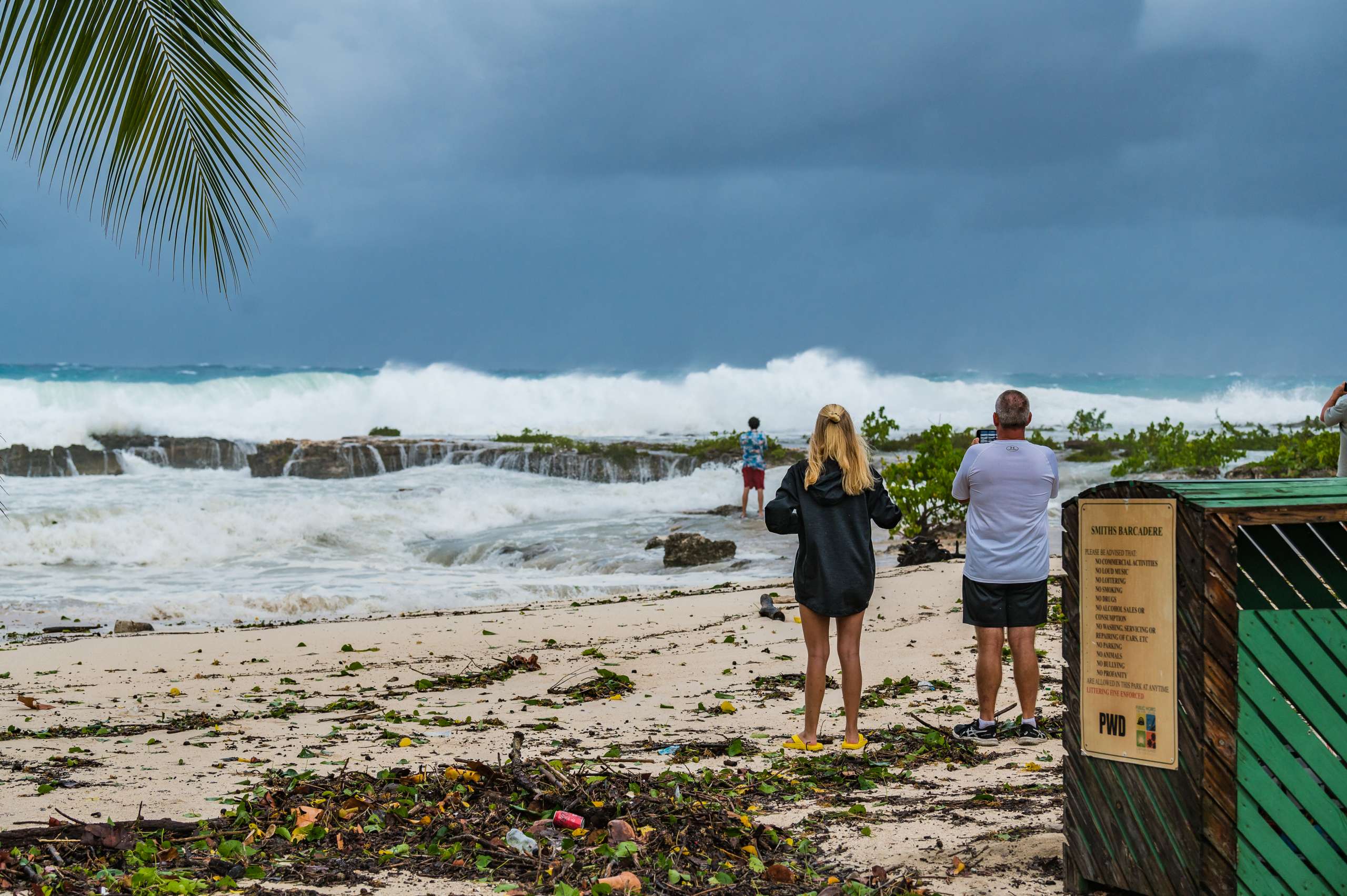
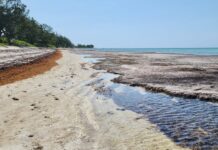
Though the storm activity for the hurricane season was not as active as originally predicted by forecasters, there were storm surges that had an impact on the islands’ turtle numbers.
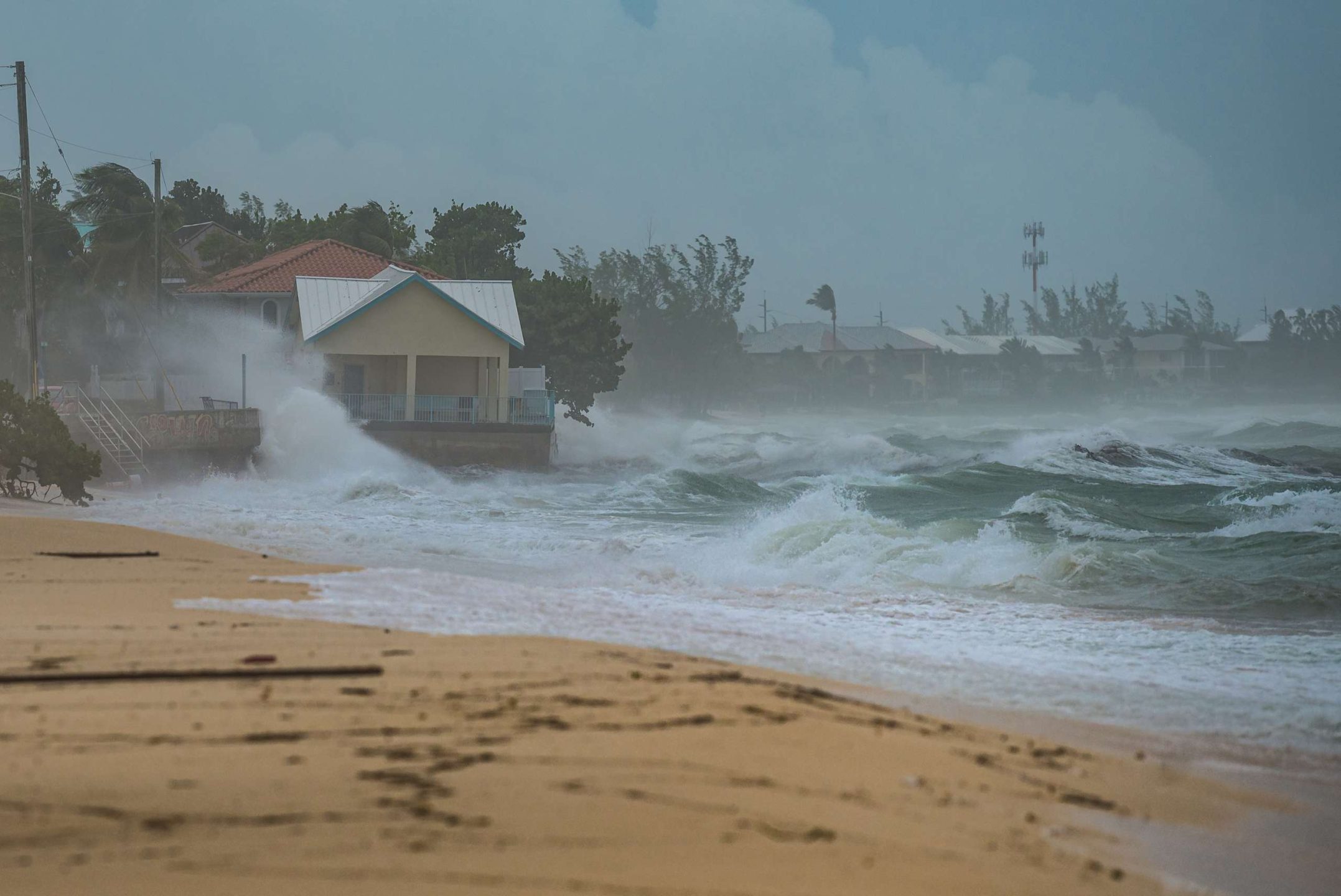
The DoE turtle team, Hardwick said, was able to rescue some nests before storm surges hit during Hurricane Ian last September, but there were still losses.
“In Grand Cayman, 21 nests did not survive due to nest flooding and a further 44 nests had an unknown fate as they could not be located after the storm due to the nest markers washing away. Storm impacts are unpredictable but we’re grateful for the many hatchlings we could rescue,” Hardwick said.
The turtle team, she said, were thrown a bit of a loop with the intense wave action experienced during Ian.
“All hands were on deck before the storm to ensure the most vulnerable nests (those closest to the water) were relocated. Almost 1000 hatchlings that had hatched from their eggs but had not yet emerged from the sand were rescued before the weather arrived. Unfortunately, the surge came up over the entire beach along many of the key nesting areas,” she said.
Despite the challenges, Hardwick said the turtle team was “really thrilled to report a record-breaking 2022 turtle nesting season with 858 confirmed nests across the three islands (527 in Grand Cayman, 252 in Little Cayman and 79 in Cayman Brac)”.
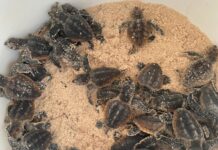
“We recorded an increase in numbers of green turtles nests across all islands this year, after low numbers in 2021. In total, more than 61,000 hatchlings made it to the sea (including green, loggerhead and hawksbills). It is important to note that the number of nests does not reflect the number of nesting turtles,” she said, adding that each female usually lays between two and eight nests in a season.
Although the nesting population is increasing, she added, the number of nesting turtles is still low and many threats remain.
“It has been a long, almost full year-round, nesting season, with 12 nests laid outside of the typical season of 1st May – 30th November. The first nest of the year was laid on 31st March in Grand Cayman (a green turtle) and the last nest laid was 8th December in Little Cayman (a hawksbill turtle,)” Hardwick said.
She paid special tribute to the team, as well as visiting researchers, beach patrol volunteers, DoE conservation officers and other key staff “who work tirelessly to ensure our nesting turtles are identified, monitored and protected throughout the season”.
“Thank you to everyone who provided support in big and small ways. The 2023 season will be here before we know it,” she added.
Related Videos








I thought that the government passed a turtle lighting law a couple of years ago. It is time to enforce it