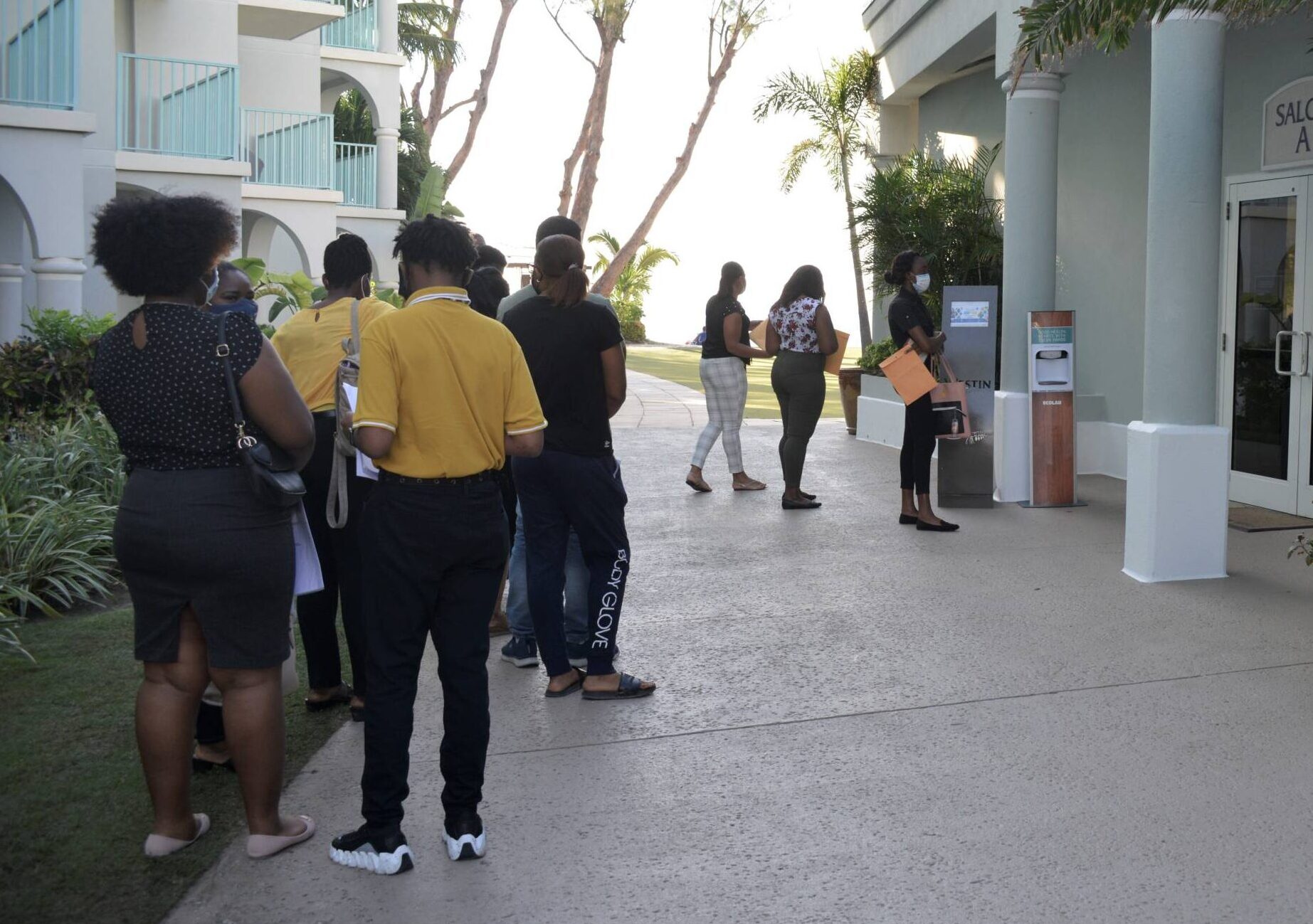
As of May, 3,202 tourism workers who lost their job during the pandemic were still receiving a monthly government subsidy.
That figure only marginally declined from January, when 3,621 people were paid the $1,500-a-month stipend.
Since then, government has increased efforts to ensure that the benefit would only be paid to workers who are out of a job.
A change in the rules, instituted in February, meant that workers who find new employment would transition to the Tourism Recovery Grant programme and receive a payment of $750 per month, if they are employed only part time.
More than 600 stipend recipients at the time were said to have found full-time employment and no longer needed government support.
Although government initially aimed to phase out the programme in April – later revised to June – the need for the stipend remains high.
Wesley Howell, chief officer for the Ministry of Border Control and Labour, told Parliament’s Finance Committee on Friday that 2,242 individuals still receive the full $1,500 each month and 960 workers receive $750.
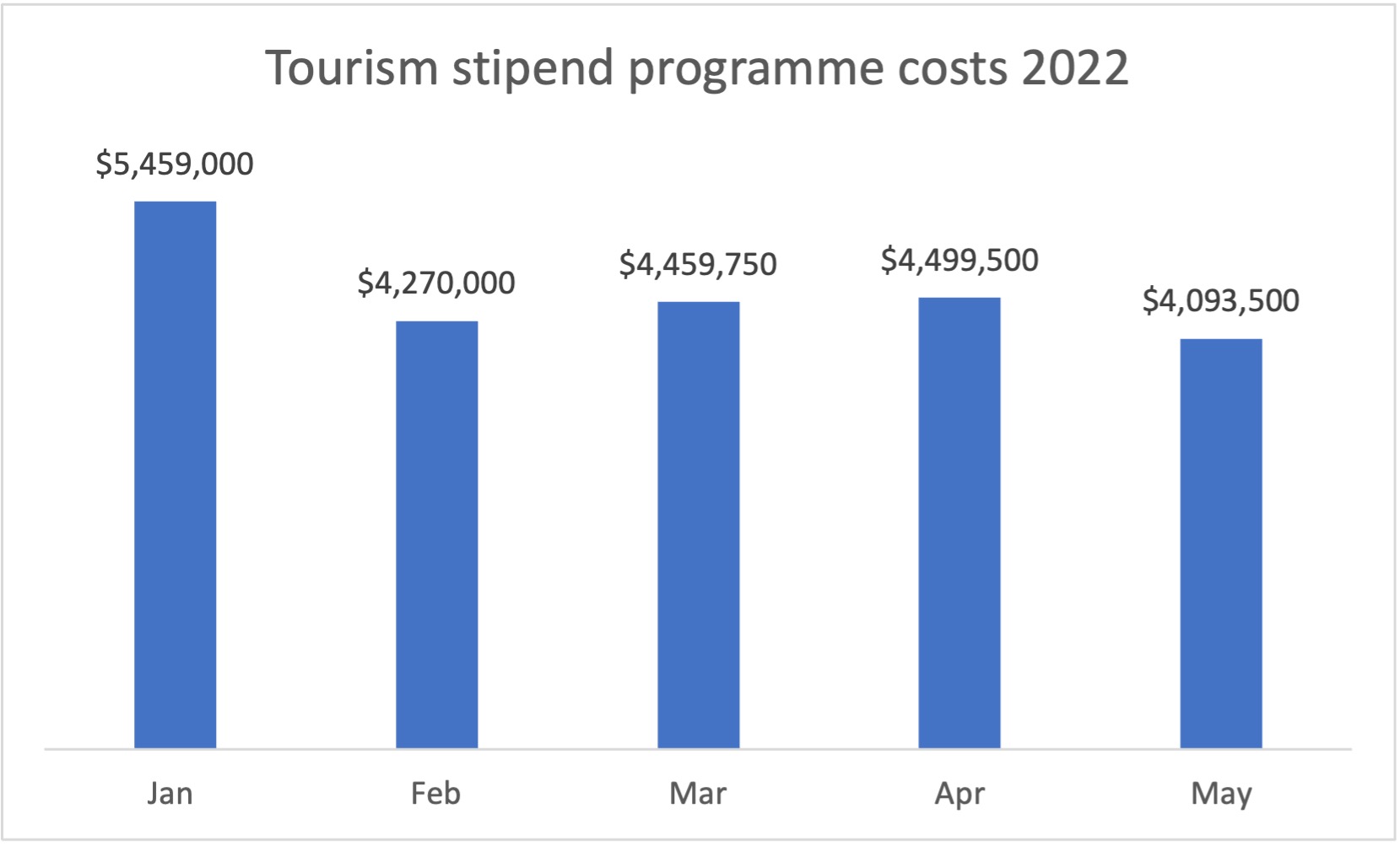 On a monthly basis, the stipend payments costs dropped from $5.46 million in January to $4.27 million in February, but then increased again to almost $4.5 million in March and April. They remained at $4.09 million in May.
The programme first ran out of money in March, when Parliament’s Finance Committee approved an extra $15 million in funding.
Last week, lawmakers were asked to approve another $1.5 million to see the programme through until the end of June. Together with the $10.3 million included in the budget, the programme has now been granted $26.8 million in the first half of the year.
Programme will transfer to social development ministry
Asked why there was no funding beyond June, the minister responsible for customs and border control, Chris Saunders, acknowledged that “some people would require assistance post-June” but he said the programme will be transitioned to the ministry of social development.
Saunders said government was conscious of the difference between people who temporarily need assistance and those who need welfare. Citing the United States as an example, he said, “[W]e don’t want our people change their mindset from work to welfare, because once the mindset changes, it is very hard then to move them back to a different category.”
Social Development Minister André Ebanks added some work had already been done between the ministry of social development and the ministry of labour to identify those who are able and ready to work, who may just need a minimum level of assistance from the ministry, and those that may face underlying social issues, who will receive assistance from the Needs Assessment Unit.
Saunders said he suspects that the funding will continue at the same level, but the management will change over to the other ministry of social development, which has some budgeted funds available.
Only some programmes, combining technical training with financial assistance, will remain with the ministry of labour.
While all efforts would be undertaken to use savings made elsewhere to fund the programme, both Saunders and Ebanks conceded that they may have to return to the finance committee for supplementary appropriations.
Suspected fraud cases
Asked about cases involving late payments of the stipend, Howell said any delays were linked to either incomplete or anomalous information provided by applicants.
Stipend payments are contingent on applicants completing questionnaires and surveys to ensure that the recipients are still in need of the financial support.
In some cases, the information was simply missing or not submitted in time, while about a dozen other cases were suspected of fraud and referred to the police for investigation.
Howell said the ministry is now using a forensic auditor, which could lead to more fraud cases being uncovered.
Related Videos