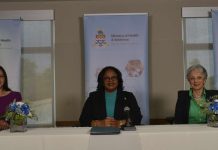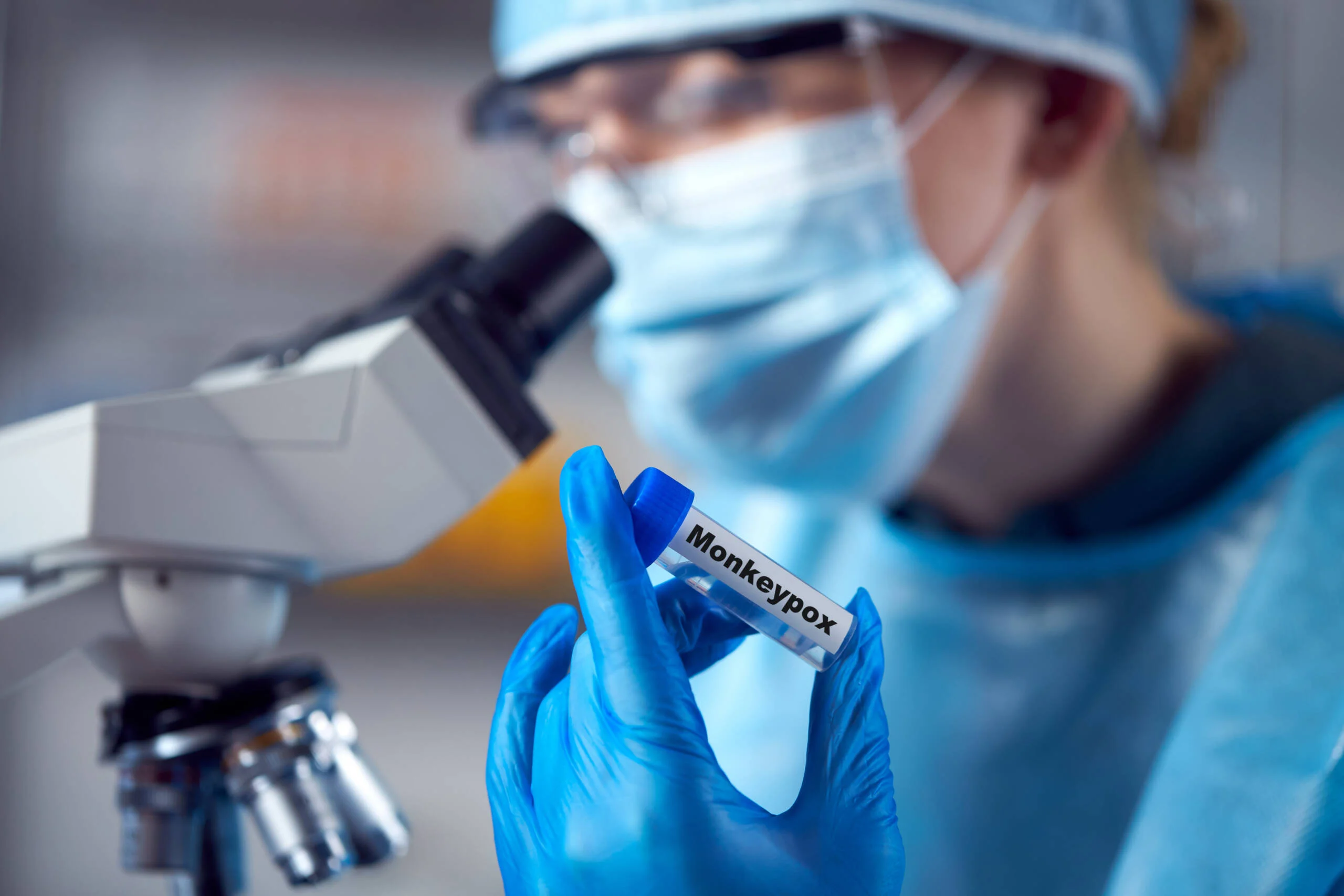
Cayman has no cases of monkeypox, interim Chief Medical Officer Dr. Autilia Newton has said, as she confirmed samples from a young local patient sent to the Caribbean Public Health Agency (CARPHA) laboratory in Trinidad earlier this month showed no traces of the virus.
Newton, speaking on Wednesday’s episode of the Cayman Compass talkshow The Resh Hour, said the results of the samples sent to the overseas lab had came back negative.
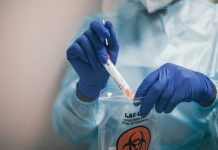
She pointed out that Cayman’s molecular biology laboratory now has the capacity to test for monkeypox so there will be no need to send samples overseas to CARPHA in future.
Samples from a young patient with chickenpox symptoms, which can be similar to monkeypox, were sent to the CARPHA in early June.
The monkeypox virus is closely related to the viruses that cause cowpox and smallpox. While symptoms resemble chickenpox, the fluid-filled lesions are larger and accompanied by high fever and swollen glands.
The World Health Organisation, in a 27 June update on the multi-country monkeypox outbreak, stated that, between 1 Jan. and 22 June, there have been 3,413 laboratory confirmed cases and one death in across 50 countries/territories in the five WHO regions.
The vast majority of cases – 2,933 or 86% – were reported from the WHO European region.
Other regions reporting cases include: Africa (73 or 2%), the Americas (381 or 11%), Eastern Mediterranean (15 or less than 1%) and Western Pacific (11 or less than 1%).
The single death from the virus was reported in Nigeria in the second quarter of 2022.
“WHO continues to closely monitor the situation, and support international coordination and information sharing with Member States and partners. Clinical and public health incident response have been activated by Member States to coordinate comprehensive case finding, contact tracing, laboratory investigation, isolation, clinical management and implementation of infection and prevention and control measures,” the global health agency said.
It has advised all countries to be on the alert for signals related to patients presenting with a rash that progresses in sequential stages – macules, papules, vesicles, pustules, scabs, at the same stage of development over all affected areas of the body – that may be associated with fever, enlarged lymph nodes, back pain, and muscle aches.
“In addition, during this current outbreak, many individuals are presenting with atypical symptoms which includes a localized rash that may include as little as one lesion. The appearance of lesions may be asynchronous, and persons may have primarily or exclusively peri-genital and/or peri-anal distribution associated with local, painful swollen lymph nodes. Some patients may also present with sexually transmitted infections and should be tested and treated appropriately,” the WHO has said.
Related Videos