

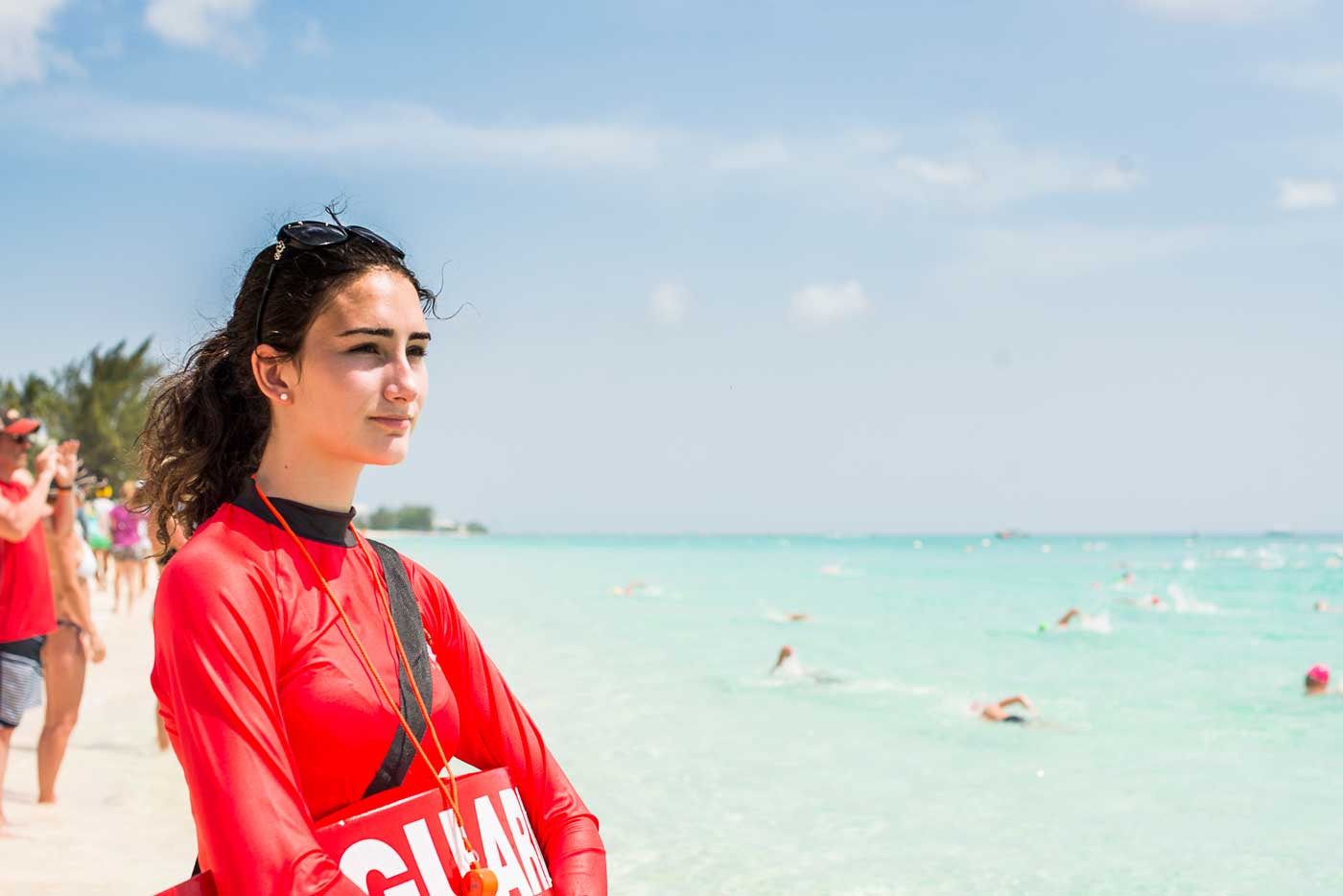
Trained lifeguards could soon be mandatory at resorts and beaches across the Cayman Islands in an effort to reduce the number of drownings here.
Two government ministers – Jay Ebanks and Kenneth Bryan – are exploring legislation to enable the change in approach.
And a new non-profit is already training scores of young people in lifeguarding and emergency first aid.
The tourism industry remains concerned about possible unintended consequences of such legislation, including insurance liability. But water-safety advocates say Cayman must do something to cut the relatively high number of deaths in the islands’ waters.
There were 14 such incidents in 2018, many of them involving American tourists, according to Craig Amundsen, of the Royal Life Saving Society of the Cayman Islands.
The society is working with the coroner’s office and a pathologist at the Health Services Authority on a comprehensive data report that it hopes will illuminate the scale of the problem and nudge government towards action. That figure for 2018 is among the highest death rates per 100,000 people for any country in the world, according to World Health Organization statistics.
While the number of deaths have dipped since then, the return of visitors to Cayman’s shores has brought back periodic headlines reporting ‘water-related incidents’. Most recently a 54-year-old American tourist was reported missing and later found dead after going snorkelling off an East End resort beach.
Government plans legislation
North Side MP and Planning Minister Jay Ebanks said that incident in June had motivated him to push a plan for protecting tourists on Cayman’s beaches up the agenda.

He has partnered with Tourism Minister Kenneth Bryan and is advocating for legislation that could mandate resorts place lifeguards on their beaches and around their pools.
“I think it should be part of the licensing for hotels and condos going forward that they have to hire a lifeguard,” he said.
“We have to do something about this. We have to be able to protect people who come to this island.”
The plan could extend to having lifeguard teams on public beaches, employed by the government or contracted through licensed, private companies.
Ebanks said the legislation, which is in the planning stages, was with the Ministry of Tourism to take it to the next stage.
He believes it could provide well-paying jobs in a sector that could be preserved for Caymanians who would become island ambassadors on the beach.
Tourism industry sceptical
The tourism industry has long been sceptical of the benefits of lifeguards and the potential issues that could arise. Industry figureheads have previously argued that it would create liability issues for government and hoteliers if an incident happened while a lifeguard was off duty.
Implementing mandatory lifeguards, the theory goes, would involve tacit acceptance of responsibility for the welfare of beachgoers and open the island up to lawsuits if a death occurred.
Marc Langevin, current president of the Cayman Islands Tourism Association, said the industry was firmly behind any measure that improved guest safety. But, he said, in more than a decade as general manager of The Ritz-Carlton, he had never encountered or heard of a death in a resort pool.
He also suggested many of the drownings that have occurred in Cayman have not been on the main Seven Mile strip where lifeguards would most likely be located. He questioned if beaches or pools would be required to close if a lifeguard were not available.
“It is a great intention but we have to think through the practicality of it. What is the issue we are trying to address and would lifeguards at hotel resorts solve that issue? The first thing to look at is where did these accidents happen?”
While Cayman’s water-related deaths are high, the island, pre-pandemic, welcomed 500,000 stayover tourists and nearly 2 million cruise visitors every year. The in-water deaths include people who have scuba diving accidents or have a heart attack in the water. Langevin said any legislation requiring lifeguards would need to be data-based to present a clear case that it would save lives.
“We are very willing to sit down and discuss but it would need extensive consultation with the business impacted,” he added.
Ebanks accepted there would be concerns. But he suggested businesses may be more liable now, without any lifeguards, for incidents that involve their guests.
“Are they liable now for not having someone there? To me having someone on the beaches is better than no one at all,” he added.
“Not everyone is going to be receptive to it but we have an obligation to the people who come to this country to give them the comfort that someone is watching over them when they are in the water.”
Training underway
Amundsen believes the data that the society is compiling will make a clear case for lifeguards to be manning Cayman’s busiest beaches.
He acknowledged some of the ‘water-related incidents’ involved people having health emergencies while in the water. But he said a heart attack that might not kill someone on land could become deadly in shallow water and lifeguards, trained in CPR, could save lives.
He said neighbouring Jamaica was a good example of a country that had strong legislation and well-trained lifeguards protecting visitors, leading to one of the lowest drowning rates in the world.
“They have legislation and a licensing programme, with a 50-hour training programme. Lifeguards are trained, they take an exam and are licensed by the government. There is no reason it can’t work here.”
Amundsen has trained around 100 lifeguards over the last four years in Cayman, initially working at a water park and since then working with young people in summer programmes through the newly minted society.
Two of his students were trained to Canadian standards and are now working as lifeguards at summer camps in Canada.
Jobs for Caymanians
A lot of the lifeguards he trains are younger people – swimmers or children whose parents wanted them to have extra skills in the water.
“It is difficult to get people to train for a certification when the jobs don’t currently exist,” he said.
In Canada, he added, many young people pay their way through college by working as lifeguards. It’s reasonably paid work – around $20 an hour.
Given Cayman’s strong swimming culture and water-based society, he doesn’t see why a cadre of lifeguards could not be suitably trained to take jobs on the island’s beaches.
Amundsen said the society, officially inaugurated last year, has a mission to cut water deaths by “any means necessary”.
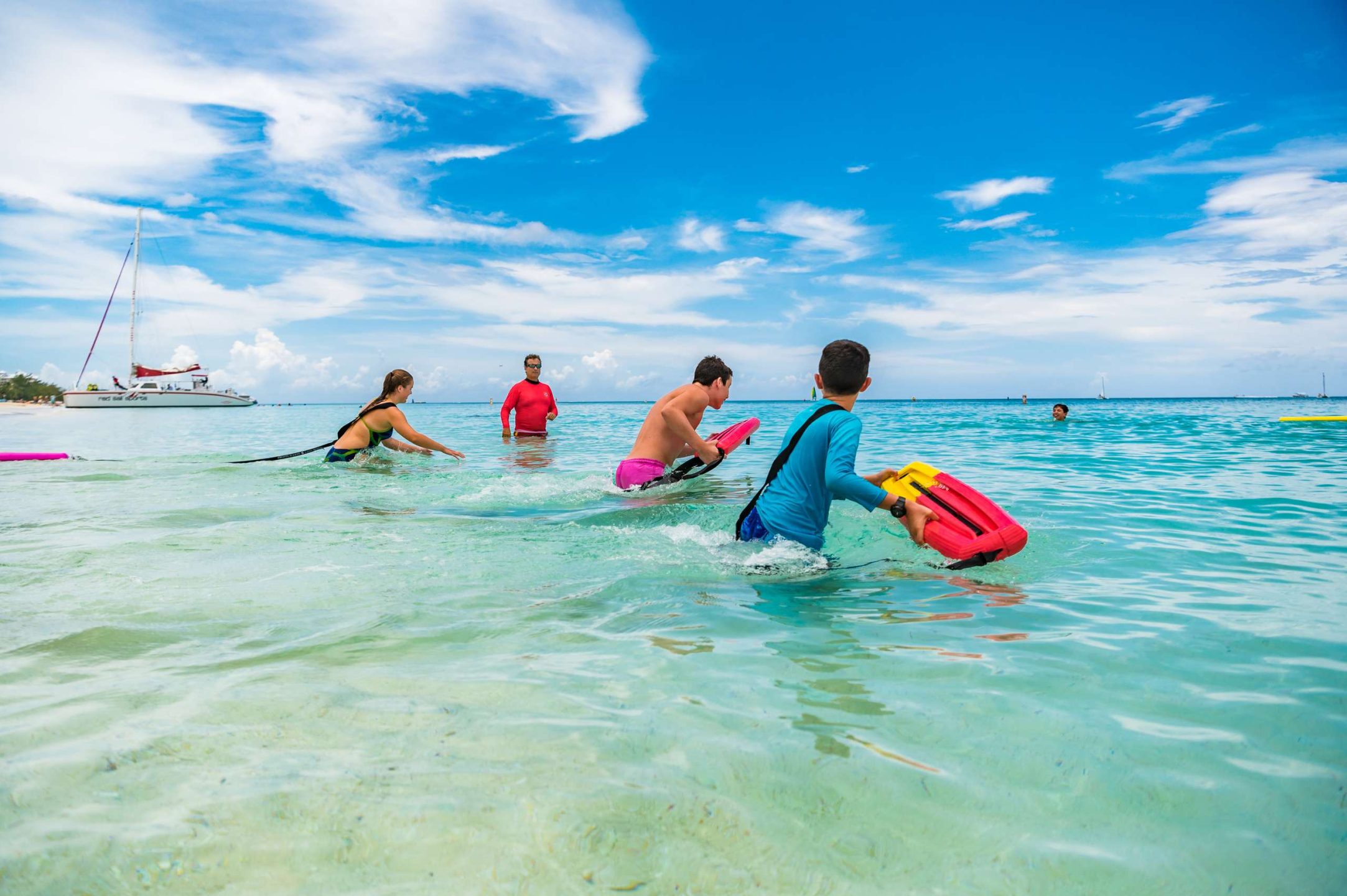
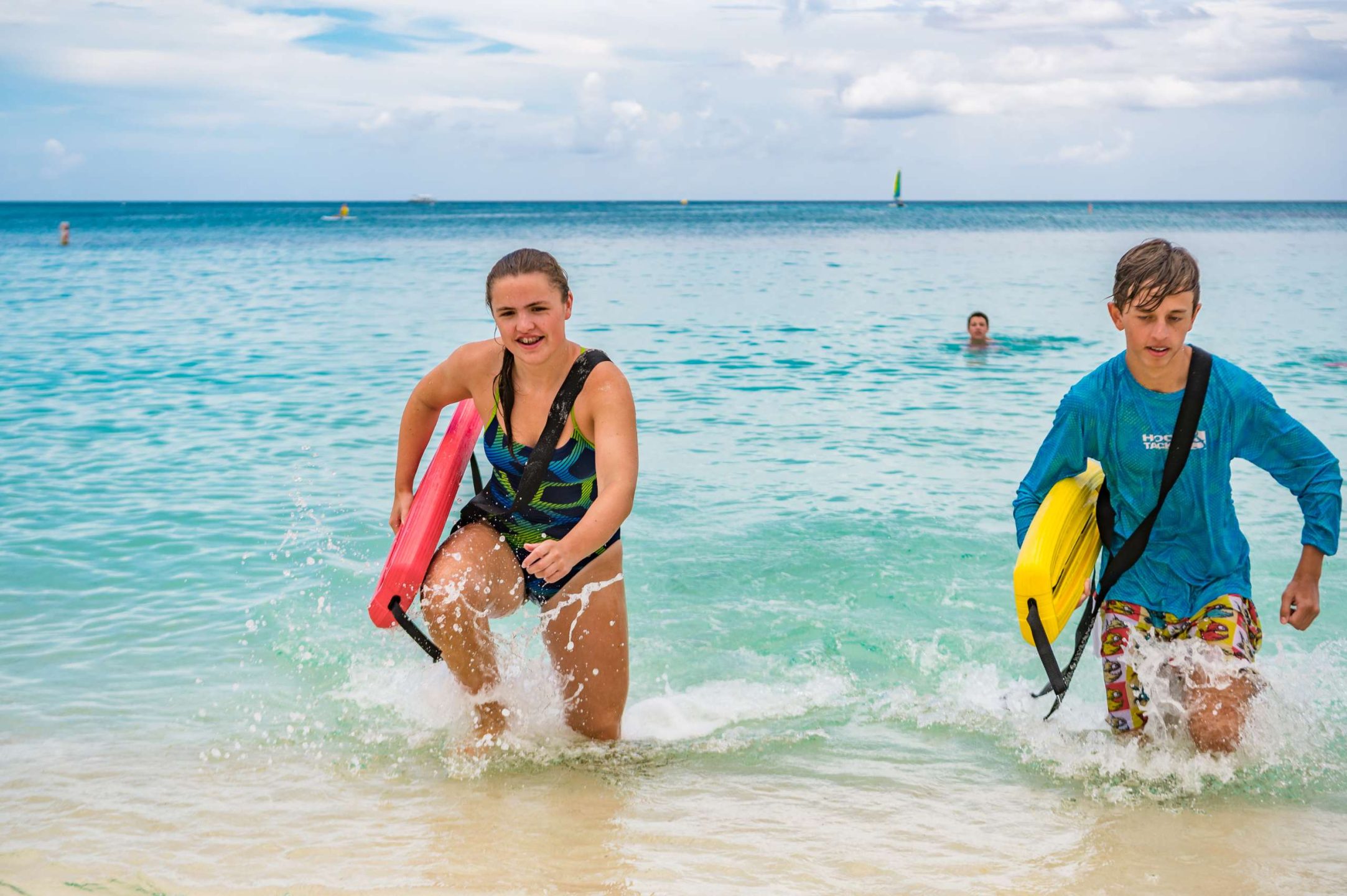
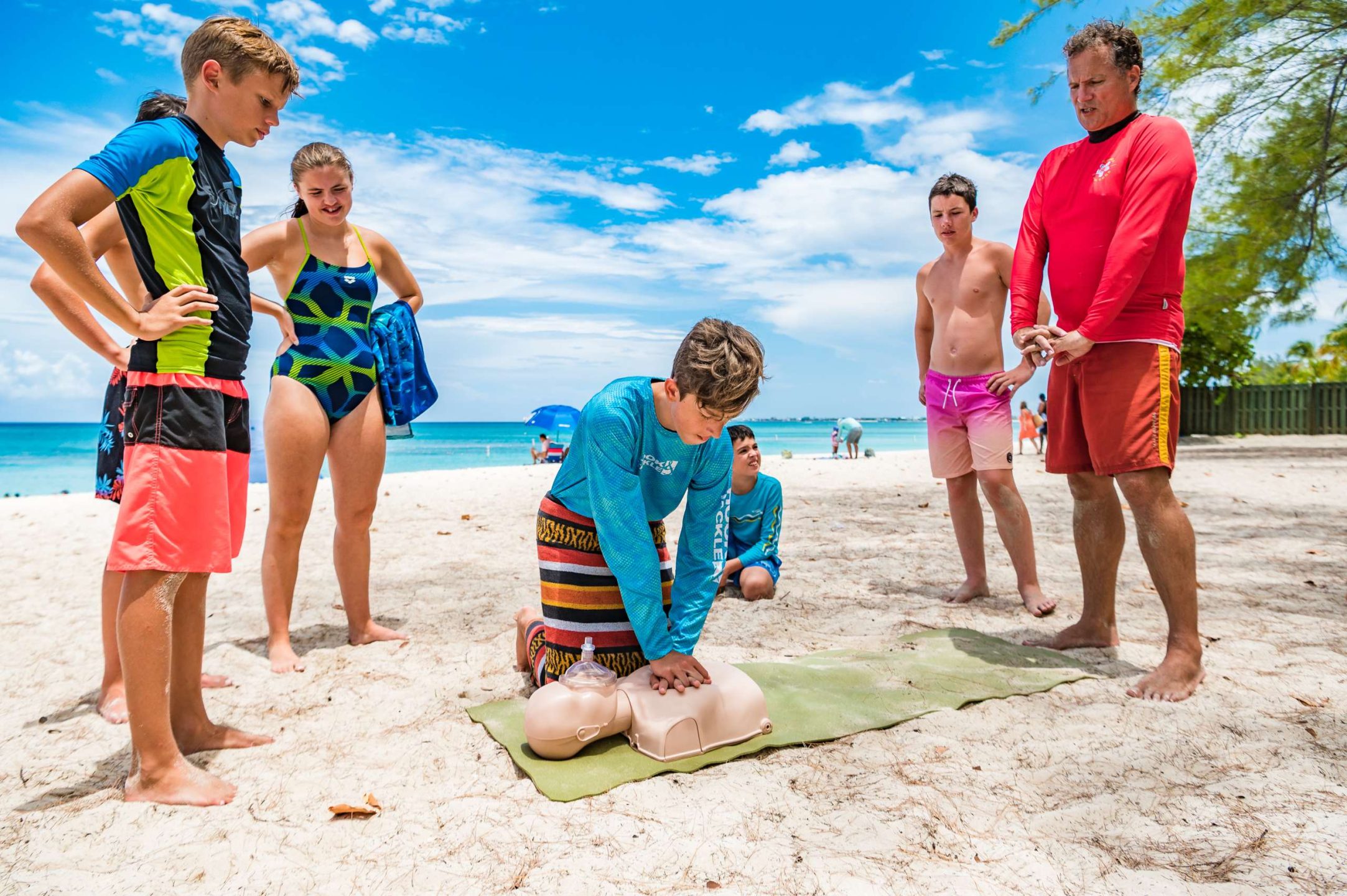
Aside from pushing for legislation on lifeguarding, he has been training scores of youngsters in lifesaving and first aid, using international standards set through the Royal Life Saving Society’s international branches. Last week a group of youngsters were on Seven Mile Beach training for their ‘bronze cross’ and emergency first aid certifications.
Amundsen wants to work with other organisations, including the Red Cross and the YMCA, and the government to create a national standard for lifeguards in Cayman.
Creating a youth culture of water safety with competitive ‘lifeguard sports’ – such as seen in Australia – would help provide a pipeline of young people to become future lifeguards, he said.
The biggest impact, he believes. will come through legislation, which helps create jobs and a minimum training standard.
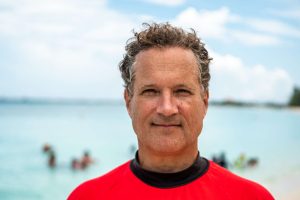
He said it would also make sense for youth workers, particularly those who supervised children in water activities, to be required to certify as lifeguards.
“Government support and legislation will take time as these things do,” he said.
“If the conversation starts getting a little louder perhaps the large resorts would see the writing on the wall. The government is thinking along the right lines and hopefully our data report will assist in providing public education not just to the government but to all of Cayman.”
All aboard
According to Ebanks, government is already on board and keen to push ahead with the idea.
He recognised there would be challenges but said he had seen too many deaths, particularly in the eastern districts, to let the issue continue to drift.
“The whole government is supportive of the idea,” he said.
“If we save one life, it will be worth it.”
Related Videos










What an absolute waste of taxpayers money.
The sea is not dangerous, a tiny number of people are unfit to swim and have accidents.
Oh…where to start with this? Taxpayers’ money? Sea not dangerous? Tiny number of people unfit to swim?
DHStephenson – maybe come over to our house for a week or so for a chat. Or maybe a big, long covid-esque zoom call, with lots of people tending their dogs and children in the background.
Lifeguards are a fabulous idea, especially given the massive number of people that will be visiting Cayman due to the mega structures that are now being constructed along the 7 mile beach corridor.
Mark Langevin unfortunately can’t predict when our where a water accident might take place. Therfore placing lifeguards at resorts would at least potentially eliminate a death were it to occur at the resort/or in nearby waters.
Lifeguards are a great idea indeed, please continue to pursue the concept Mr Ebanks!!!
Among the highest rates in the world? For starters, what does “among the highest“ mean? Next, compared to what? Austria? The statistics are meaningless in this article. A small island with a small population, and a disproportionate number of tourists who get in the water. Compare Grand Cayman to Jamaica, for example. How do they compare?
David S. Regrettably you’re mistaken and the Cayman Islands has a very high drowning rate. While you may think the numbers of drownings are small compared to other nations our drowning rate is amongst the highest. Cayman’s status as an Overseas Territory means we are not compared to other countries. Currently a Drowning Research project is underway in Cayman to create verifiable data and take appropriate action based upon the data. As a jurisdiction where tourism employs a large number of Cayman Nationals we should not be risking lives by placing our head in the sand and saying there is no problem. Nor should we ignore the employment opportunities that Lifeguarding can provide Cayman youth and adults. A final question, apart from the risk to tourists how many Cayman people can swim? I don’t think we have statistics for that either. I look forward to discussing the issue further. Kind Regards, Craig Amundsen
Most of the condos on SMB has 3-4 to no people in the water most of the time. I walk from Sunset Cove to around Public Beach 4-5 times a week and other than the 3 big hotels there is almost no one in the water, There is no reason for the condos to have life guards.
Question two, I suppose is how Mr. Edmunston makes his living? Is he paid to train lifeguards or promote them? If so, naturally he think’s they’re needed. In fact, his association with the lifeguard society implies that he’s far from impartial.
The whole thing looks like a desire to create a paying job (lifeguards). That’s not necessarily bad, but just come out and say it. And don’t necessarily put it on the backs of the resorts and condos.
Your comment about how many Caymanians can swim is productive. If that’s the issue, requiring swimming lessons in school makes sense.
But first, I’m curious, when you say, “ While you may think the numbers of drownings are small compared to other nations our drowning rate is amongst the highest”, what is the basis for that assertion? Research, or a study of some kind? I suggest waiting until the research you mention is complete, and basing response on evidence.