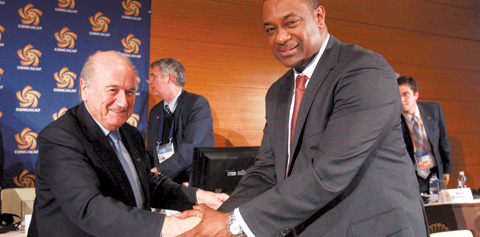
Allies of former Cayman football chief Jeffrey Webb were seeking to line up a $100 million ‘fighting fund’ to help install him as the top official in the world game, a court heard last week.
The revelations – from emails presented in the ongoing fraud trial of fellow football executive Canover Watson – demonstrate the hopes that Webb would succeed Sepp Blatter as president of FIFA.
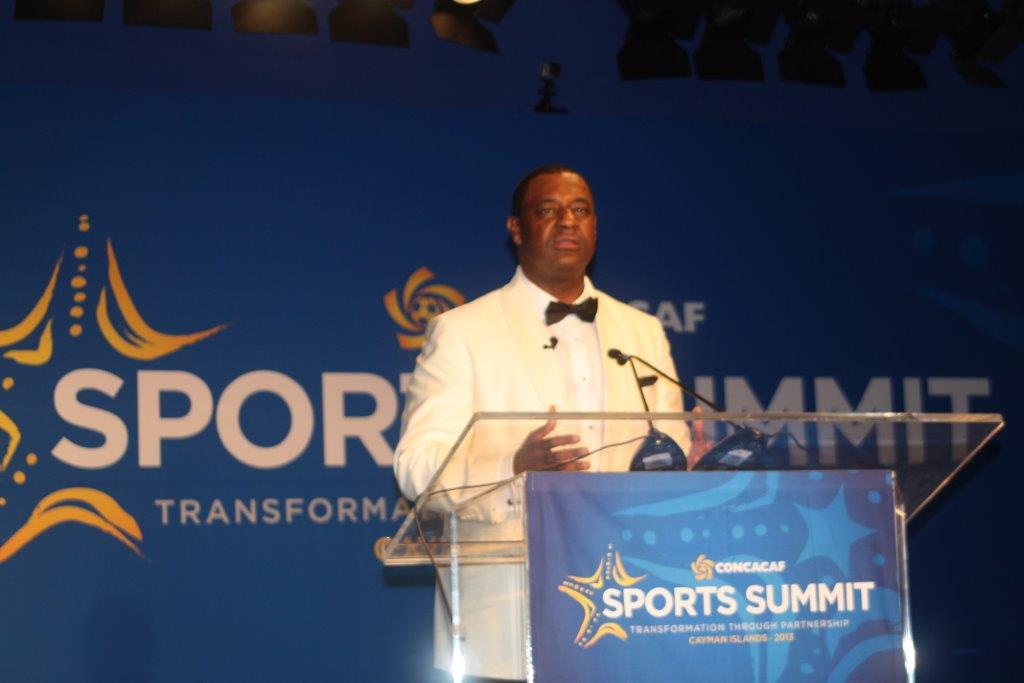
The emails between Fidelity Bank executives were written in the aftermath of a conference for global soccer leaders at the Ritz-Carlton hotel in Grand Cayman in October 2013.
In those emails, the bankers expressed their view that Webb, who was a vice president of FIFA at the time, had been “anointed” as Blatter’s long-term heir at the CONCACAF Sports Summit.
The controversial Swiss administrator, who led FIFA from June 1998 until his suspension in October 2015 following a corruption scandal, was believed to favour Webb because, unlike some of the European contenders, he would not look into claims of wrongdoing by Blatter.
In an email read out in court Friday, Anwer Sunderji, the now-deceased head of Fidelity Bank, apprised the bank’s executive committee of Webb’s likely career trajectory.
In the message, Sunderji claimed to have been told by Watson that Webb would need a “$100 MM” fighting fund to make a serious bid to succeed Blatter.
Testifying at Watson’s corruption trial on Friday, former Fidelity Bank CEO Brett Hill, who was one of the recipients of that email, claimed that “$100MM” was likely to mean “$100,000” rather than the international convention of $100 million.
The bank was following the progress of Webb, a former employee, closely, in part, because they had loaned the Cayman Islands Football Association $1.6 million under Webb’s presidency.
The loan secured by CIFA’s Centre of Excellence headquarters and football pitch, as well as personal guarantees by Webb and Watson, had been serviced only sporadically with payments covering mostly interest costs.
‘Gnashing of teeth’
Sunderji’s email on 23 Oct. 2013 described his view of the political infighting among FIFA officials in the succession of Blatter at the time.
Following a BBC story on Blatter backing Webb, he noted there was “a lot of gnashing of teeth, and concerns” the announcement had been made prematurely.
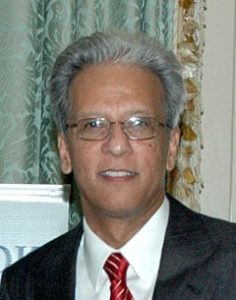
“There was subsequent backtracking by Blatter and Webb, but I think most observers would see Jeff as a successor, providing there is no dirt on him as the long knives are probably out,” Sunderji wrote.
“My own view is that Blatter does not want a European successor as he is concerned that they would investigate him, which could potentially taint his legacy, and Jeff is someone who would likely not pursue that option.”
Sunderji wrote that Webb had told him Blatter was not ready to give up the presidency, but that Webb, who had been lavishly praised by international political leaders at the event, was prepared to bide his time.
The chairman told the bank’s executive committee: “It is evident that Blatter is grooming him to be his successor. If Jeff plays his cards right, he could be the boss of FIFA in five years.”
Sunderji also expressed his view on key allies for Webb in the FIFA leadership election.
Tokyo Sexwale, the South African anti-apartheid activist and wealthy businessman who gave the keynote speech at the CONCACAF summit in Cayman, Sunderji wrote, “is the secret weapon to solicit African votes when the successor to Blatter is elected”.
War chest
The email, which includes detailed discussions with Watson on how the Fidelity loan to CIFA was going to be repaid, ends with the remark, “Canover [Watson] told us that Jeff needs a war chest of $100MM to run a campaign.”
While the campaign fund reference was ignored by the bankers, Hill told the court that the bank at the time had a cordial relationship with the two former colleagues Watson and Webb.
“We considered them friends and we were proud of them, as every other Caymanian was,” Hill said.
Details of the email exchange emerged during Hill’s evidence in the ongoing trial of Watson and Bruce Blake, two former Cayman football executives.
They are charged with a number of offences in relation to their time at CIFA and regional football body CONCACAF.
Watson has pleaded not guilty to receiving secret commissions, transferring criminal property and false accounting, while Blake has pleaded not guilty to money laundering-related and false accounting charges.
The trial, which is expected to last 12 weeks, continues Monday.
Cayman Compass editor James Whittaker contributed to this article.
Related Videos