


Prince Charles, eldest son of Queen Elizabeth II, has become King following the death of his mother.
As his mother had before him, when her father King George VI died in 1952, in accordance with royal protocol and rules of succession, Charles immediately ascended the throne after his mother passed away, on 8 Sept., at the age of 96. He is now King Charles III.
Queen Elizabeth II’s coronation did not take place for more than a year as she and the country marked a long period of mourning for the late King. The date of Charles’s coronation has not yet been announced.
He issued a statement within a hour of the Queen’s passing being announced, saying, “The death of my beloved Mother, Her Majesty The Queen, is a moment of the greatest sadness for me and all members of my family. We mourn profoundly the loss of a cherished sovereign and a much-loved Mother. I know her loss will be deeply felt throughout the country, the Realms and the Commonwealth, and by countless people around the world.
“During this period of mourning and change, my family and I will be comforted and sustained by our knowledge of the respect and deep affection in which The Queen was so widely held.”
According to UK media reports, succession plans dictate that Charles will make his first address to the public as head of state on the evening after his mother’s death and he will be officially proclaimed king at 11am the following day at St James’ Palace in London.
Within 24 hours of the Queen’s death, parliament is expected to gather so that lawmakers can swear allegiance to the new head of state.
The transition from queen to king will mean a change in phraseology in many instances. For example, ‘God Save the Queen’ will now be ‘God Save the King’, Queen’s Counsel will become King’s Counsel, the Queen’s Bottom – the term used to describe the seabed in the UK and its Overseas Territories – will be the King’s Bottom.
Charles has been the longest-serving heir apparent, having being first in line to the throne since he was 3 years old, when his 25-year-old mother became Queen. He is also the longest serving Prince of Wales in history.
At 73, Charles is the oldest person to become British monarch, a title previously held by King Edward VII, who was 59 when he succeeded his mother Queen Victoria in 1901.
His wife, Camilla, becomes Queen Consort, while his eldest son William, 40, now becomes first-in-line to the throne.
Over the past year, Charles has shouldered extra royal responsibilities, as his nonagenarian mother took a step back. For the first time during her reign, she did not open Parliament this year, instead her son took on the duty. He also took on the role she usually played at Easter Maundy Service, Remembrance Sunday, and the Commonwealth Day Service.
Charles’s personal life has been under scrutiny by the media and the public since he was a young man, even before his marriage to Lady Diana Spencer in a spectacular televised wedding ceremony in 1981. They had two children, William and Harry, before going through a messy, public divorce.
He and the royal family, including the Queen, faced public backlash after Diana died in a car crash in Paris in 1997. However, he rebuilt his image as a dedicated father and a future king in the intervening years. He married Camilla Parker-Bowles in 2005.
Earlier this year, the Queen showed her support for Camilla, saying in a statement that when her son became King, it was her “sincere wish that, when that time comes, Camilla will be known as Queen Consort as she continues her own loyal service” to Britain.
Charles, over the decades, has become known for championing environmental causes.
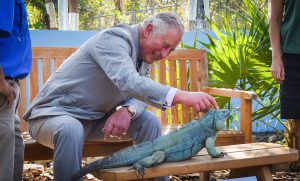
During his March 2019 visit to the Cayman Islands, this formed part of his farewell speech, when he delivered an impassioned call to action for Cayman to do everything in its power to protect its environment, stating that with the right management and protection of the islands’ resources, Cayman could “help lead the world and indeed the whole of nature out of this appalling crisis of our own making”.
Related Videos








I have read articles about how the UK currency will change given the passing of her majesty. How will the currency of The Cayman Islands change?
Anne Evans
[subscribers spouse]