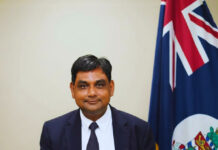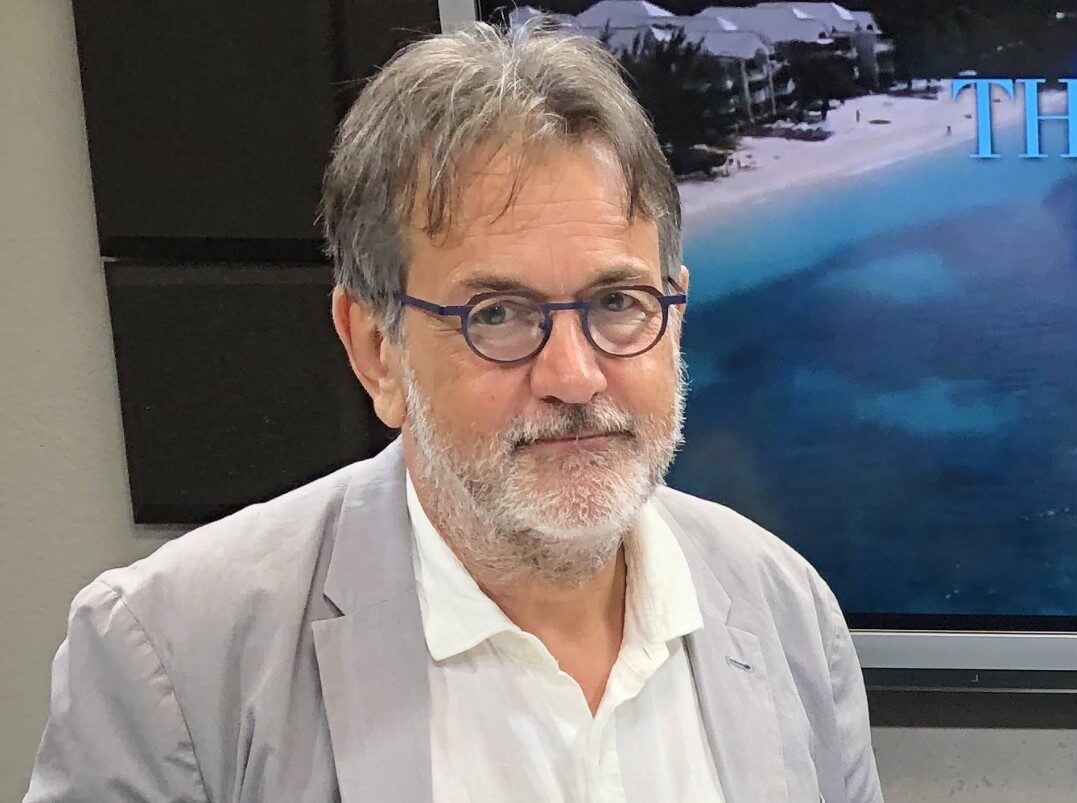
The resume of new Chief Medical Officer Dr. Nick Gent reads more like something out of a spy novel than that of a public health advocate. Over his decades of medical experience, he has dealt with everything from espionage-linked assassinations to advising on bio-weapons and Ebola.
However, despite the darkness Gent has come to know in his 30-year career, the international public health expert remains grounded through his love of books, music, his family and, of course, his 2-year-old granddaughter Sophie.
Gent formally assumed the post of Cayman’s top health expert on 10 Oct. and since then he has been getting the lay of the land with the aim of drawing on his specialised skillset to prepare local healthcare professionals for the changing world of modern public health.
“I see [as] the chief medical officer, you are the senior public health person, and public health is a very, very ‘broad church’. Wherever there’s something that can be done to improve the health of the population… whether that’s avoiding disease, whether it’s improving the quality of life, if it’s improving the length of life… these are all things if there are the interventions, they are of interest to public health,” Gent said, when he appeared on the 19 Oct. episode of the Cayman Compass Facebook talkshow ‘The Resh Hour’.
An East Lancashire lad with a family of doctors
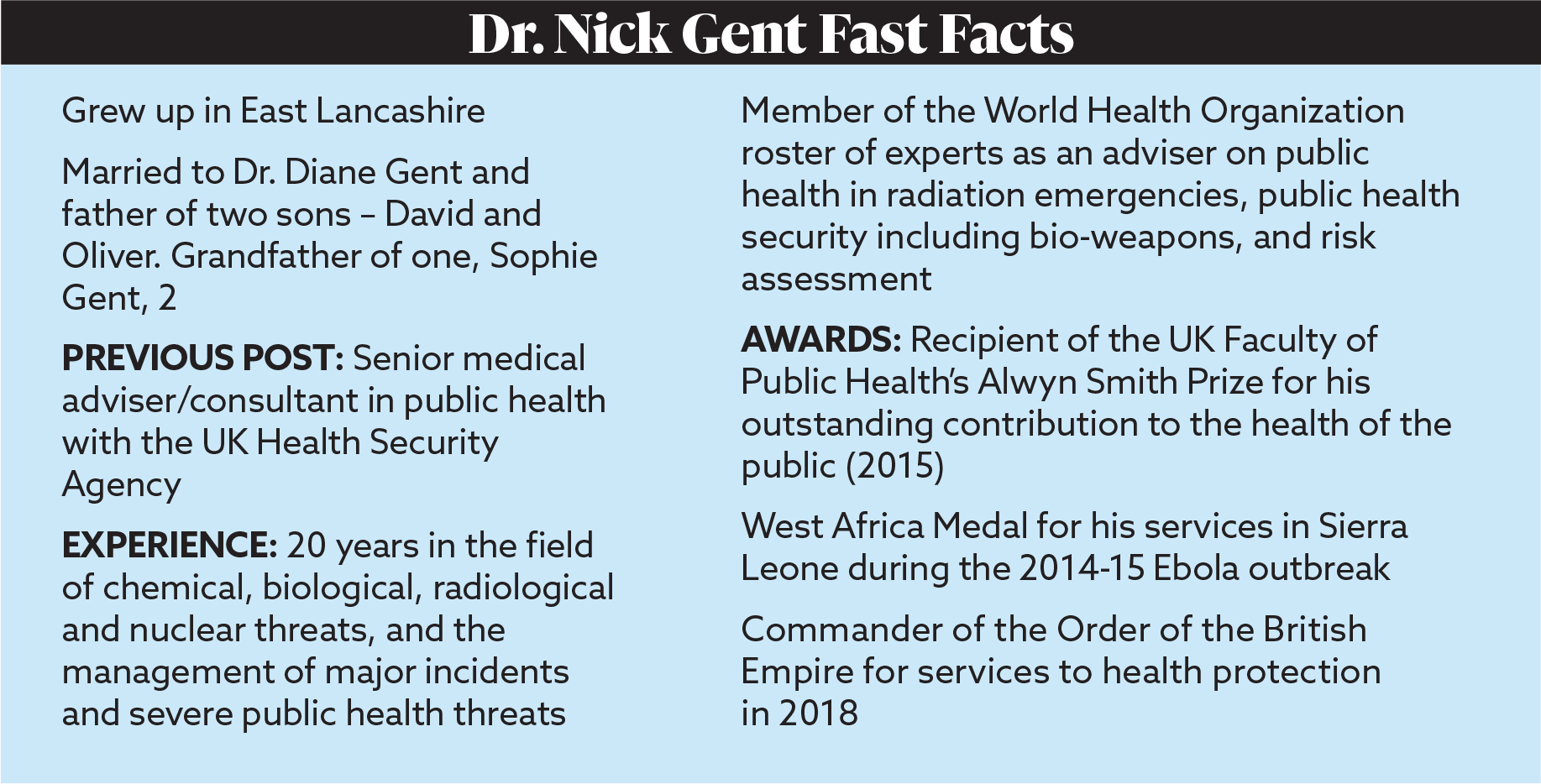
Gent, who was awarded a Commander of the British Empire in 2018 for his work in public health, grew up in Bolton, East Lancashire.
It was while studying medicine, during his very first term at the University of Liverpool, that he met his wife Diane, who is a general practitioner.
“We’ve been together, oh, too long to count now,” he said laughing, adding that they are “very, very happy, very good”.
He said they moved to the Lake District and lived in Grange-over-Sands for a long time where they bought an abandoned hotel they converted into their family home to raise their sons Oliver and David.
Though he said he is missing the hills already, Gent, who is accustomed to a seaside life from Grange-over-Sands, said he is enjoying swimming in Cayman’s pristine waters which has been wonderful especially since he “wasn’t stood huddled in front of a fire after”.
“When I got out it was lovely, warm, clear. It was beautiful and relaxing. I think I’ll be doing an awful lot more of that,” he said.
Though this is his first time in the Cayman Islands, Gent said his son Oliver, a wealth manager in London, has visited before and has been preparing him for this new turn in his career.
His son David, he said, followed in the “family business” and is also a doctor.
Gent added he is no stranger to local public health officials as he has been supporting UK Overseas Territories like the Cayman Islands with various elements of specialist advice during the COVID outbreak.
“I was head at the mathematical modelling side of things – so a lot of the modelling and intervention, planning stuff and also quite a lot to do with vaccines. So I’ve been on many calls with Cayman,” he said, adding that had he known he would end up here, he would have worn a tie on one of his calls with Cabinet.
He recalled that during that particular meeting, he was wearing a “tatty T-shirt”; now he says he wishes he had worn a tie.
He did share that he commenced his stint a week later than planned as he had a kidney infection.
Gent said it was an experience for him as he was hospitalised at the same facility he worked at when he was a young doctor.
From lifesaver to life preserver
Gent’s career has been wide and varied, ranging from a practising physician to a public health expert working extensively on analysing, responding and preventing chemical, biological, radiological and nuclear (CBRN) threats on the ground in the UK and around the world.
He recalled how his view of life changed somewhat with the assassination of Russian spy Alexander Litvinenko in 2006.
Litvinenko was poisoned with radioactive polonium-210, which was believed to have been administered in a cup of tea.
The father-of-one was being paid by MI6, the British Secret Intelligence Service.
Having worked on that case, Gent said, he has been operating at a level of preparedness and strategising how to prevent such attacks.
“I’m having to be paid to think about people doing unthinkable things to [other] people,” he said, adding that in that world “you live a life of essentially distrust which is not who I am”.
Gent also worked on the Salisbury poisonings in the UK which prompted a national emergency when former Russian agent Sergei Skripal, his daughter Yulia and a police officer, Nick Bailey, were exposed to military-grade nerve agent Novichok in 2018.
It had been smeared on Skripal’s front door knob.
Gent said at that time he already had experience with people using a lethal weapon in a public place. Incidents like that, he said, can be taxing as they involve intensive, long hours.
While it was very strange to see that happen again, he said it was not all too surprising.
“That was a very unusual experience, clearly tragic in the case of the one person who died and life-changing for all the other people who were severely poisoned, but also traumatic to a whole community… there’s a sort of existential nature… somebody has come and used a chemical weapon in my town,” he said.
Gent said while he hopes he does not have to use those skills nor his experience with highly infectious diseases here in Cayman, the reality is anything is possible, which is why preparation is critical.
He explained that he has experience in managing “high consequence infectious diseases” and the various associated public health responses.
“I’ve got all that experience of working around issues of ionizing radiation threats,” he said, explaining it is used “in the civilian world. We use it for diagnostic purposes and I think it’s quite possible that we will be having therapeutic use of ionizing radiation on island in the future, and that brings a new set of safety concerns. So being able to talk and understand those kinds of threats I do not think is going to be a loss to Cayman,” he said.
As he settles into his role, Gent said he has identified some priority areas, such as strengthening the local epidemiology services, knowing what the state of health of the population is and “being able to monitor it and being able to see that we are improving it”.
“We need some hard objective measures as to people’s fitness, the likelihood that they are going to develop illnesses during the course of their life because of their lifestyles. We need to be able to monitor them for acute incidents, so things like the notifiable infectious diseases that can get really, really slick,” he said.
He said he is also very interested to see how the population’s mental health and welfare “stood up to COVID” and with life getting back to normal, how well people bounce back with their mental health.
Related Videos