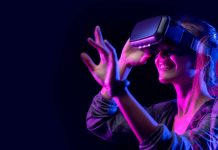
The metaverse – a three-dimensional immersive virtual space – is often described as the next iteration of the internet.
Since Facebook rebranded to Meta and doubled down on early billion-dollar investments into virtual reality, such as headset manufacturer Oculus, has the vision been hyped as a unique future form of human experience.
The economic and business promise of a persistent virtual world – so far only basic and disconnected virtual spaces exist – is in part based on the concept of digital scarcity, says PwC’s Anthony Zamore.
In the physical world, items derive their value from scarcity and they are scarce because there is a cost to producing them.
In the digital world, items are just information or data that can be copied over and over again at almost zero cost, Zamore explained at the ‘Into the Metaverse conference’ earlier this month.
That means for something to have a value in the virtual world, until blockchain technology came along, scarcity had to be created by a centralised authority that set the price for goods or services.
Computer games, like Second Life, created their own unique intra-game economy almost two decades ago. Software company Linden Labs insisted that Second Life is not a game, but a place of role-play escapism for users that control their own unique avatar through this virtual world. For some, it is an early version of a metaverse.
But the vision of the metaverse goes beyond that of a software controlled by one company. It is rather an internet-like virtual 3D world that also connects to the physical world and that allows digital assets to be used anywhere, not just in confined software environments.
In Second Life, the price of goods that could be purchased in the world is dependent on the rules set by the software maker and the digital assets are, as such, ‘stuck’ inside the game.
However, since the advent of blockchain technology it is possible to create digital assets without a centralised party.

“In 2009, Bitcoin was the first application of this concept, where for the first time in history, you have a digital commodity with natural scarcity,” Zamore said.
“After Bitcoin, the next huge innovation was in 2018, the creation of a standard for non-fungible tokens. This took the concept of scarcity to the next level.”
As an extension to the concept, Zamore said, there are important ideas that will underpin the metaverse economy and non-fungible tokens (NFTs) play a key role.
The first is that in the future metaverse, digital worlds will be interoperable and digital assets or representations, like avatars, can be taken from one world to another.
NFTs are unique digital identifiers that are encoded on the blockchain and cannot be altered. As such, they can be used to demonstrate property ownership and the provenance, or ownership history, of digital assets.
That makes digital assets easily tradeable and allows them to be transported from one digital world environment to another.
Another important idea underpinning value in the metaverse will be signalling, Zamore argued. In other words, the fundamental human need to signal our desirability to others.
“An NFT is a form of digital signalling that would allow people to efficiently and reliably display their value to others.”
This is already exemplified in digital art NFT collections, like cryptopunk or bored ape, which fetched huge sums of money for little apparent reason, other than speculation and as status symbols.
Just like the smartphone dematerialised all kinds of devices from desktop computers, scanners, cameras and watches into apps on the phone, Zamore said, the metaverse will enable us to dematerialise entire economies and realise value by replicating them in a virtual environment.
Related Videos