Sitting in an auditorium during a conference break, I can hear the familiar chatter of a dozen people. Old acquaintances meet again, other event participants are trying to make new ones.
“Is that you? Where are you, I can hear you, but I cannot see you?” says a woman with a Caribbean accent that I cannot place. “Wait, stay where you are, let me come to you?” another responds.
I am looking left and right to see who the two people are. About 20 or so have huddled by the stage, their voices muffled.
Then I can see from my chair the two ladies in a nearby aisle awkwardly bumping into each, laughing. “Wait, how do we shake hands?” says one wearing a bright yellow dress. “No, that does not work, let me try this. Oh no.” Giggling, their movements resemble meerkats, their bodies upright, stiff and rotating, as if on the lookout for danger.
“This is fun,” they conclude and continue to compliment each other on their attire.
I watch other delegates walking around, stretching their legs.
Except, at this conference, all the legs are virtual.
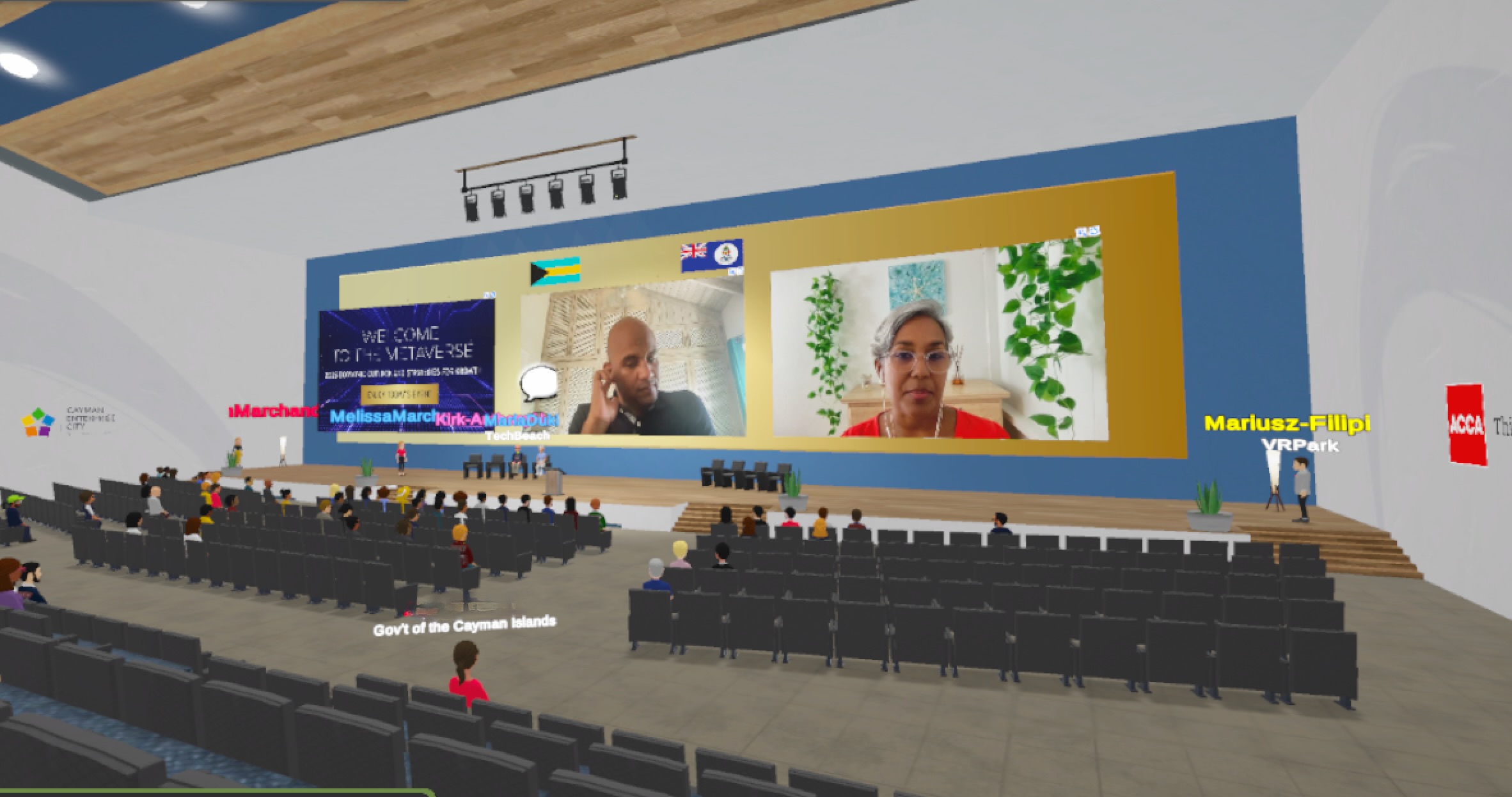
Everybody attending is represented by a unique avatar. Name tags are redundant, as over each computer character hovers the name and organisational affiliation.
No more bending forward with squinting eyes to identify who we are talking to.
We are in a three-dimensional computer world in the form of a tropical island. A pirate ship is moored in a bay outside the conference hall. There are various buildings dotted around the place, with meeting rooms, the conference hall, rooftop cafes and exhibition areas where vendors advertise their services and trade.
All can be freely explored by simply walking the avatar through the virtual world or choosing where to go to from a drop-down menu. To speak to someone, one simply walks up to them and talks using the computer microphone.
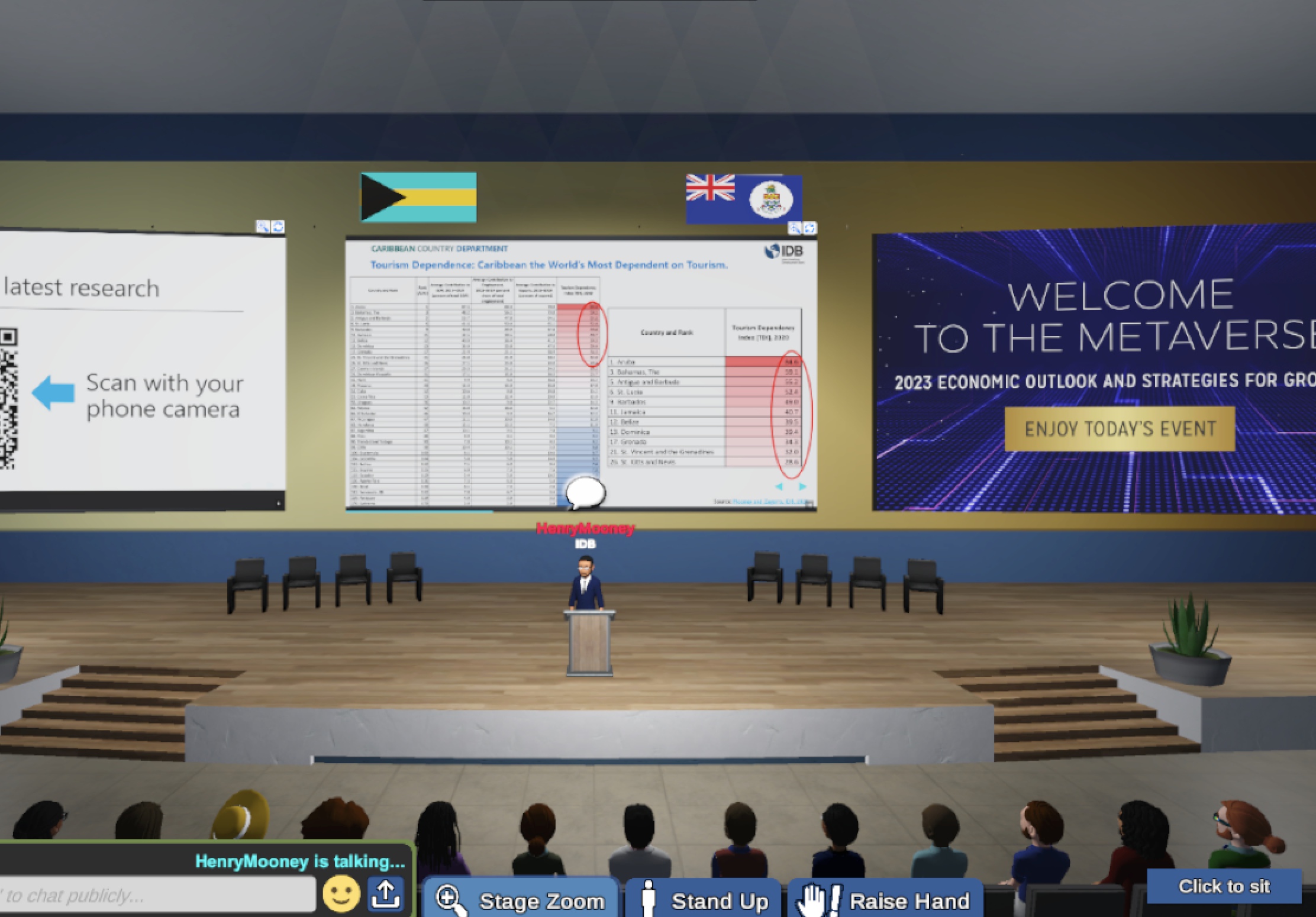 In the auditorium, delegates can sit their avatar in a chair and zoom in on the stage. Even the speakers are little computer figures taking a seat or standing behind a podium. In some cases, their real-world selves appear in an oversized video screen above the stage. Others narrate over PowerPoint presentations.
During the question-and-answer sessions, delegates can raise their virtual hands, and, when prompted, unmute their mic and ask their questions. Just like in the real world.
For computer gamers, the experience is very familiar and intuitive. For others, it is novel and indeed fun, even if one cannot find the short-cut to shake another delegate’s virtual hand.
However, for everyone, the application of this technology in a business context is entirely new.
Breaking new ground
Marla Dukharan, who organised the ‘Into the metaverse’ conference, says there are already many applications for a 3D-rendered setting from cultural institutions like museums to education.
Each year, the economist hosts an economic outlook event to give her forecasts for the following year. She is always on the lookout for new approaches to deliver this content.
Eight years ago, Dukharan first implemented a webinar software. “A lot of people then were like, we don’t know what that is. We don’t want to use any software. We don’t want to download anything. And now, eight years later, after the pandemic, this is our life, right?”
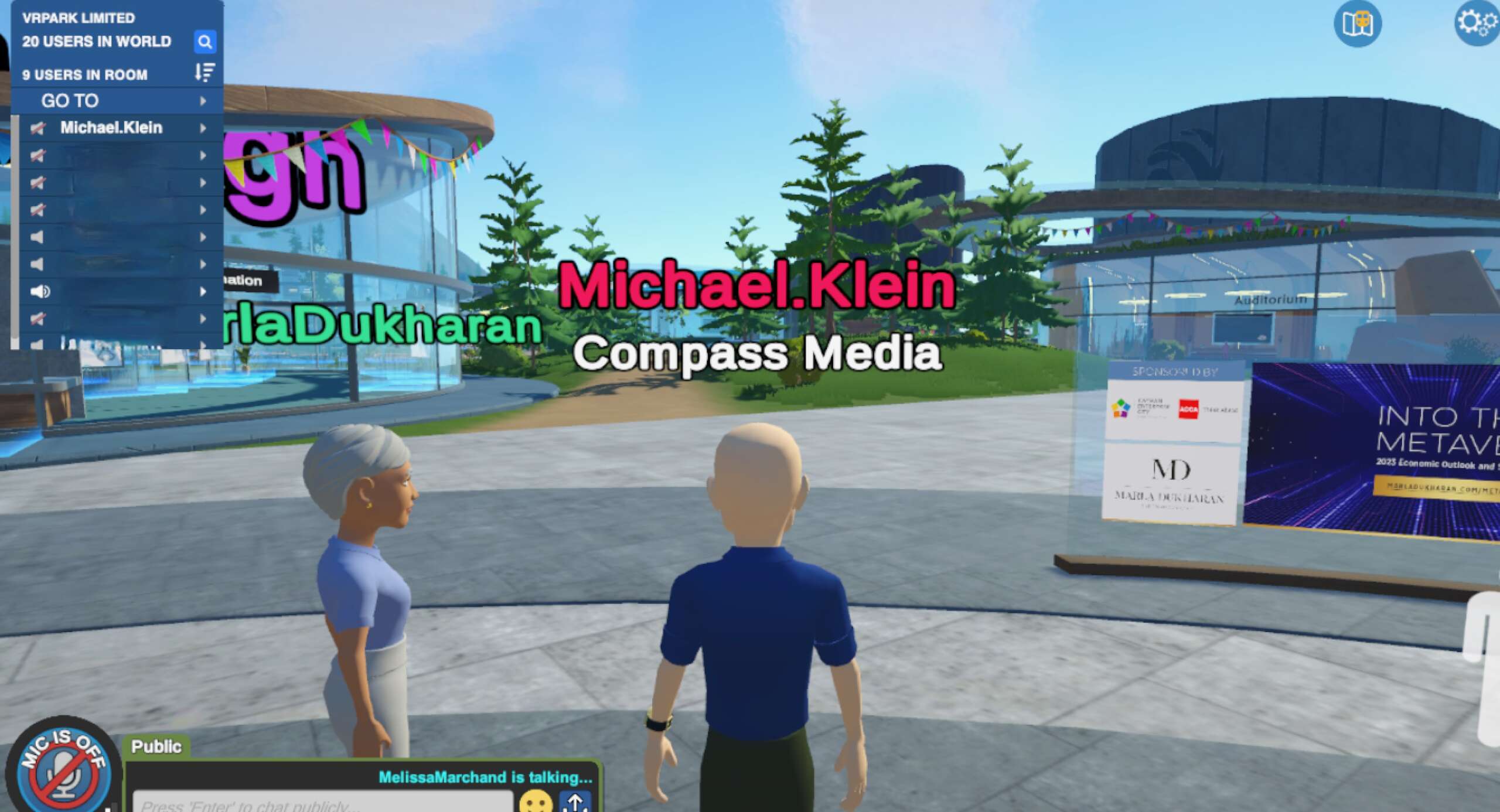 She says there are bonuses to a technological alternative over an in-person event, avoiding the need for delegates to fly in or find accommodation, particularly for a conference that does not last a full day.
“I don’t do a very long event and the whole carbon footprint of that just, to me, didn’t make sense.”
At the same time, Dukharan did not want to organise another Zoom call, reminding participants of the drudgery of work meetings, she said, adding that engagement in the metaverse was simply more fun.
Not having to appear in person on a video call was, for many, another plus, she said.
“Somebody’s got to take the leap and jump in, and we thought: why not?”
Tech investment needed
Speakers at the event argued that, in the Caribbean, the adoption and use of technology is essential for economic progress to overcome geographical limitations in terms of size and remoteness.
Henry Mooney, economics advisor at the Inter-American Development Bank, pointed to productivity levels that have been declining in the region for decades due to insufficient or inconsistent investment.
An IDB study had shown that to get the “biggest bang for their buck”, countries needed to invest in digital telecommunications infrastructure.
“Digital communications, [for example] like us here today in a virtual conference room, is the new aeroplane, is the new ship. It is the new way of bringing people together and taking advantage of what islands in the Caribbean have to offer,” Mooney said.
Kirk-Anthony Hamilton, founder of Tech Beach Retreat, has no doubt that technology like the metaverse will be used in business in the future, even if the exact iteration may not yet be clear.
He said the event had “certainly been eye-opening” and there were numerous applications he could see, for example, in tourism.
“If you were to create these metaverse-type virtual experiences where people could have some taste of what is available, then there’s a potential to attract even more people.”
Media reports about people buying land for absurd amounts of money in these virtual spaces really did not capture the essence of what people are trying to achieve, he added.
“The metaverse, as I see it, is really just about making the virtual world more interactive.”
At this stage the technology is still in its infancy, Hamilton said.
“It doesn’t matter what it looks like right now, what we need to start believing in is what it looks like tomorrow.”
Related Videos