

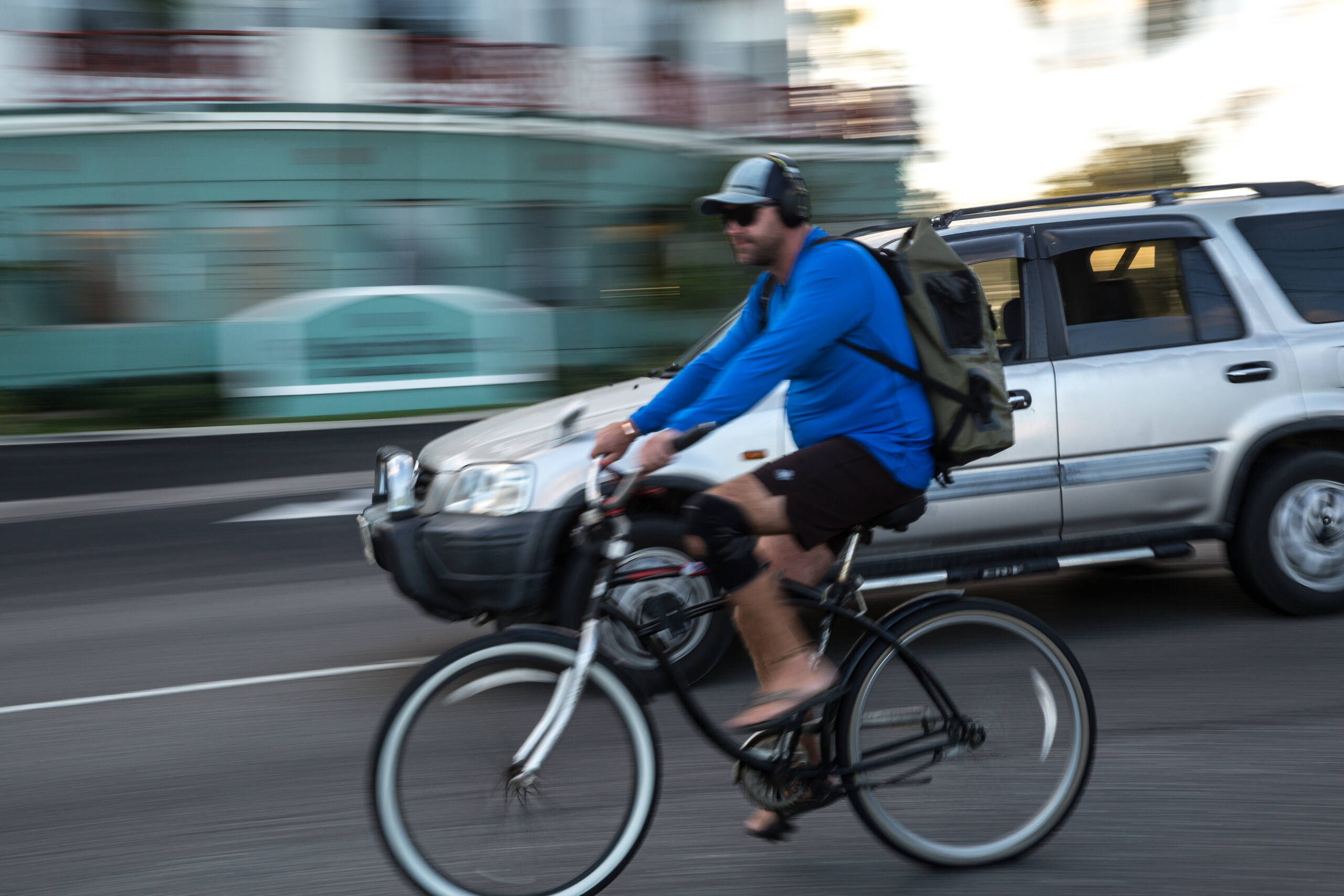
A sustainable transport plan for Grand Cayman must consider all possible modes of mobility – from walking and biking to mass transit and sea ferries.
That was one of the conclusions of a preliminary report from Canadian firm RPI Consulting Ltd, which is seeking to work with government on a feasibility study on how to transform the way we move.
The document urges Cayman to reframe its traffic problems as a broader development and transport infrastructure issue that can most easily be solved with a coordinated strategy.
“The proverbial ‘silver bullet’ solution likely does not exist,” Roger Power, one of the consultants, told the Compass in an interview.
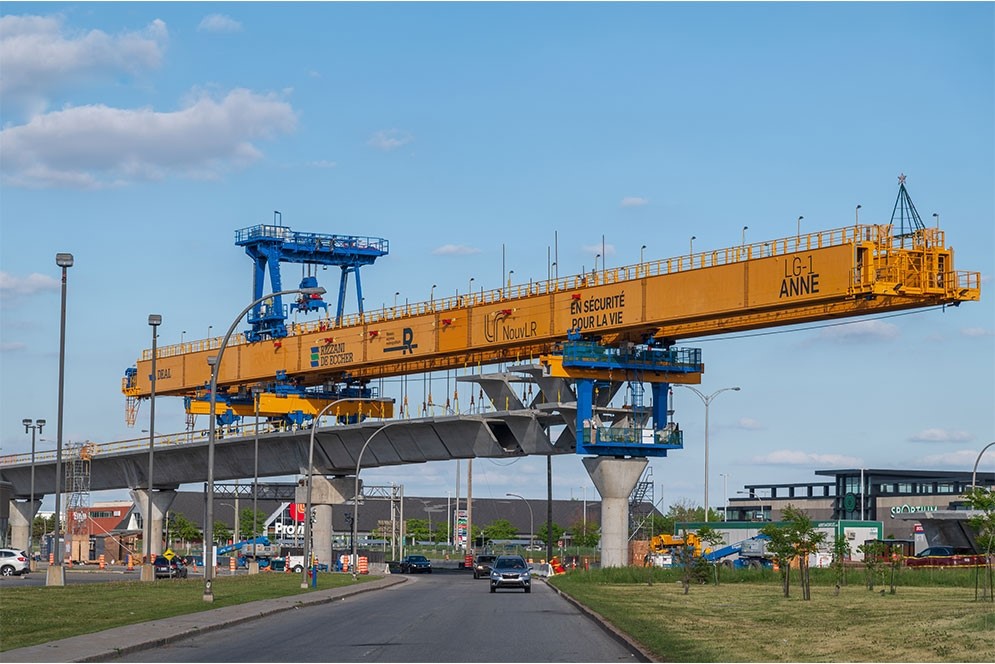
He argues for an integrated approach that contemplates making mass transit separate from the road system – either by creating specific bus lanes or through utilising an elevated light rail network that allows passengers to bypass the traffic.
“There is discussion about adopting a bus system, which by itself may not yield the results expected without additional policy or infrastructure changes,” he said.
“A bus sitting in traffic does not reduce congestion. A bus in its own lane able to bypass traffic has the potential to provide value.”
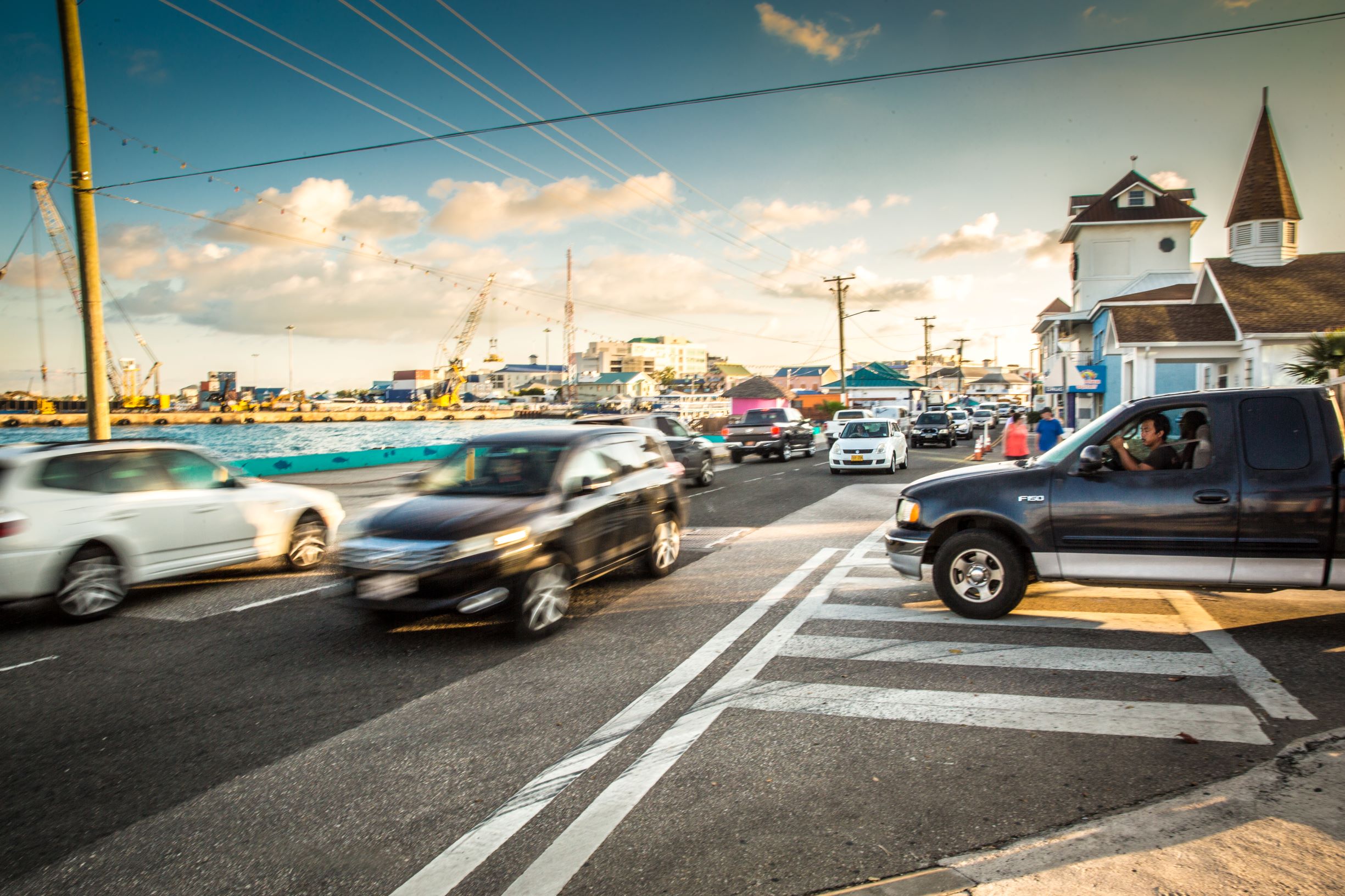
He said other areas had used light rail or similar mass transit options, strategically locating stops and stations to reduce the need for journeys.
Tony Sutton, fellow consultant with RPI, said the best approach likely involved sensible urban planning that cut down on urban sprawl. Right now Cayman’s traffic problems are exacerbated by the fact that most people live in distinct residential neighbourhoods and travel to work and school in George Town.
‘Solve this for our grandchildren’
RPI was alerted to Cayman’s traffic challenges by businessman Curtis Eldemire, who said he was frustrated with the lack of action on a key concern for island businesses.
He said he had reached out to the firm in the hopes that they could develop a long-term solution for the islands. Eldemire, who closed his water-sports business after COVID, does not believe the issue is one that can be solved overnight, or even within an election cycle.
But he said the process of redesigning how we move needed to begin soon to avoid the issue growing exponentially as the island’s population continues to multiply.
“I am an 11th generation Caymanian, 300 years on the island, and I am tired of band aid fixes and band aid solutions,” he said, “I want to solve the traffic problem for my grandkids.”
RPI’s initial report touts the opportunities inherent in investigating a holistic solution to Cayman’s transport issue. Rather than focusing on building roads or improving public buses, the company suggests Cayman take a bigger-picture look at mobility.
The company is pitching its services to undertake a wide ‘feasibility study’ of the possibilities for the island and circulated the document among government members early last year.
One of the challenges, said Power, is Cayman does not have a single agency with responsibility for the issue.
He said it had been tough even to find a dedicated point person within government to approach. The company has been on the look-out for a request for proposal, but has yet to see anything that fits the bill for what it believes is required.
Deloitte has been hired by government to look at possible improvements to the public transport system.
The National Roads Authority meanwhile is working on a series of expansions to accommodate growing numbers of vehicles on Cayman’s roads.
Power said successful strategies in other areas had considered road construction and public transport as two aspects of a much wider analysis that considered town planning, development guidelines, cycle and footpath infrastructure, and mass transit alongside infrastructure improvements.
“All modes of mobility need to be examined here,” he said. “Everything needs to be on the table.”
The cost of doing nothing
Power added that any analysis must also examine the cost of a ‘do nothing’ approach. He believes the quality-of-life impacts and business costs of allowing traffic to continue to go unchecked could outweigh the financial costs of a well-planned and coordinated system.
“The population has doubled over the past 25 years and there is no reason to believe it won’t double again in the next 25 years. What is Cayman going to do with 25,000 more cars on the road? The Cayman Islands could still be trying to solve this problem in 50 years if it doesn’t start now.”
Sutton said the best solutions for transport were closely integrated with planning and development policy.
Creating mixed-use zones that allow people to live and play where they work is fundamental. Beyond that, look at transit-orientated development, that optimises mass transit, such as light rail, so that the majority of homes and work spaces are within a short journey of a station.
Their report emphasises that transportation is a component of long-term policy planning – not the other way around.
“If public transportation is to succeed it must be reliable,” Sutton said.
“People must be able to rely on it as they do with existing transportation modes; it has to demonstrate value. If not, there is no incentive to change behaviour.”
Related Videos









“One of the challenges, said Power, is Cayman does not have a single agency with responsibility for the issue.” So is Mr. Power saying that the Ministry of Tourism and Transport does not consider itself responsible for ground transportation performance, solutions and plans for the future? What do Minister Kenneth Bryan and Chief Officer Stran Bodden have to say about that?
Fully agreed. And could we please put a stop NOW to that ridiculous suggestion of a road any where near the Mastic Trail. Making it quicker to get to Hurleys roundabout in the morning is madness. Please help them see sense.
“A bus sitting in traffic does not reduce congestion. A bus in its own lane able to bypass traffic has the potential to provide value.”
The roads aren’t wide enough to accommodate a bus lane, which will be empty 99% of the time. And if we’re going to build an extra lane then that in itself will reduce traffic.
Of course it’s only partly true that a bus sitting in traffic does not reduce congestion. Of course it helps if it takes 40 car drivers off the road and into one vehicle.
So we need reliable, larger buses that actually follow their routes, not deciding not to go to Northside because there might not be any passengers there. The buses need to run at night as well.
Of course, as I have written multiple times, the major traffic jams are at AL Thompson and Hurleys roundabouts. Install flyovers (overpasses) and 80% of the traffic will disappear.
Just some suggestions: have all high school children living East on buses; let all workers who can (including parents/helpers who would normally drive kids to school) work from home – those cars are off the roads. Satellite offices in other areas on island – e.g. firms/departments that do not necessarily need to be in GT could have a small branch office in Bodden Town, or Breakers, so those workers who wish to, from from Savannah, can go East – opposite way of GT/traffic – and those driving from East End would not need to go all the way to GT. In addition, businesses in those areas may have more customers and may create more jobs with an influx of GT workers. If there are satellite offices then companies can also elect to downsize their GT rented office spaces (to subsidize any branch office); see Bermuda ferries: https://www.bermuda4u.com/transport/ferry-service/ They work – I used Bermuda ferries for over 5 years and they were a great way to get to work.