The Financial Action Task Force (FATF) has expressed concern that the Cayman Islands has not yet fulfilled an agreed action plan to remedy deficiencies in its anti-money laundering regime and said it will consider next steps, if all conditions are not met by June 2023.
In the wake of its plenary meeting held 22-24 Feb., the global standard setter for anti-money laundering (AML) noted that Cayman had taken steps to advance money-laundering prosecutions and to achieve convictions in complex cross-border money-laundering cases.
However, the islands still need to continue their work by demonstrating that all types of money-laundering cases, in line with the jurisdiction’s risk profile, are prosecuted and that “such prosecutions are resulting in the application of dissuasive, effective, and proportionate sanctions”.
An update on Cayman’s progress issued on 24 Feb. stated: “The FATF expresses concern that the Cayman Islands failed to complete its action plan, which fully expired in May 2022. The FATF strongly urges the Cayman Islands to swiftly demonstrate significant progress in completing its action plan by June 2023 or the FATF will consider next steps if there is insufficient progress.”
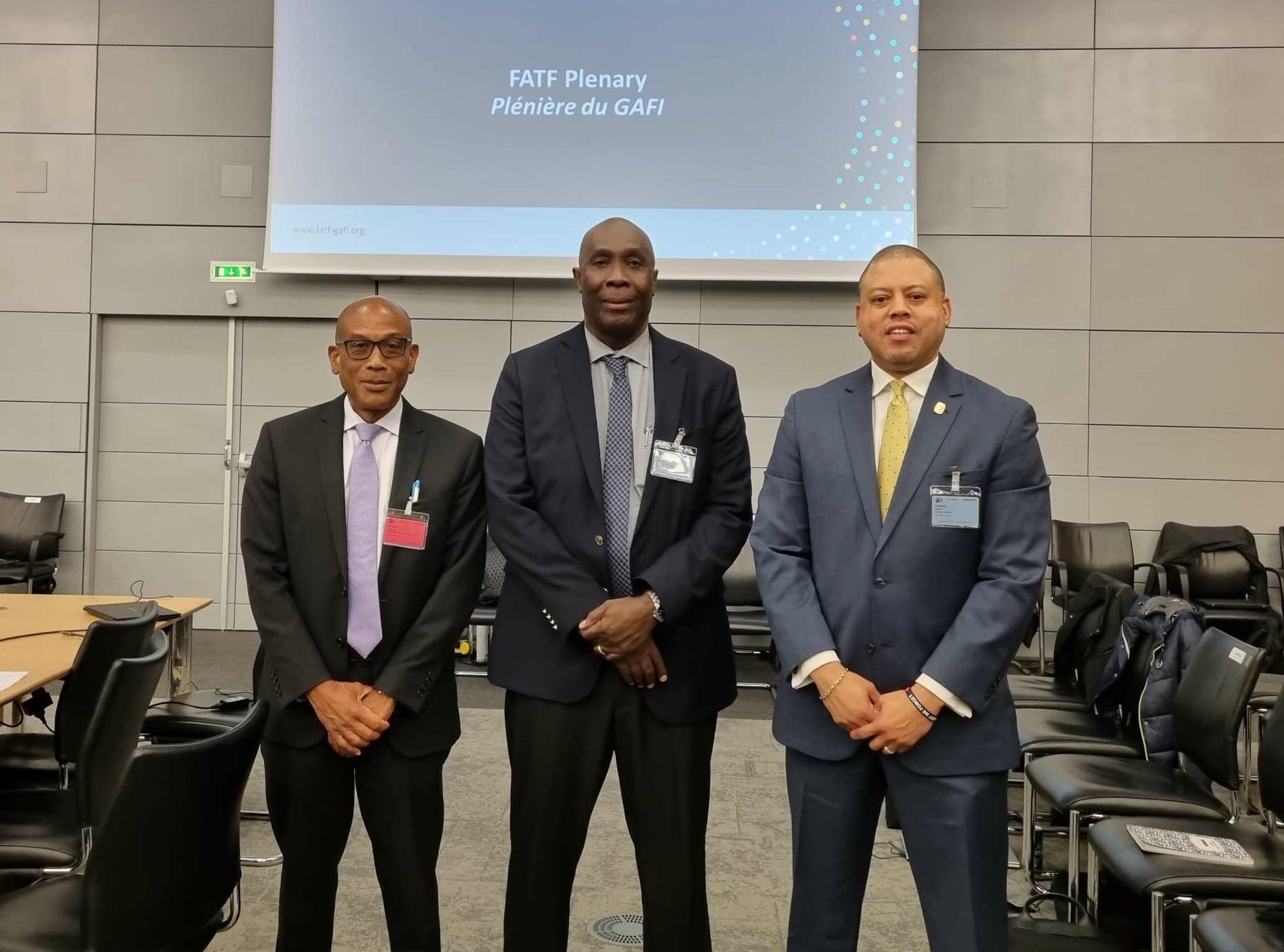
Having attended the plenary in Paris, Minister for Financial Services André Ebanks said in a press release that the Cayman Islands government is pleased that the FATF has noted the continuous progress toward completing the final recommended action regarding investigations and prosecutions of money-laundering cases.
“Our aim is to demonstrate significant progress in time for the FATF June plenary, and therefore avoid the need for FATF to consider next steps for insufficient progress,” he said.
In February 2021, the FATF added the Cayman Islands to a list of jurisdictions whose AML regimes are under increased monitoring.
An action plan agreed at the same time required Cayman to complete three recommended actions in order to be delisted.
Progress since 2019
These three actions remained from an initial 63 actions, recommended in March 2019 by the Caribbean Financial Action Task Force (CFATF), to strengthen Cayman’s AML regime.
At the last plenary in October 2022, the FATF confirmed that the Cayman Islands had only one remaining recommended action to address: Investigations and prosecutions of money-laundering cases.
“They occur in sequence,” Ebanks said. “First is that offences are investigated, followed by offenders being successfully prosecuted; and second, that the courts apply effective, proportionate and dissuasive sanctions to those convicted.
“For FATF to consider this recommended action as addressed the Cayman Islands must demonstrate, among other things, that those convicted have been sentenced.”
Ebanks said that, in accordance with FATF procedures, the Cayman Islands will provide an update during the FATF Joint Group’s review meeting this April, prior to the FATF Plenary this June.
Sentencing delayed
Government has no influence over the judiciary other than to ensure that judges are familiar with the appropriate sentencing guidelines.
In October 2022, a jury found Canover Watson guilty on all counts in a complex fraud trial that accused him of sending false invoices for US$1.54 million to regional football confederation CONCACAF and then laundering the stolen funds. His co-accused Bruce Blake was found guilty of false accounting but cleared of money laundering.
The 12-week trial was by far the largest money-laundering case in Cayman so far, but the sentencing, originally scheduled for January 2023, has been delayed.
Related Videos