Nearly 12 years after a CCTV network was introduced in Grand Cayman, a formal legal framework to govern its use has not yet been implemented, Director of Public Safety Communications Sean Vasquez has confirmed.
Vasquez, speaking with the Cayman Compass in a recent interview, said a Surveillance Devices Bill is currently being drafted and supported by the Solicitor General’s Office to provide an operating framework for CCTVs.
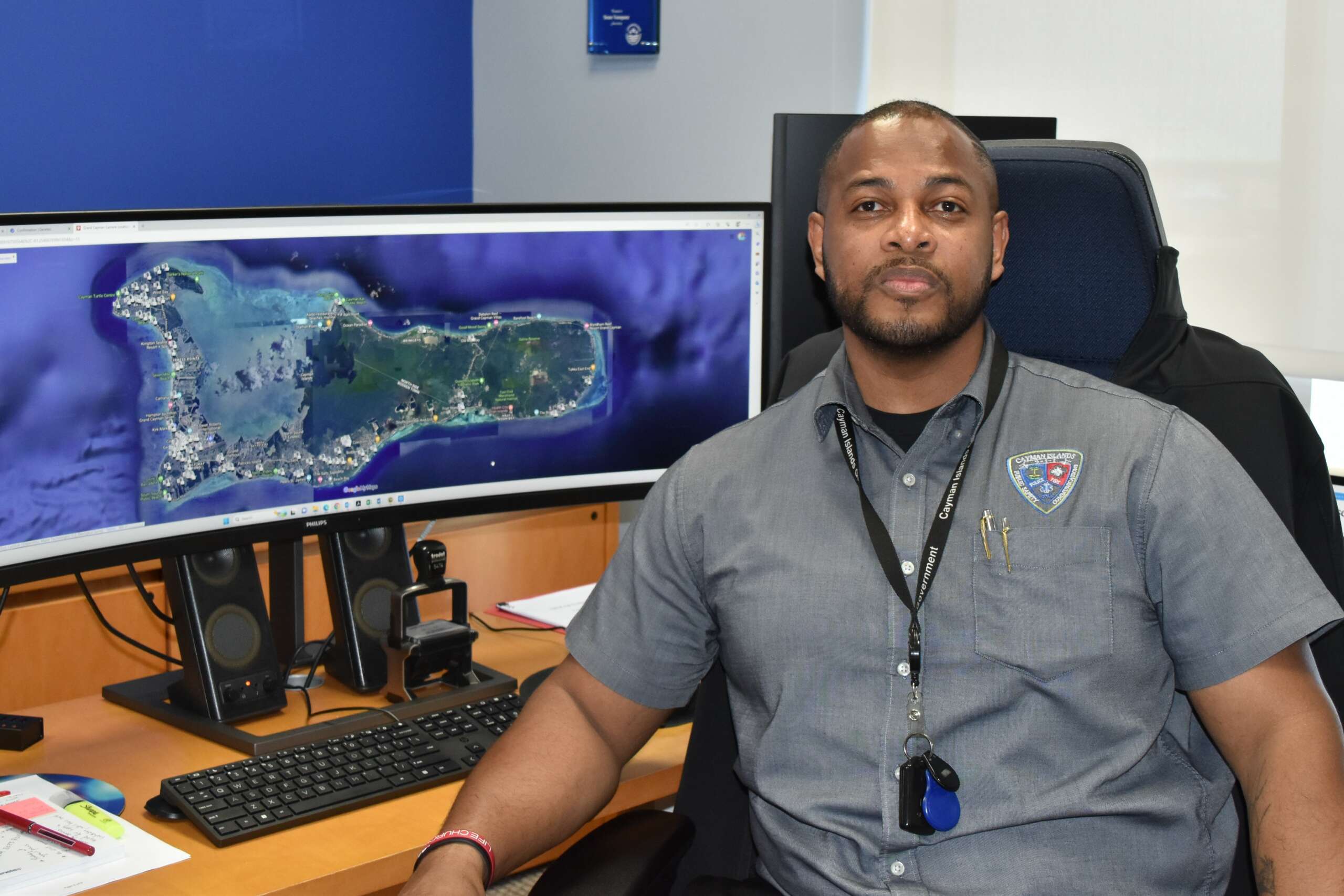
While the Data Protection Act, passed in 2017 and enacted fully in 2019, covers elements relating to the storage, sharing and usage of personal data, which could include CCTV footage, the Cayman Islands currently has no dedicated legal mechanism to regulate the use of closed circuit television cameras in public areas, despite installing cameras in 2011.
A CCTV Code of Practice is in place, but that is not a legally binding document.
Back in 2016, the Cayman Islands Human Rights Commission highlighted the legal concerns surrounding a lack of legislation to governor CCTV usage, at a time when the islands were moving to introduce data protection legislation. It was also a concern for then acting Information Commissioner Jan Liebaers.
The 2011 code, which states that the Data Protection Act, when introduced, would regulate the processing and use of images captured by CCTV cameras, was not updated after that legislation was enacted.
Vasquez said the code of practice is followed by Department of Public Safety Communications personnel who monitor the CCTV network.
He said the code is currently being revised and would tie in with the Surveillance Devices legislation.
“We’re also working very closely with [the Solicitor General’s Office] to ensure that both these are parallel in line with what we’re trying to achieve through the Data Protection Act. Persons that are identified and meet the criteria of being an investigator – whom the CCTV administrator, along with the CCTV steering committee, will identify – and put those provisions in place for them,” he said.
An investigator can be an RCIPS constable or an individual from areas of public safety.
He said the Department of Public Safety Communications has a dedicated team in its electronic monitoring centre which carries out “video patrols” several times a day to ensure that the fields of view of the cameras are in line with the code of practice as to where they should be.
“This code of practice is a public document. This is something that the public has access to. Not only [does] that give guidance on the do’s and don’ts as to how the camera uses are meant to be regulated, but [it also guides] how evidence is stored and who has access to this programme at a very high level,” he said.
Vasquez said there are 15 principles in the code of practice and the department continues to revisit and improve upon them to share the knowledge with the community and public safety partners.
He said there is a system in place to guard against abuse.
“We have very strong audit controls in place and there are different tiers of access to this programme, depending on whether you are an operator and investigator or an end user. So there are different criteria and methods as to how we are able to manage and ensure that the security and privacy of this programme are managed properly,” he said.
Vasquez said there have been no reports of any abuse of the CCTV network since its installation in 2011.
Related Videos