

The government has released its Airports Master Plan, which outlines the way forward for aerodromes on all three of the Cayman Islands over the next two decades.
The Cayman Islands Airports Authority document indicates that the total estimated price tag for the many projects in the plan is just under $660 million. Some are considered to be of such high priority that they need to be completed within the next five years, while others are much further down the to-do list.
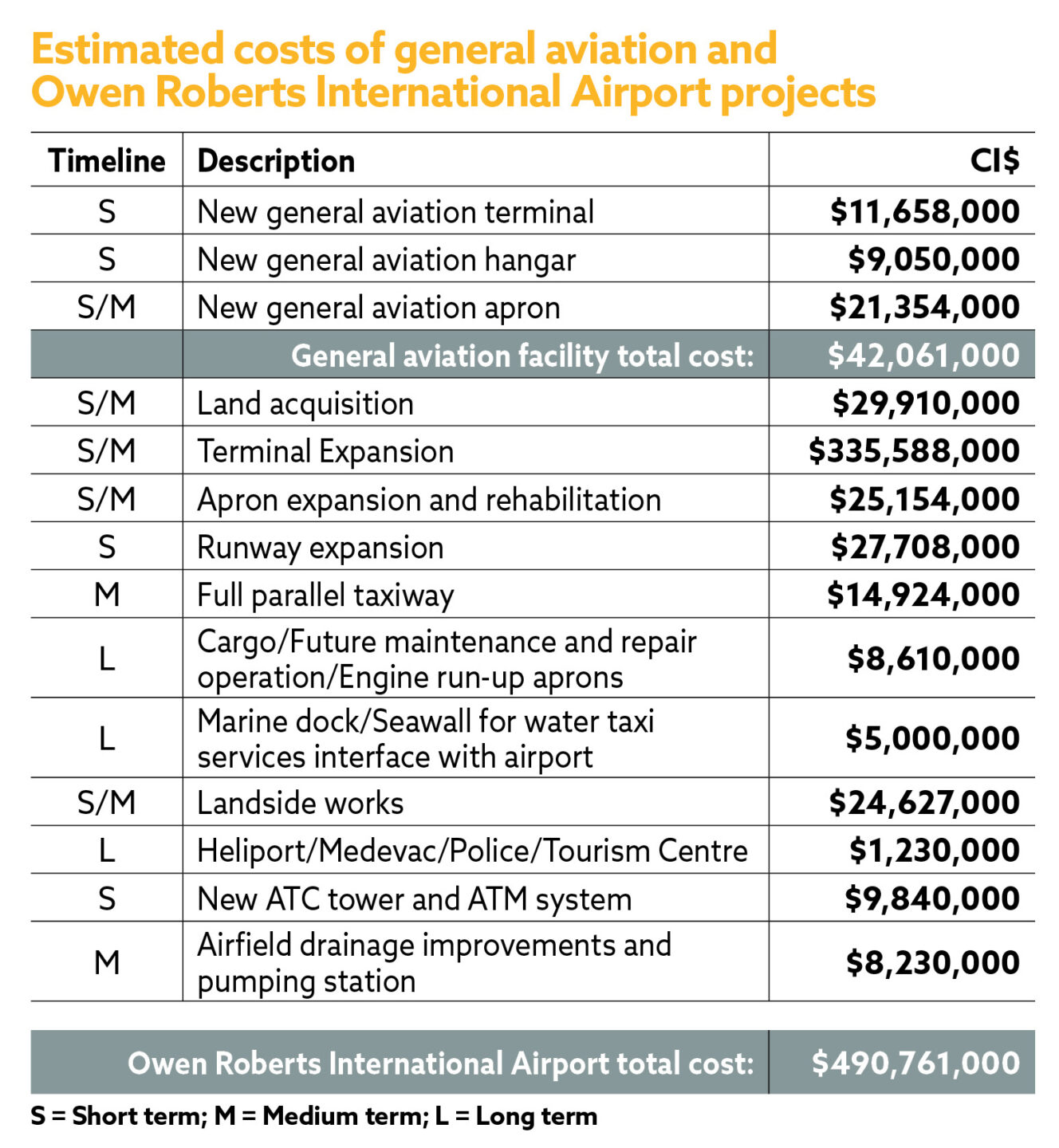
Of that amount, almost $491 million will be spent on Owen Roberts International Airport in Grand Cayman, $79 million on the Charles Kirkconnell International Airport in Cayman Brac, and $47.5 million on the Edward Bodden Airfield in Little Cayman.
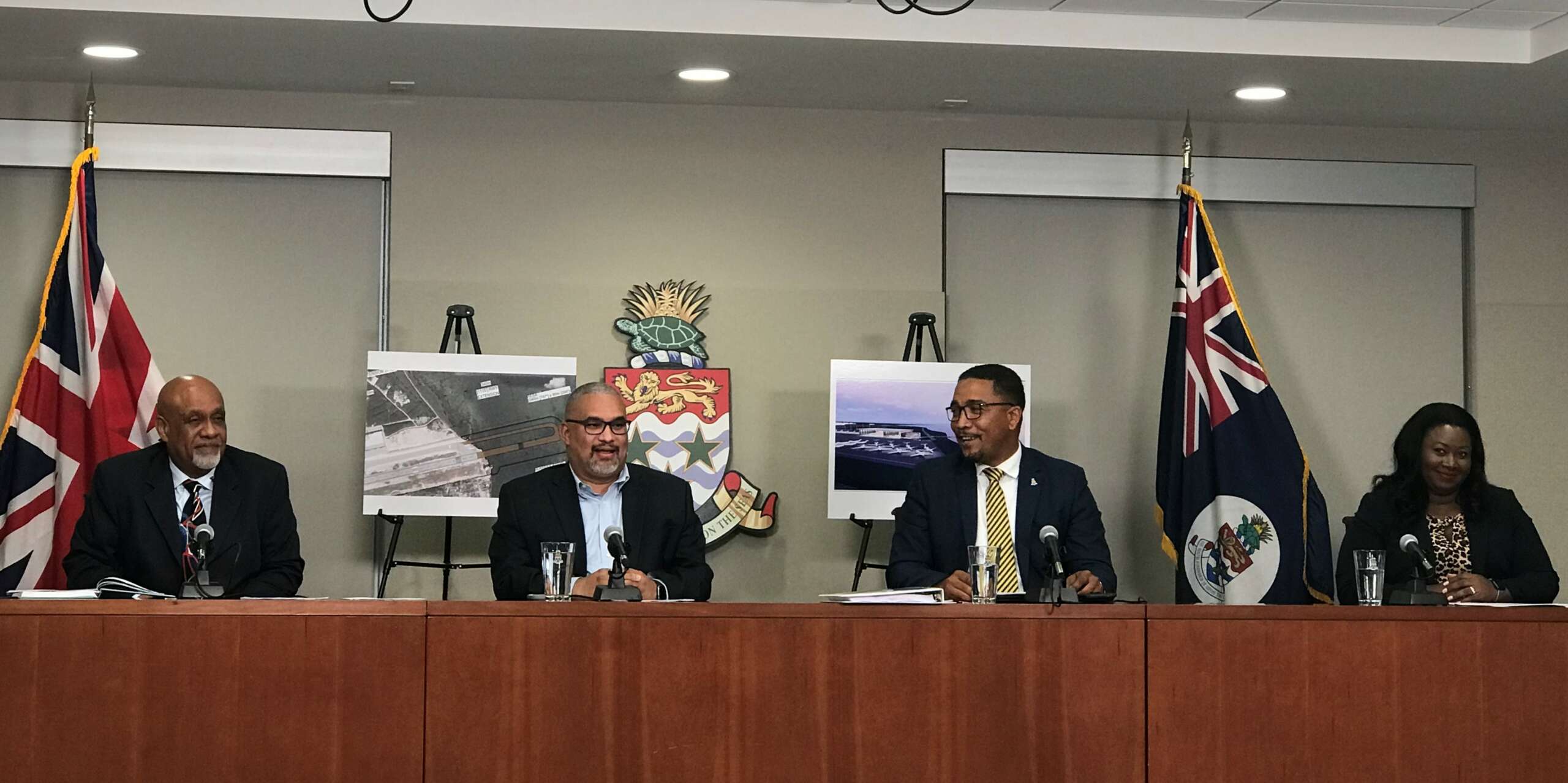
Government announced its plans for the airports at a press briefing in May this year, and released the master plan last week.
Four of priority ‘sub-projects’, at a total estimated cost of almost $76 million, have been included in an outline business case that has already been signed off by Cabinet. Those sub-projects are subject to environmental impact assessments, where necessary.
They include a plan to extend the Owen Roberts runway into the North Sound; a new general aviation terminal for private jets at Owen Roberts; and safety work at the end of the runway at the Charles Kirkconnell International Airport on Cayman Brac.

The fourth project that has been approved is an environmental impact assessment for a proposed new airport on Little Cayman. The need for a new airport terminal and runway to replace the island’s Edward Bodden Airfield was highlighted as a priority by consultants from Canada-based firm Stantec, which helped draw up the master plan.
While building a new airport on Little Cayman is not part of the immediate plans in the outline business case approved by Cabinet in May, government has assured the Civil Aviation Authority of the Cayman Islands that it will fund a $1.38 million environmental impact assessment of a new airport.
The airfield on the island is currently unlicensed, and operates under an ‘exemption of airworthiness’ granted by the Civil Aviation Authority.
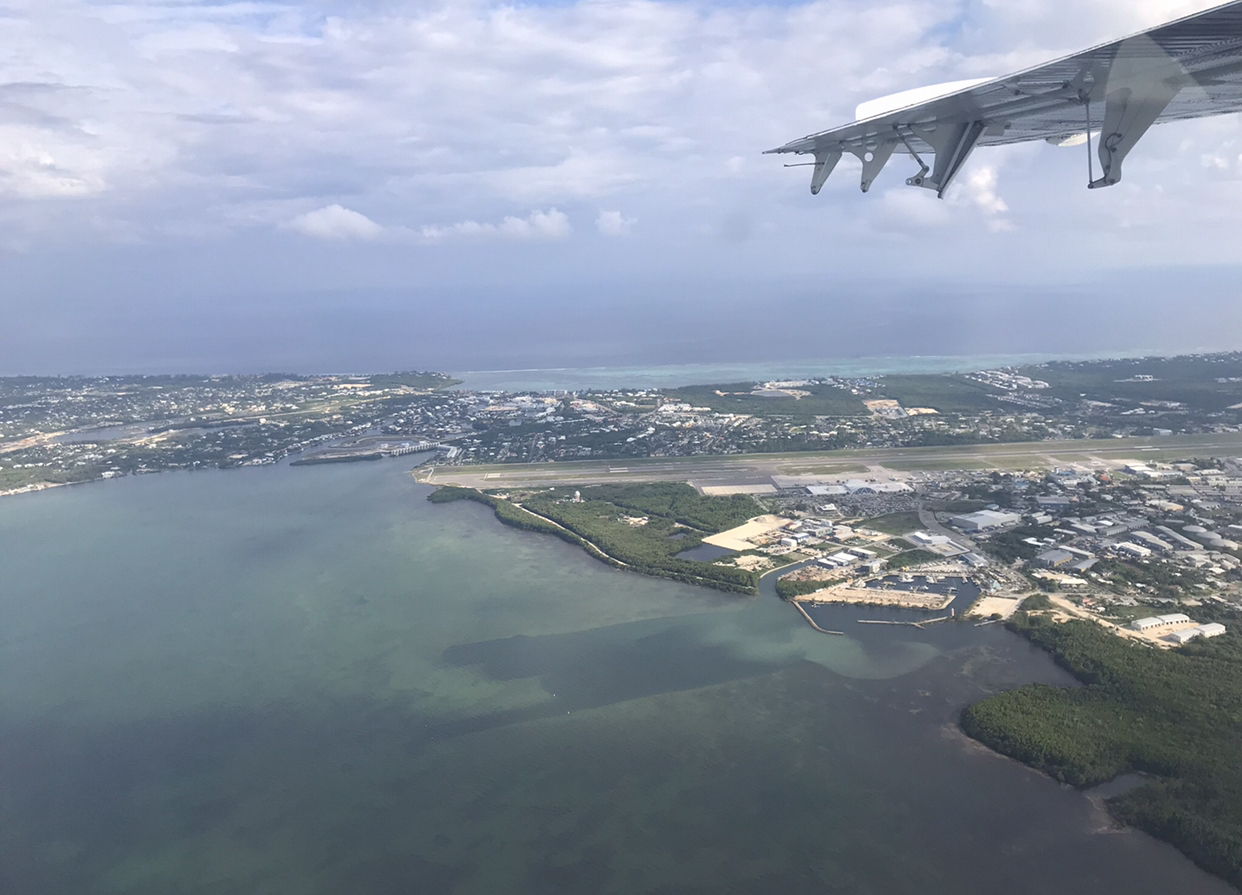
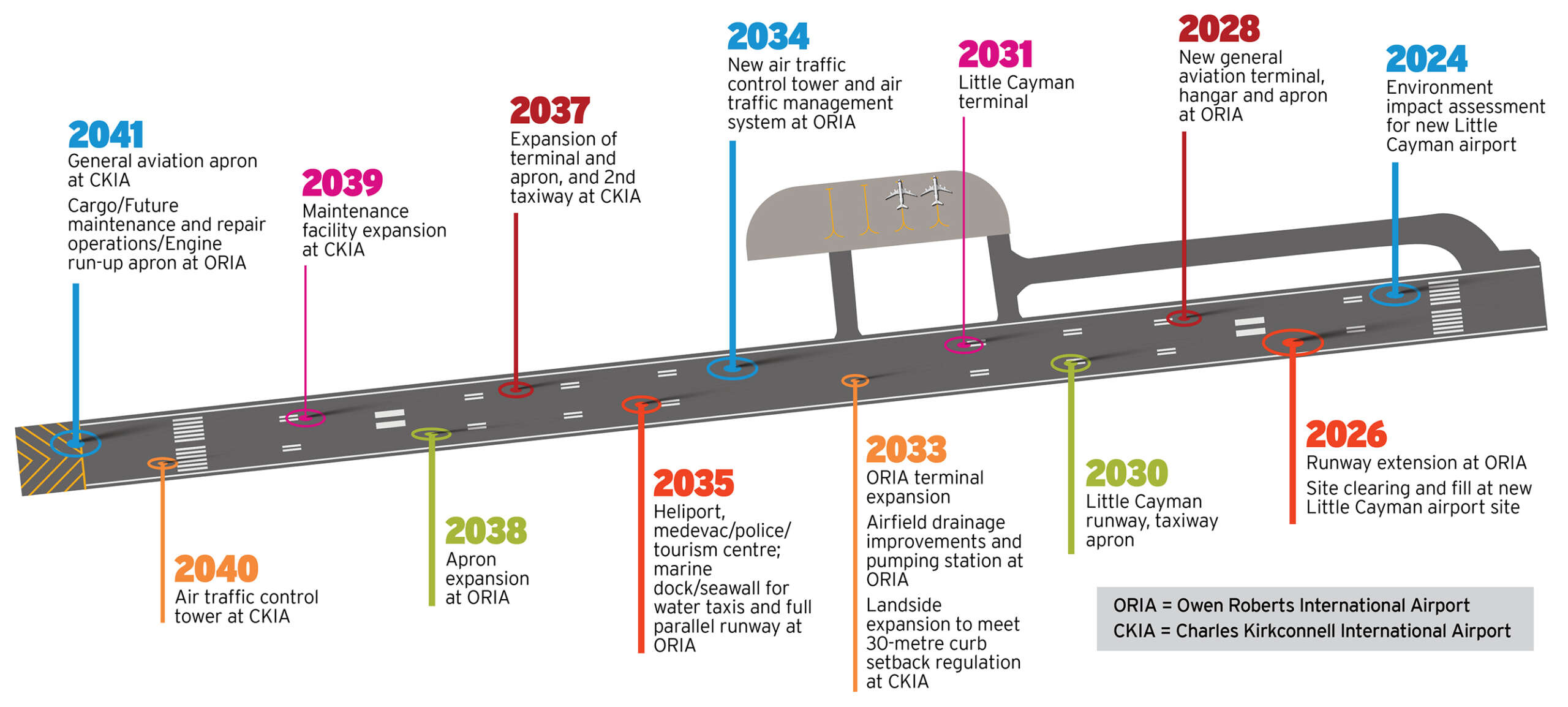
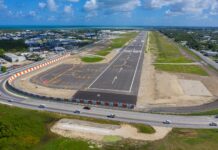
The plan to extend the 7,008-feet-long Owen Roberts runway 1,900 feet into the North Sound, at an estimated cost of $27.7 million, will also be subject to an environmental impact assessment.
While the proposal has already been met with criticism from environmentalists, the outline business case notes that it is necessary if Cayman is to compete for tourists with neighbouring Caribbean destinations. The longer runway would enable larger-body aircrafts to land, bringing in passengers on long-haul flights from far-flung countries, the document notes.
Heliport and water taxis among longer-term plans
There are many more medium- and long-term projects in the master plan, with some not expected to be completed for well over a decade.
For example, there are plans for a heliport and a combined medevac/police/tourism centre, at a cost of $1.2 million; as well as a seawall and dock for water taxis to bring guests to and from Owen Roberts and the general aviation terminal, estimated to cost $5 million. None of those projects are expected to be completed before 2035.
And new facilities for cargo, and for maintenance and repairs at Owen Roberts, at a cost of more than $8 million over three years, are unlikely to be finished before 2041.
Owen Roberts terminal expansion
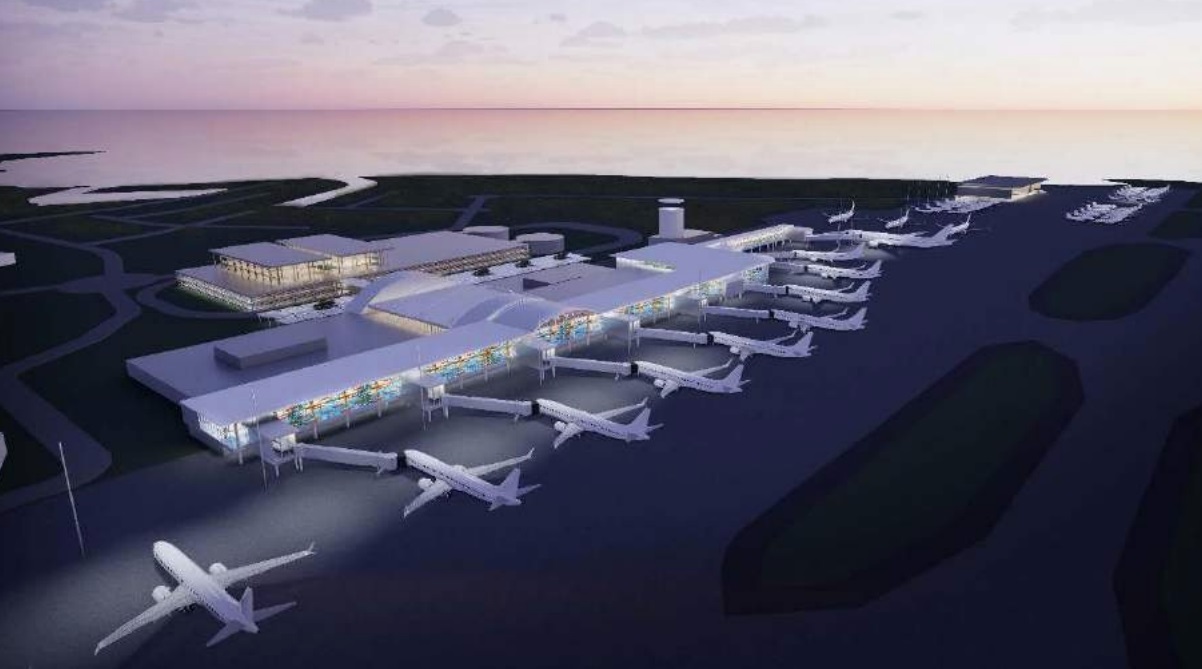
By far, the most expensive job in the 20-year master plan is the Owen Roberts terminal expansion, which is expected to be completed by 2033. According to the outline business case that was drawn up from the master plan, that carries a price tag of $334.5 million.
That expansion would include adding a second level to the existing passenger terminal as a departure lounge area, and a third level for arrivals, as well as the addition of air bridges from boarding gates to aircraft.
The main single-storey terminal building at Owen Roberts, in the outline business case, is described having “inefficient layout” which requires passengers and staff to walk “sub-optimal distances, including when transiting between the terminal building and aircraft”.
It notes that visitors need to brave the heat or rain when walking to aircraft on the airside and to the car-rental buildings and parking lots on the landside.
It also states that during peak hours, there are capacity issues at check-in, immigration, security and in the departure lounges, and that there is insufficient parking.
Expansion work on the airport’s apron – where aircraft park – at a cost of more than $25 million, is also planned, with a completion date of 2038.
A new air traffic control tower at Owen Roberts is also expected to be completed by 2034.
Need for change

One of the key drivers for change at the airport on Grand Cayman, which underwent extensive expansions and renovations in recent years, is capacity.
Peak-hour passenger numbers in 2019 reached record levels and, leading up to the COVID pandemic, the expectation was that 2020 would surpass 2019, with record numbers experienced in the first quarter of 2020.
Work on building a bigger, more modern terminal at Owen Roberts began in 2015 and the building was officially opened by the then Prince Charles in 2019. The year before construction work began, the 2014 Airports Master Plan had identified the annual/peak hour numbers that would trigger the need for another new terminal at Owen Roberts, and predicted that number would be reached in 2028.
In fact, that number was reached in 2019, making the island’s new terminal already over-capacity at certain peak times.
Now, the number of passengers passing the airport is expected to grow by 1.9% each year, officials have indicated. In 2019, according to Airports Authority figures, about 1.4 million passengers passed through Owen Roberts.
Private aviation
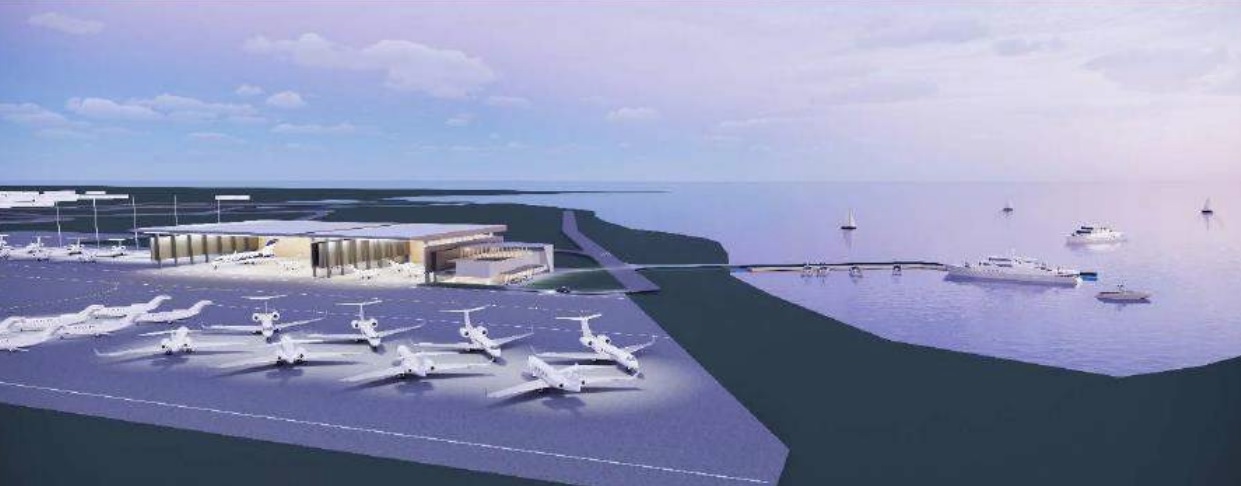
Another driving force behind the planned expansion on Grand Cayman, especially in terms of the private aviation side, is the government’s focus on attracting high net worth individuals to the islands.
According to the outline business case, the current facility is “of low quality, outdated and is not a good representation of the islands from a luxury brand perspective”.
Building a new general aviation terminal and apron at Owen Roberts would enable more than 40 private planes to park simultaneously during peak periods, without taking up space from other aprons. It would also enable commercial aircraft to use a portion of those aprons during off-peak periods. And new aircraft hangars, also part of the proposed project, would offer the expensive jets shelter from the elements.
Regulatory concerns are another issue.
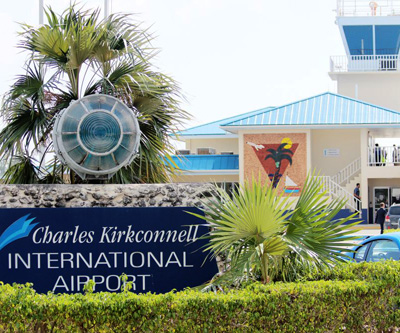
For example, the Cayman Brac airport is operating under an exemption to airport regulatory standards due to insufficient length and strength of its runway end safety area, known as RESA, and the runway strip is too narrow on the south side due to the proximity of ponds, the outline business case notes.
It also points out that expansion on the landside at the Charles Kirkconnell airport is required to accommodate a 30-metre set-back security regulation at the airport, which will result in the parking lot having to be relocated to the north.
The regulatory issues with Little Cayman, which the report notes, “fails to meet any airport regulatory standards required to be classified as a certified airport” are ongoing.
Meanwhile, competition within the region is yet another driving factor for change, with airports in Antigua, Jamaica, Bahamas, Barbados, British Virgin Islands, Aruba, and Turks and Caicos Islands all expanding or improving.
The business case states, “At present, the Cayman Islands are not maintaining their competitive edge in this regard. Inefficient space and processes, lack of previous investments in airfield and landside infrastructure has resulted in the need for significant investments to support the growth in passenger demand over the master plan horizon.”
The environment is also mentioned in the plan, which states that while rising sea levels were considered and the option of raising the runways was explored, the project team concluded that the airport facilities and runways on all three islands would not need to be raised to accommodate potential sea level rises in the near term.
It noted that the existing terminal in Grand Cayman is 8.5 feet above sea level, which is “only susceptible to partial flooding in extreme circumstances that are infrequent in nature”. It gave the example of the “partial flooding” at the site from 2004’s Hurricane Ivan.
Costly options
None of the preferred options chosen from the several outlined projects are the cheapest, the report notes.
However, it points out that the increase in revenues generated by the preferred options “is expected to outpace the increase in associated costs (due to increased demand and capacity) and so it is not anticipated that any Cayman Islands Government funding will be required in respect of the operations, post completion”.
Government has said it will not need to borrow or dip into any of its financial reserves to pay for the first four approved projects.
Instead, the projects will be paid for by a US$20 increase in fees for air passengers and by the ongoing operating profits of the Cayman Islands Airports Authority. The government also intends to invest CI$5 million into the Airports Authority as equity to fund the conceptual design and the environmental impact assessments.
The report includes suggestions from the consultants on how the Airports Authority can earn more revenue to offset costs.
It suggests increasing the daily parking fees at Owen Roberts, saying the current price of CI$7 a day is well below market rate in other regions; and recommends introducing charging for passenger drop-offs – a practice, it says, which has been implemented in many other airports.
It also suggests the licensing of taxi and bus services at the airport.
Increasing revenue
The consultants also noted that commercial land development and new terminal revenues through additional restaurants, bars, shops and other concessions would contribute significantly higher revenues than the existing options, particularly if premium rates were charged.
The report stated that the CIAA could consider including car-rental concessions in the expanded airport terminal.
On the aeronautical revenue side, the consultants suggested that premium fees could be charged for commercial and private aircraft to land during peak hours, when the airport is at its busiest. This, they said, “would increase revenues, may ease congestion during peak hours (i.e. airlines incentivised to land outside of peak hours) and may attract additional airlines (i.e. non-peak landing slots may be priced low enough to attract budget or cheaper airlines)”.
Additional fees could also be charged for aircraft parking, such as hourly rates during peak hours or daily/overnight during off-peak hours, or higher fees could be charged for noise disruption for late-night flights and for older and louder aircraft models.
The consultants noted that the Cayman Islands Airports Authority is unable to raise its own finance, “which limits the capacity for self-funded projects”.
They added, “If CIAA was able to raise its own finance, this may create opportunities in private sector debt financing and municipal bonds.”
In arguing for an increase in fees, the report compared what Cayman charges to what is charged in other airports in the region and in the US and Canada.
It notes the fees at Owen Roberts Cayman’s airport fees currently include a US$36 passenger service fee; a US$15.60 passenger facilities charge; US$12 security charge; and a US$1.20 terminal charge, which total US$65.40 per passenger, well below the US$94.97 average in the Caribbean.
“However, most notably, the total fees per unit of the Cayman Islands are significantly below primary competitor countries, such as: Barbados US$182.20; Jamaica US$114.65; and the Bahamas US$99.
“Therefore, there is ample scope to increase fees for the Cayman Islands to align with the closest competitor countries in the region. This can be further justified in the context of Cayman’s desired branding (i.e. high-end and luxury tourism),” the report stated.
Read the full Outline Business Case and Airports Master Plan here.
Related Videos










“Do you really need to spend $1.38 million dollars to know what an environmental impact assessment of a building and housing a new airport in Little Cayman will bring?” The last bastion of an untouched magnificent piece of paradise.
While one has to keep pace with growth, please refrain from doing it to compete with some of the other islands that cannot hold a candle to Cayman, which has had a relatively safe environment, not as much as it once did. What do you think happens with significant growth? Is there an assessment study and how to address it, or do we keep on going and worry about that later? Families will seek and find another relatively uncluttered island to take families to.
It appears that inch by inch, the face of Cayman that everyone that has been coming there for over 30 years with their families sees it slowly disappearing. Thank God it has not captured the souls of the Caymanian people.
This timetable is laughable. In ten years’ time the cost will have tripled, many of the politicians responsible will be extinct, and deadlines will have come and gone with no doubt painfully slow progress. The recent airport “upgrade” had key ingredients deleted along the way, so, for example, the air bridges were eliminated as a cost saving, a decision so shortsighted that GCM still gives the impression of an outpost in a third world country. Look at the progress of Bermuda and compare their airport facility with ours. They already have a facility that is better that what is being envisaged for Cayman a decade (probably two) into the future. Add in all the delays that will be encouraged by activist environmentalists and we have a dead-on-arrival plan.
The small but vocal opposition to building a real airport on Little Cayman seem to get all the attention but they are actually a minority.
There are many more land owners like me that are looking for to improved transportation to the island so we can build our retirement houses on the properties we own there.
Yes, please do the environmental studies, but also realize that more people will eventually require an expansion of the medical and emergency clinic . That will benefit everyone.
As a property owner, what i would like to see is
1. Adequate building setbacks to allow for lush landscaping. no zero lot lines, ever.
2. Make approval of building plans contingent on acceptable landscaping plans so developers don’t turn LC into a concrete jungle.
3. Underground power lines and either require discreet solar panels with every new construction, or a one time payment (kind of like an impact fee) to add panels to a cooperative solar farm.