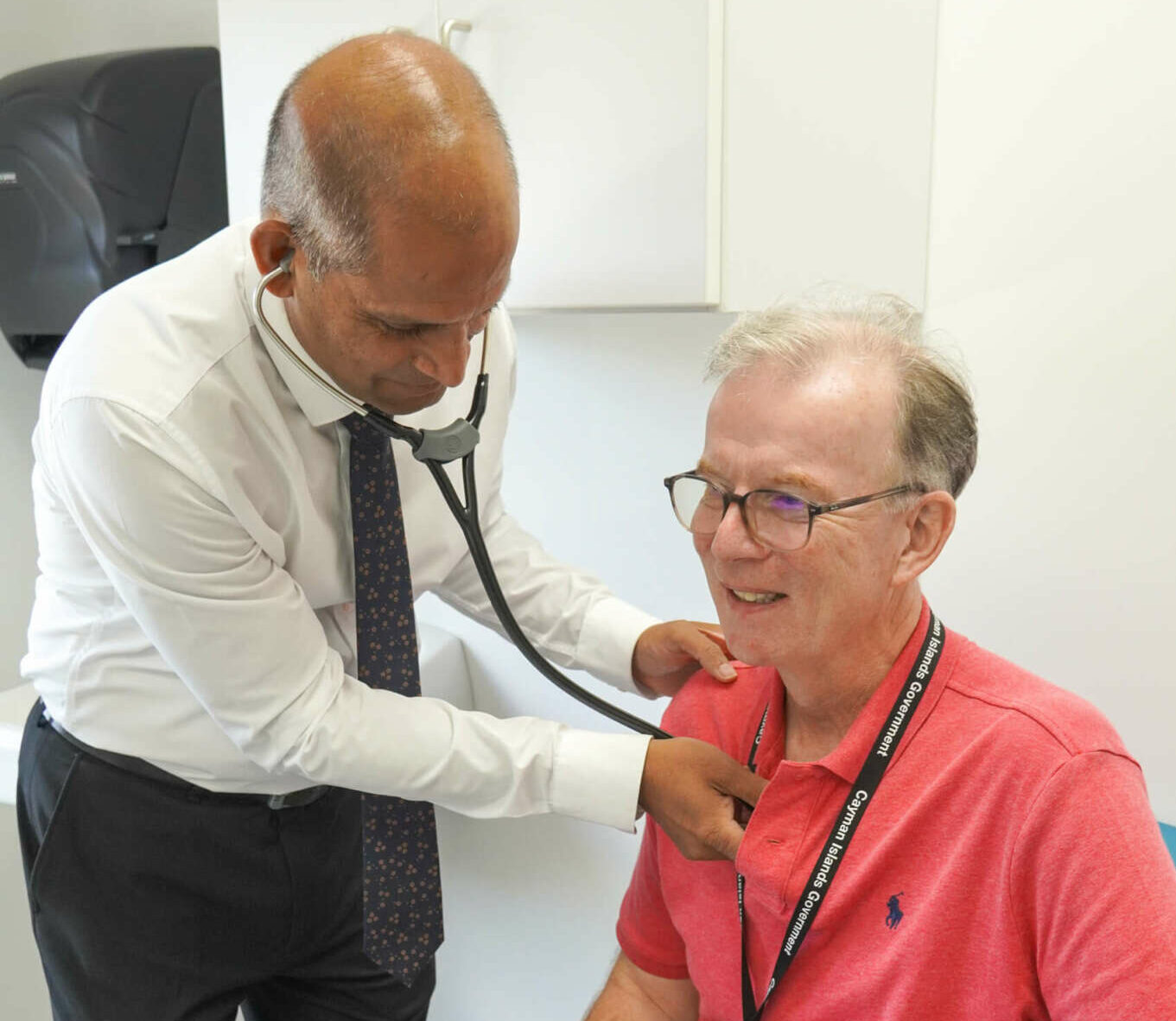
An irregular heartbeat, experienced a handful of times over his lifetime, led John Fahy to getting his heart monitored.
While that previously involved him having to tape a Holter monitor to his chest for up to 48 hours, now, inside his skin, near his heart, he has a small device – about the size of a pill – which enables a doctor to remotely monitor his heartbeat.
The Health Services Authority recently introduced this procedure, which involves using the world’s smallest insertable cardiac monitor, the Medtronic LINQ.
The tiny device can help doctors keep track of a patients’ heartbeat 24 hours a day, seven days a week, to determine if there is an irregular heartbeat.
“This can help their physicians determine if their heart is causing their symptoms and recommend the most effective treatment,” according to a press release from the Health Services Authority.
The device has a small lithium battery that can usually last three to four years. The procedure to implant the monitor takes approximately 15 minutes under local anaesthetic.
Fahy said that, after the procedure to insert the monitoring device, there was no discomfort, minimal scarring, and the monitor was not visible under his skin.
He told the Compass having the device implanted was painless and quick. “I’ve had worse experiences at the dentist,” he said.
Prior to his follow-up visit, his cardiologist, Dr. Brian Noronha, had analysed the data from the monitor which showed that two very brief episodes of atrial fibrillation were detected that he had been unaware of.
“Having a Medtronic monitor implanted has immediately had a positive impact on my treatment,” Fahy said in the release.
Noronha, who is with the HSA, said a physician may recommend a heart monitor for patients with symptoms that could be caused by abnormal heartbeats, such as atrial fibrillation, heart palpitations, stroke and unexplained fainting.
“However, abnormal heartbeats can be difficult to catch and diagnose. They may not happen regularly, and a patient may not feel them happen,” he said.
Heart monitoring often involves electrocardiograms (EKG) or continuous Holter monitoring, which involves the attachment of cables and electrodes to the patient’s skin, which, the HSA says, can be “a cumbersome and uncomfortable process that may sometimes interfere with the person’s daily activities and may not always be effective at detecting an abnormal heartbeat”.
Fahy had previously worn a Holter monitor for a short period once a year due to a history of atrial fibrillation.
“My previous monitor was inconvenient and only checked what was happening for that brief period of time,” he said.
Related Videos