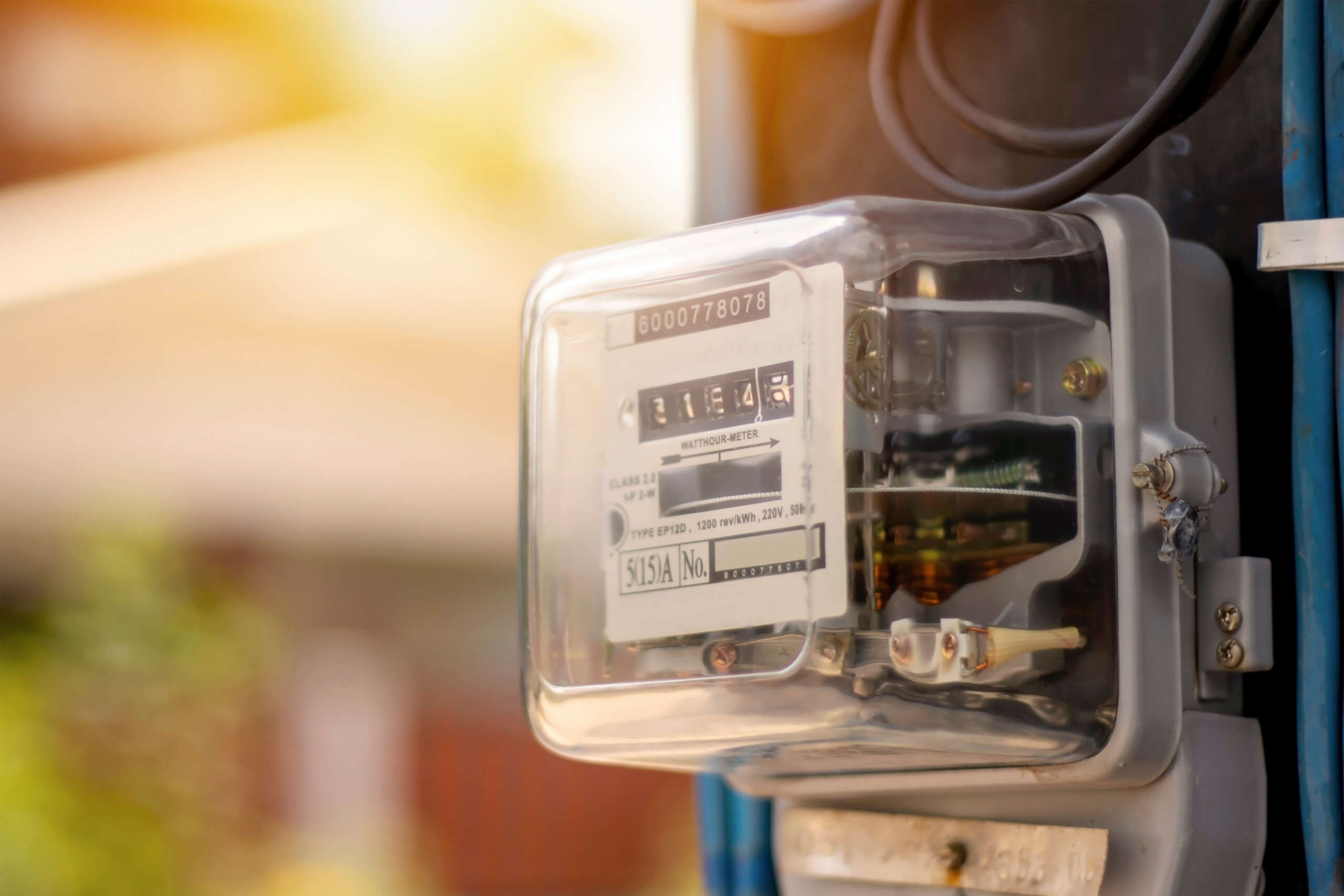
Rising temperatures rather than rising profits have been blamed for a surge in power bills as air conditioners hummed throughout a scorching start to the summer.
While the Caribbean Utilities Company has increased rates in what it has described as a long-delayed move to keep up with inflation, that increase accounts for just $5 extra for the average monthly electricity bill in Cayman.
Meanwhile, fuel prices – which account for two-thirds of the dollar value on household bills – have started to come down.
The net effect of the changes means the price of electricity was actually less in June than it was in May, according to regulator OfReg and CUC.
“The reduced costs of fuel will not only cancel out the base rate increase but will result in an overall reduction of energy costs for the next few months,” a spokesperson for the utility company insisted in response to questions from the Compass.
It is additional higher usage – principally from air conditioners – that has sent total bills through the roof.
According to OfReg, it has been a while since Cayman has seen moderately high fuel costs coinciding with the hot summer months, and the size of the bill has left many residents shocked.
Global fuel costs plummeted during COVID and government subsidies helped cover a resurgence in prices in the second half of last year.
“The last few years, we have actually had it good,” said Louis Boucher, deputy executive director for energy and utilities at OfReg.
How much have CUC rates gone up?
CUC increased its ‘base rate’ by about 3.6% from 12.35 cents to 12.8 cents per kilowatt hour. The average customer uses 1,084 kWh per month. That equates to a monthly increase of $4.88.
For larger homes that can use double the national average, that adds about $10 to the bill.
That difference would have been reflected in the recently issued bills for June.
What is happening with the fuel costs?
According to utilities regulator OfReg, the ‘fuel factor’ – principally the cost of diesel to power the CUC generators but also including a small surcharge for renewables – forms around two-thirds of the bill, while the CUC ‘base rate’ forms just one-third, at current fuel prices.
The utility company insists it does not profit from any mark-up on fuel and simply passes on the cost, which fluctuates wildly based on global factors, to the customer. Monthly fuel costs are verified and checked monthly by the regulator to ensure accuracy.
In June, the fuel cost dipped to just under 17 cents per kWh, from a high of 24 cents in October of last year. The overall trend in fuel prices continues to be downward.
According to Boucher, the declining fuel price in June was enough to completely cancel out CUC’s rate increase.
He said customers should actually see an overall decrease of around 3.5% in the unit cost of electricity compared with the previous month. A further decrease in fuel costs should see that trend continue in July, he said.
So why is my bill higher?
Both CUC and OfReg say this is simply down to high usage.
May and June saw near-record temperatures in the Cayman Islands and air conditioners – a huge drain on electricity – would have been operating on overdrive.
The power company cited a 2-degree difference in average temperatures throughout June, which was the hottest on record globally, as a key factor.
“Average temperatures and rainfall levels have substantial impacts on the energy used by air conditioners, which are the largest energy consumers in most residential homes in Grand Cayman,” a spokesperson said.
Premier Wayne Panton, announcing a new programme to support energy-efficiency retrofits for low-income homes, alluded to the climate impact on utility bills.
“This summer’s record heat demonstrates that the energy crisis, the cost of living crisis and the climate crisis are all interlinked,” he said.
Summers are always hot. Why do the bills seem higher than ever before?
OfReg’s Boucher attributes this to a slightly misleading period of low fuel prices and government subsidies that has kept utility bills artificially low over the past few summers.
When the world stopped during COVID lockdowns, the cost of fuel – reflected on household electricity bills – dipped to just over 6 cents per kilowatt hour.
The average customer – the one we mentioned earlier that uses 1,084 kWh per month – would have seen a charge of $86 for their fuel costs in July 2020, with the overall bill hitting near record lows as a result. But the cost of fuel has quadrupled since then. That same customer would have seen fuel costs of almost $350 on their bill for October 2022 – were it not for a government subsidy that capped the amount most residents paid for power last fall.
While fuel prices have come down since October, they are still marginally higher than they were last summer and three times higher than they were during the COVID lockdown.
Meanwhile, the government subsidy has been discontinued, there has been an increase in the CUC rate and it is hotter than ever.
CUC makes decent profits. Why can’t it absorb some of these costs and keep prices low?
For many residents looking at their bills for June energy consumption, it felt punitive for CUC to have raised rates at a time when Cayman is in the midst of a cost-of-living crisis.
Mortgage rates, rents, water bills, insurance and food have all increased significantly, and for the power costs to go up as the island hits the hottest time of year, was an unwelcome addition to mounting household budget challenges.
The company announced first-quarter earnings of $5.5 million, so it is not unreasonable to ask why it can’t take the hit for the rest of us.
CUC insists that is exactly what it has done. It is being hit by inflation – like every other business – but has deferred its contractually guaranteed rate increase for the past two years. It also partnered with government on last year’s subsidy, which kept power bills down as fuel prices soared in the second half of 2022.
Ultimately, though, the company says, it has to recover its cost of doing business to remain a sustainable service provider.
Materials, insurance, salaries, interest rates, labour and contracted service costs have all increased over the past two years.
“Materials for the utility sector have seen double-digit inflation along with significant increases in insurance and other service costs. The marginal base rate increase assists, along with CUC’s cost efficiencies to cover these increases in overall costs,” the company said.
Wait, CUC has a contractually guaranteed rate increase?
Yes. Part of its annual licence includes a rate adjustment in line with inflation which comes into effect on 1 June each year. The increase is based on a formula called the Rate Cap Adjustment Mechanism, which regulators say is standard throughout the industry and is designed to keep up with inflation, and allows CUC to maintain a reasonable profit margin while reinvesting in the grid.
Marginal rate increases in 2021 and 2022 were deferred until this year and are being slowly recouped at a net impact of around $2-a-month on the average bill, according to Boucher.
The purpose of the increase is for the utility to maintain a reasonable enough profit margin that it continues to attract investment and can continue to invest in the grid.
Can’t OfReg step in and control prices?
No. OfReg’s role in the process is simply to confirm that CUC has applied the formula correctly and its calculations are accurate.
Peter Gough, CEO of the regulator, said, “We want to make sure the public understand that OfReg’s role in the annual base rate adjustment is to verify and confirm the calculations submitted by CUC against its audited financials, the 10-year US treasury yield and the Cayman and US consumer price index figures.”
Are there any plans for another government subsidy?
Nothing like that has been announced by government as yet, but public pressure over high prices could potentially sway policymakers. Last year, government subsidised fuel surcharges of over 15 cents per kWh. Fuel costs are currently around 17 cents per kWh and could come down further next month, so a subsidy may not have that much impact even if it is brought in at the same threshold.
The Ministry of Sustainability and Climate Resiliency announced this week it is launching a new programme to provide energy-efficiency retrofits for eligible Caymanian homeowners struggling with high utility bills but that will take time to have an impact.
So what is the solution?
Aside from sweating away with the air conditioner off, there seems to be few cost-neutral options for homeowners to reduce their power bills in the short term.
Replacing old air conditioning systems can have a huge impact on efficiency, but comes at a cost that most cannot afford at this time. CUC messages customers with tips and tricks to make houses more energy efficient and reduce consumption, and is recommending national standards on ‘energy efficiency’ for buildings.
Many new buildings do come with lower power costs as a result of smart design, but, unfortunately, people in older homes with older AC units suffer disproportionately.
Government will be working with the non-profit Resilience Cayman to help retrofit homes for lower income families to reduce energy costs.
The $500,000 programme will prioritise the elderly, people with health conditions, and families with children living in older, smaller properties with high energy costs.
What about solar?
It feels ironic that long periods of sunshine are being blamed for high power prices, when solar energy has long been touted as the most viable solution to stabilise power costs.
While CUC recently released new capacity for household solar – that’s an option that is again only available to those that can afford, or get financing, for the upfront costs.
The major game changer will be utility-scale or large distributed solar systems that can provide a substantial portion of Cayman’s power needs.
The National Energy Policy calls for 70% of the island’s power to come from renewable sources by 2037. But that target has been in place for more than six years old and Cayman is currently at less than 5%.
Last year, government announced plans to be involved in the ownership of utility-scale renewable projects but has been silent on the proposal ever since. Meanwhile, OfReg is continuing with an auction process to solicit solar farms, but again there has been no recent update on progress.
CUC says it supports a switch to renewables and plans a massive investment in solar energy if it wins the bids.
Are renewables actually any cheaper?
That depends on the price of oil, which has fluctuated vastly over the past few years – between 6 cents and 24 cents per KwH, settling at around 17 cents in the past few months.
The war in Ukraine, the impact of OPEC squabbles and a number of other geopolitical factors out of Cayman’s control mean that price will likely remain volatile for years to come.
Renewables are not necessarily substantially cheaper than diesel fuel, but they are more stable. Current price estimates suggest utility-scale solar could be delivered in Cayman as low as 12 cents per kWh depending on the size of the solar farm.
Distributed generation – using rooftops or car parks for example – is more expensive to deliver (anywhere between 18 and 24 cents per kWh depending on size) but brings cost and environmental savings in terms of the land-use requirement.
A combination of the two – which is what the National Energy Policy calls for – would deliver power at a cost that is competitive with diesel fuel, while removing the ‘shock factor’ that comes from surges in oil prices.
So what is the hold-up?
Cayman has made slow progress on renewables, particularly on larger-scale projects. There remain dispute and doubt about the best way forward, and frustration reigns on all sides.
James Whittaker, president of the Cayman Renewable Energy Association, argues for swifter progress. Under the current system, he told the Compass, customers are exposed to the volatility of global oil markets.
“As long as the Cayman Islands remains reliant on fossil fuels as our primary energy source and fuel costs remain a direct pass-through to consumers, which does not impact CUC, the people of the Cayman Islands will continue to pay painfully high prices for energy, and our transition to cheaper and more stable renewable energy will not happen as fast as it should.”
He believes renegotiating CUC’s contracts would incentivise “greater pace of energy transition, fair competition and consumer equity”.
Whittaker, who also owns GreenTech Solar, added, “Cayman needs to accelerate the transition to renewable energy and mitigate the negative impact that fossil fuel price volatility has on our consumers.”
CUC insists it is itching to get started on renewable projects and has previously attributed delays to the lack of a procurement process – which OfReg has been fine-tuning for the past several years.
- Editor’s note: James Whittaker, president of the Cayman Renewable Energy Association, and James Whittaker, the writer of this article, are not related.
Related Videos