


By James Whittaker and Reshma Ragoonath
The building boom that has seen more than a dozen 10-storey office, condo and hotel buildings spring up across Grand Cayman over the past few years has been encouraged and incentivised by the policy decisions of successive governments.
Many of the developers involved in major projects benefited from privately negotiated concessions agreements. Only a handful of those were proactively made public.
In many cases, government agreed to waive import duty – typically charged at 22% – on the import of all construction materials among other fees.
The United Democratic Party government, led by McKeeva Bush, negotiated the deals that led to the construction of the the Kimpton Seafire resort as well as the Health City project in East End.
And the Progressives government, under Sir Alden McLaughlin, continued the policy of incentivising developers to bring major projects to Cayman, in what it has described as a job-creating tool following the global recession.
The policy persisted, however, into a second Progressives administration – with COVID-19 also cited as justification for stimulating construction – and appears to have been continued by the current PACT government.
Waivers for the WaterMark condos – another luxury 10-storey development near Public Beach – were extended last month as construction nears closure on the project, according to brief notes from a recent Cabinet meeting.
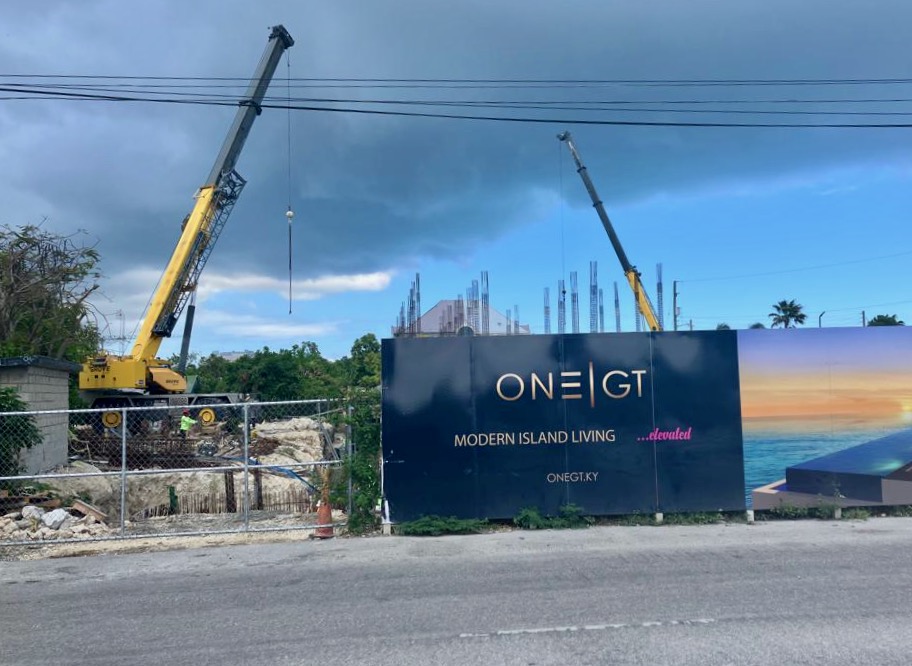
It is understood that other projects, including the One|GT apartment tower under construction in central George Town, are also likely to benefit from concessions, though details have not been made public.
Premier Wayne Panton did not respond to questions on his government’s policy on incentivising development for this article. The Progressives have defended their own strategy of using duty waivers, in particular, saying “it broadly worked” to bring Cayman’s economy and government finances ‘out of the doldroms’.
Politicians on all sides and developers themselves say concessions can be a useful tool to stimulate economic activity, create jobs and bring innovative new projects to the islands. But continuing lack of clarity about who gets concessions and in what circumstances, how they are negotiated, and whether they are made public is causing serious concern.
The Office of the Auditor General – the watchdog for how public money is spent – first recommended in 2015 that government formalise its policies and procedures, including a set of criteria, for the granting of any revenue concessions.
Despite the formulation of various policy drafts by the previous government, no such policy was ever finalised, and nothing appears to have been done by the current administration – in power since April 2021 – to progress the issue.

“It is disappointing that eight years after first recommending that the Government develop and adopt a comprehensive revenue concessions policy, it has not been actioned,” acting Auditor General Angela Cullen told the Cayman Compass in an emailed comment on the situation.
The need for a policy was reinforced by a Grand Court case last year in which lawyers for George Town’s Doctors Hospital argued that it was unfair for government to offer a slew of ongoing duty waivers to Health City without making such conditions available to Doctors Hospital.
Justice Richard Williams opined that the details of the Health City concessions package, later offered to the proposed Aster MedCity hospital as well, were inappropriate, though not illegal, and he highlighted further concerns over a lack of transparency around such agreements.
He suggested government should publish a transparent statement of criteria to determine applications for waivers of customs duty, work permit fees and stamp duty.
Though promised at the start of the PACT term in 2021, the Panton-led administration, like successive administrations before his, has not implemented a formalised, written policy on issuing concessions.
Meanwhile, developers, environmental groups and campaigners on issues like affordable housing are calling for clarity on both a development plan – which would determine how and where new projects should go – and a concessions policy.
In this special report, the Compass examines the ongoing debate around concessions and their central role in the development of the country.
Who has been granted concessions and why?
Any policy where government foregoes potential revenue in order to incentivise a project is a concessions policy.
In Cayman, they have been typically granted for relief on fees to incentivise development in the belief that it will encourage economic activity. Examples include Health City, Cayman Enterprise City, Tech Cayman and several condo developments, including WaterMark.
There are also more complex deals like the National Roads Authority agreement, which granted the Dart group duty relief on its projects, in return for investing in Cayman through the Kimpton Seafire Resort, as well as building the Esterley Tibbetts Highway expansion, among other things.
The stamp duty relief for first time Caymanian home buyers is also a smaller scale form of concession – designed to help people get on the housing ladder.
Does government give up money?
In most cases, government agrees to give up potential revenue – money it would never receive if the project doesn’t go ahead. The developer doesn’t get any benefits unless it brings the project to Cayman.
The team behind the Ironwood Golf resort project, for example, signed a deal that is understood to have included significant duty waivers, but that project never went ahead.
The point of concessions is generally considered to be to attract development that the country wants or needs, that otherwise would not be cost-effective.
The idea is that government makes its money on the back end, either in stamp duty on real estate sales or in the case of hotels, for years and years of collecting room taxes, duty on consumables, work permit fees and tourists spending in the economy.

While this might make sense in lean times, it seems to make less sense amid government concerns about over-development.
Mark VanDevelde, CEO of Dart Enterprises, told the Compass that the NRA agreement, for example, was designed to help get people working and bring jobs and revenue to Cayman, as well as boost the island’s infrastructure after the global financial meltdown.
“If you are in a recessionary environment and government is looking for investment that creates jobs and economic activity then it makes sense to incentivise development, if you are in a period where you don’t necessarily need it as much, or that type of activity would happen anyway without incentives, that’s when you can turn the tap off.
“Governments need to be strategic at all times and sometimes that will mean that incentives are not necessary.”
Are concessions agreements public?
Sometimes. The NRA agreement and a handful of others were made public. The Ironwood deal, that never came to fruition, was announced at a press conference, for example.
Some of the deals for condo developers, including WaterMark were revealed following freedom of information requests from the Cayman News Service.
It appears that some concessions agreements are still being granted, though Michael Nixon, the senior assistant financial secretary in the Ministry of Finance, said “large multi-year concessions”, for example, ones that government has approved for 20 years or more, were no longer granted, and had not been since 2018.
There has been no public announcement or information released relating to any concessions requests or agreements with developers in the past few years.
What’s the problem with concessions?
There’s no real issue with the concept of concessions themselves, particularly to encourage needed infrastructure like a school or a hospital or even a project that will bring jobs to the islands.
There are significant concerns, however, about equal access to such financial opportunities and transparency as well as more political issues around the point of concessions and whether they are delivering on any clear policy goal.

The first issue is fairness. Why would one developer get certain advantages and not another?
Paul Pearson, of Davenport Development, which built San Sebastian and Vela on South Sound, among others, believes there is a need for a clear, transparent policy over who can apply for waivers and in what circumstances.
He said his company had not benefited from significant concessions agreements.
“It helps with the development of the country and it helps with the development of the industry. However, if you’re going to give concessions, it has to be equal. So, you can’t give concessions to a big hotel like the Ritz or whoever, and not give it to, for example, Davenport Development,” he said.
The second issue is policy objective. The lack of published criteria leaves governments open to the criticism that such deals are negotiated on an ad-hoc basis, rather than with any defined policy goals in mind.
There’s also the question of follow up. The auditor general found no evidence of any government policy to track the success of such agreements or even if the project developer is following through on its commitments, on hiring Caymanians, for example.
Why have a concessions policy?
The auditor general has stated on numerous occasions that good governance requires a published policy and a tracking mechanism, expressing disappointment that government has not followed through in the eight years since that recommendation was first made.
“In the absence of a formal revenue concessions policy, there is a lack of transparency in the process for approving concessions. Without such a policy, prescribing criteria for assessing revenue waiver applications, there may be inconsistencies in the assessment and approval of concessions and waivers,” Cullen told the Compass.
Both the previous and current government have agreed that a policy is needed and various drafts have been produced, with two general elections and the pandemic among the reasons given for the stalling of those efforts.
What could a policy contain?
Developers and politicians that spoke to the Compass on this issue felt that a framework that allowed sufficient flexibility for changing economic times and policy goals was the best way forward.
While a policy drafted in 2013 might have looked to encourage development of any kind, a 2023 policy might be more tailored towards encouraging lower-cost housing, for example.
One developer told the Compass this would likely be the best method to bring more affordable projects to Cayman.
“Everybody is chasing the market, which is not $300,000 homes,” the developer said.

Pearson of Davenport, which produces mid-priced homes but has not had any concessions, said some type of rebate was a necessity with inflation driving up the cost of construction.
“The building costs and the material costs have literally doubled in price in 18 months. So, to be able to build affordable housing is extremely difficult,” he said.
It is feasible that a concessions policy could offer staggered incentives for different types of development, potentially favouring hotels over high-end condos, or schools, hospitals and low-cost housing over any resort development.
It is also conceivable that government could turn the tap off completely if it were eager to cut down on development or felt that enough construction would take place anyway.
The important point for the auditor is that the policy is public, is transparent, and open to all. The detail of what type of projects attract waivers or rebates is a policy matter.
VanDevelde, of Dart Enterprises, believes a concessions policy would work best as a living document that can be tailored to the policy goals of a political administration, the economic needs of the time and to allow for the possibility for innovative new concepts to be considered.
“You have to quantify what you are giving away and what you expect to get in return, and then you can do the math on the pros and cons and the benefits and costs,” he said,
What has the government said?
When Panton’s PACT administration took office following the 2021 elections, a formal concessions policy was listed as a priority item.
Panton, in his inaugural budget speech, said that “the public has been crying for transparency” around concessions, and he had signaled then there were plans to have a “clear and transparent policy around concessions for developers”.
He indicated that “decisions on concessions and waivers and the policies which inform those decisions need to be out in the open”.
However, to date, though requested by the Compass on previous occasions and prior to publication of this article, no update on those plans or the status of the draft concession policy drawn up under the Progressives has been forthcoming.
In 2022, when appearing before the Public Accounts Committee, Financial Secretary Kenneth Jefferson said a committee consisting of then Finance Minister Chris Saunders, Premier Panton, financial services minister André Ebanks, PAC member Katherine Ebanks-Wilks and chief strategist Pilar Bush was set up to develop a concessions policy, which was expected to be completed by the end of June that year.
Apart from Jefferson’s disclosure before the PAC, there has been no public pronouncements nor further information on a government policy on concessions.
What do the Opposition say?
The Progressives have defended their policy of using concessions, saying it was largely successful in helping the economy rebound.
The party, which was in power for 2013 to 2021 when many of the waivers were granted, has argued that it did have an informal policy of utilising concessions in periods of low or slow growth to encourage investors to start projects earlier.
As the economy improved, current Progressives leader and former finance minister, Roy McTaggart, said concessions were only used to encourage Caymanian developers and for the Sister Islands and eastern districts.
“In our view, our strategy broadly worked,” he said. “We came out of the doldrums of the recession, where we saw Caymanian unemployment peak at about 10% before the 2013 election to about half of that by the time COVID hit, and we closed the borders.”
He added that while the party supported the concept of a concessions policy – and had drafted one prior to its election defeat – it believed this should not be “set in stone”.
McTaggart said it was one of the few tools at government’s disposal to encourage growth.
“Concessions by themselves are not a bad thing, and if done correctly and for the right reason (to create economic growth when/where needed and provide jobs) are actually good,” he said, highlighting the ‘multiplier effect’ of construction spending in the economy.
What do opponents of concessions say?
While there is no argument about concessions being used for needed infrastructure like schools and hospitals, there is concern about how they are handled.
There is also strong and increasing resistance to such waivers being used to incentivise multi-million dollar condo projects, many of which are not targeted towards Cayman Island residents.
Amplify Cayman, one of a number of advocacy groups calling for more judicious use of concessions, suggested government seek public input on what type of development Cayman needs.
In a statement to the Compass last year, the group said it was insensitive to continue approving concessions for luxury developments “when thousands in our community struggle to get onto the property ladder in their native country”.
“Government must act with reciprocity in its decision-making when approving concessions, which should be given to strategic objectives, such as affordable housing,” it said in response to a discussion at the time around a slowdown in development.
“This is a prime opportunity to use the slowdown in planning applications to work on a development plan, which we see as a relief to the housing and cost of living crises we’re currently facing,” it added.
Amplify said it did not support the policy of successive governments of using development and construction as a means of generating revenue, arguing this is an “unsustainable method of economic revitalisation”.
Related Videos










If concessions are to be granted at all they should also be granted to those developing moderately priced homes that local people can afford.
Why should the developers of Watermark get concessions but not Davenport and others?
I fully understand the argument that these prestigious developments create employment, but so does the construction of more affordable homes. Evenfor people building their own single family homes.
In my opinion, the incentives of government may pay off in benefits to Cayman in the long run, BUT all of these agreements should be made public if there is nothing wrong with them and they are issued on a standardized basis.
Shame on the current Prime Minister for hiding this information. Very disappointing, as far as I am concerned.