The small size of Little Cayman’s Edward Bodden Airfield plays a vital role in restricting new construction on the island in the absence of a development plan, Cayman’s director of the Department of Environment has said.
Gina Ebanks-Petrie, speaking at a recent National Conservation Council meeting where members discussed plans for an environmental impact assessment on a proposed relocation of the airport, noted that neither of the two Sister Islands – Cayman Brac and Little Cayman – have development plans.
“Obviously, the Department of Environment is concerned about any increase in the ability to increase the number of people who can access Little Cayman and the availability of goods and services getting onto the island more quickly without having a development plan for the island,” she said.
About 30,000 passengers a year travel to Little Cayman – which has a population of around 2,000 people – on Cayman Airways’ small fleet of 19-seater Twin Otter planes.
“That airport is one of the major control valves on development, both the rate and the scale of it on Little Cayman,” the DoE director said. “Removing some of the constraint that’s imposed by the size of the current airport will have a significant impact on the development potential for the island.”
She added, “We think, as the DoE, that there needs to be very serious consideration given to putting a development plan in place for the island before we lift the only control valve we have for development on the island. That is a major concern of ours.”
Proposal for new airport site
Canadian design consultancy firm Stantec, which helped draft the Cayman Islands Airports Authority’s new Airports Master Plan, previously stated there was an urgent need to address the Little Cayman aerodrome, as it is unlicensed, is located on privately owned land, and does not meet international safety regulations. The airport, near Blossom Village, currently operates under a recurring ‘exemption of airworthiness’ from the Civil Aviation Authority.
The consultants have suggested a new airport and runway could be constructed on government land, near the current Public Works site, which had previously been cleared.
Ebanks-Petrie also noted that there were concerns over the location of the proposed new site for the airport, as frigate birds and red-footed boobies would fly across that area to reach the Booby Pond nature reserve, which is located south of the site. She said the birds do not just fly in from the south coast to get to the reserve, but fly across the island to access it also.
Government announced in May that while a new airport for Little Cayman was not among the immediate projects outlined in the Airports Master Plan, an environmental impact assessment on the proposed new site for the airport would be carried out.
The master plan also calls for EIAs to be completed on expansion and redevelopment projects at the Owen Roberts International Airport on Grand Cayman and the Charles Kirkconnell International Airport on Cayman Brac.
The conservation council voted in favour of setting up a single Environment Assessment Board to oversee the environmental impact assessments on all three upcoming airport projects.
Among the members of that board would be representatives from the Department of Environment, Cayman Islands Airports Authority, the Water Authority, the Department of Planning, the Fire Service, the Coast Guard, Hazard Management and the National Roads Authority.
The Cayman Islands Airports Authority released its Airports Master Plan last month, outlining short-, medium- and long-term development for each of the islands’ three airports.
General aviation terminal
The council also voted that while it was not recommending that an EIA be required on a general aviation terminal beside the Owen Roberts International Airport, it was asking for the replenishment of mangroves that would be removed in the construction of the facility.
The private aviation terminal would be situated on land currently being used for Fire Service training.
Lauren Dombowsky, manager of the Environmental Management Unit at the Department of Environment, who presented the EIA options to the conservation council, explained that an area of the mangrove buffer zone at that site had previously been cleared, but has since regrown.
In her report, she recommended restoring 1.5 acres of the mangrove buffer zone to offset the loss of 3 acres of mangroves at the site, a proposal the council agreed to.
Ebanks-Petrie noted that the National Conservation Council could not direct the Cayman Islands Airports Authority to restore the mangroves, because the mangrove buffer zone is not a protected area under the National Conservation Act, and therefore it has no other option than to strongly recommend that the mangroves be partially restored.
Cayman Brac runway extension
Delivering a report to the council on the extension to the Charles Kirkconnell International Airport on Cayman Brac, Dombowsky said there were some environmentally sensitive areas adjacent to the proposed site.
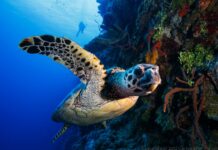
These include a nesting area for the Sister Islands rock iguanas, which often wander onto the grass beside the runway, and a proposed critical sea turtle nesting habitat. The airport is also next to a protected marine reserve, and the Westerly Ponds which are home to birds and mangroves.
The Airports Master Plan calls for the extension of the runway and the safety area to the west, which would bring it close to the turtle nesting area, Dombowsky said. The proposal involves partially filling the ponds to the south of the airport, and adding a taxiway, control tower and weather station to the north of the existing runway, on land where the Daggaro airfield had previously been proposed.
To the eastern side of the existing runway, she said, there are plans to construct another runway and safety area on the already filled-in site next to the pond, and realign the road.
She noted that Cayman Brac does not have an abundance of marine habitat, and the Westerly Ponds, though “not pristine, they are still very important as a stopover site” for wetland and wading birds on the island.
“With that in mind, the recommendation from the Department of Environment is that an environmental impact assessment would be required,” Dombowsky said, adding that it would focus only on the ecological issues, such as wildlife management at the airport, and the impacts on sea turtle habitat, rock iguanas and mangroves.
She added that it was also recommended that the EIA look at drainage and water quality, “because those ponds are quite close to some of the main tourist areas on the Brac, and if the water quality in those ponds are impacted and they become eutrophic, that could have a big impact amenity issue for those properties on the south”.
Related Videos