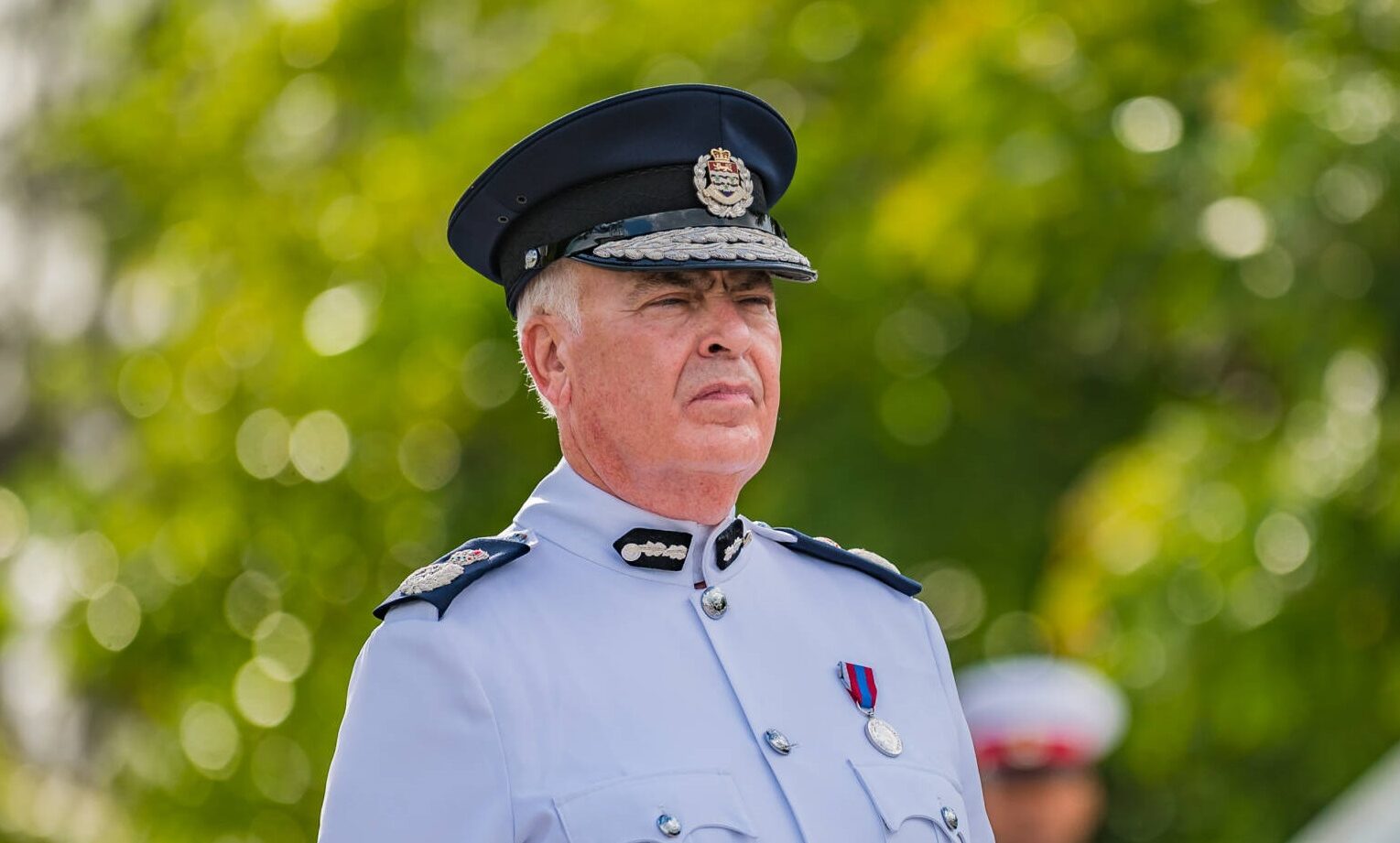
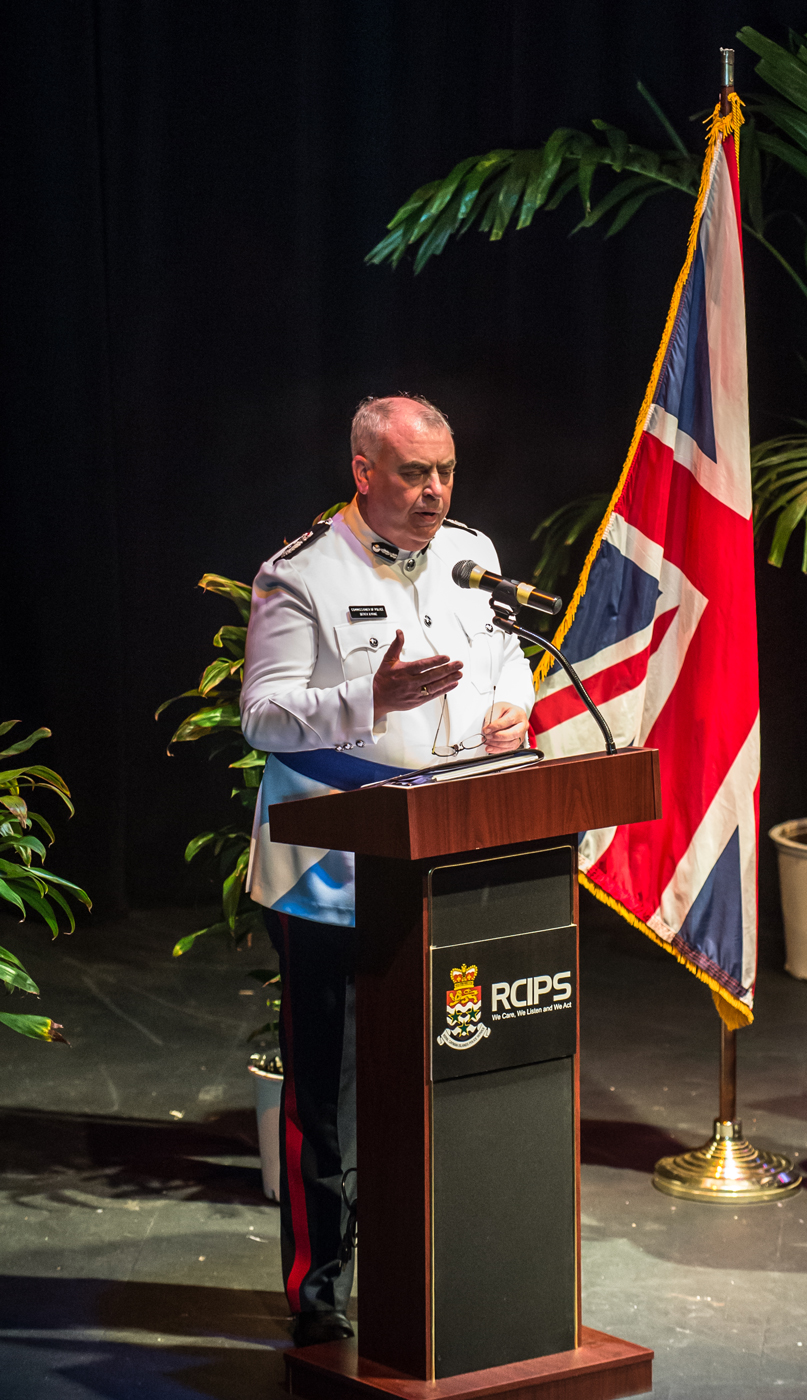
After seven years, two governments, three governors, a global pandemic, a population increase of more than 20,000 people, multiple lawsuits, and a massive overhaul of the police service, Commissioner of Police Derek Byrne is saying his final goodbyes, having helped to train a Caymanian successor to take over his role.
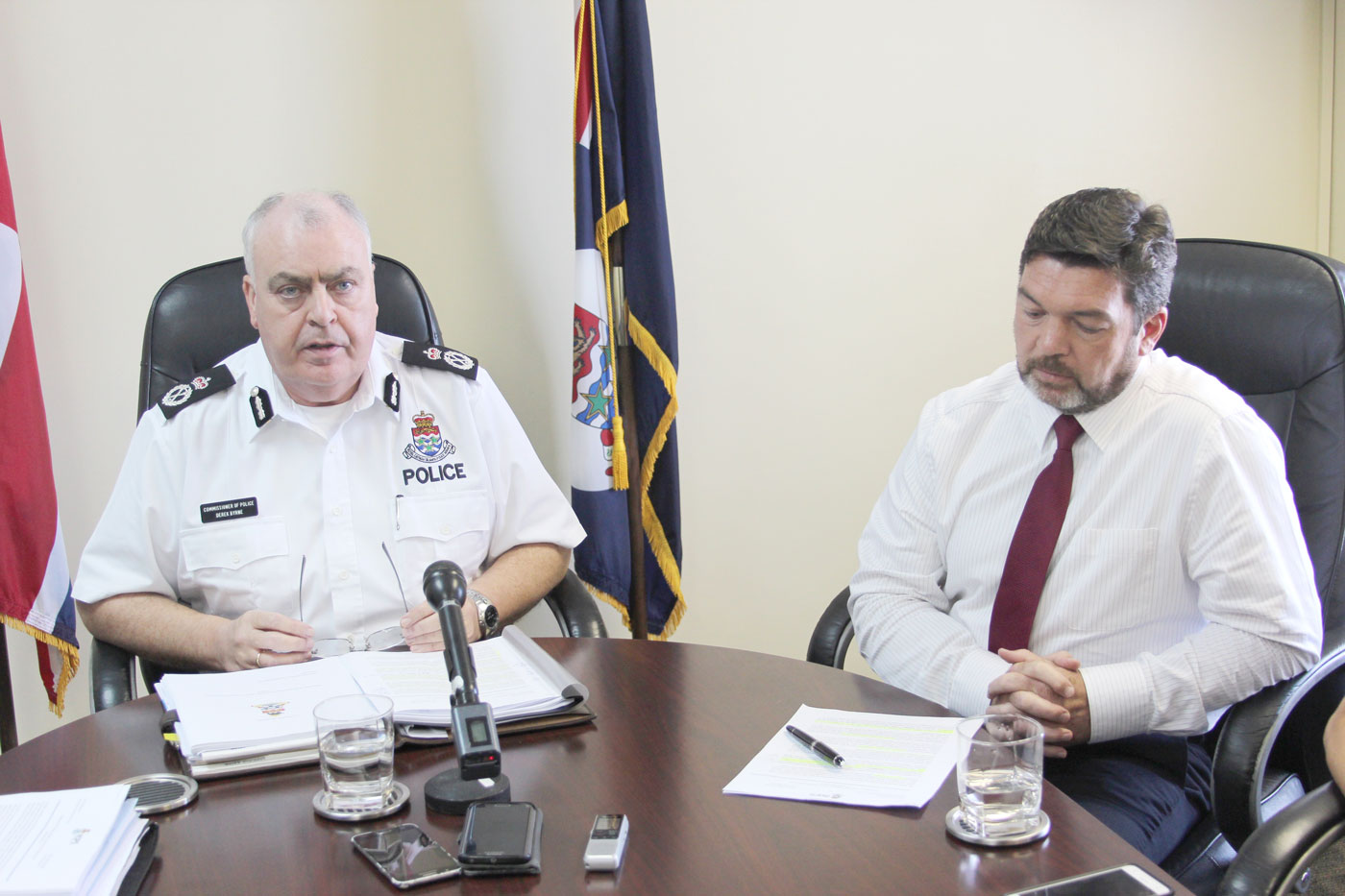
“It’s not easy walking away from Cayman and the people of the Cayman Islands,” said Byrne at a final media roundtable discussion on Wednesday, 27 Sept., during which he reflected on the successes, failures and ongoing challenges of the police service.
A mission to mend
Byrne, who is a native of Dublin, Ireland, was appointed as commissioner of the RICPS on 1 Nov. 2016 after a 36-year career that saw him climb to the rank of assistant commissioner of Ireland’s national police service, An Garda Síochána.
Months before his appointment, the then Police Commissioner David Baines had unexpectedly resigned, citing strife between himself and elected officials whom he claimed had undermined his authority.
An external view of what Byrne inherited was nothing short of shambles.
The relationship between the police and the public had been severely strained after the community policing unit was made all but defunct. Allegations of discrimination and corruption within the ranks of the police service were rife.
There was a high level of attrition, which resulted in the RCIPS hemorrhaging officers to other uniformed bodies, such as the then Immigration and Customs departments.
An ageing fleet and a lack of equipment resulted in police having to outsource crucial services, which in turn drained their budget and hampered the timeliness of criminal investigations and subsequent prosecutions.
All of this was against the backdrop of an ever-growing landscape of criminal activity which was swiftly evolving and outpacing police who were struggling to detect, let alone react to, emerging criminal trends.
The stats speak for themselves
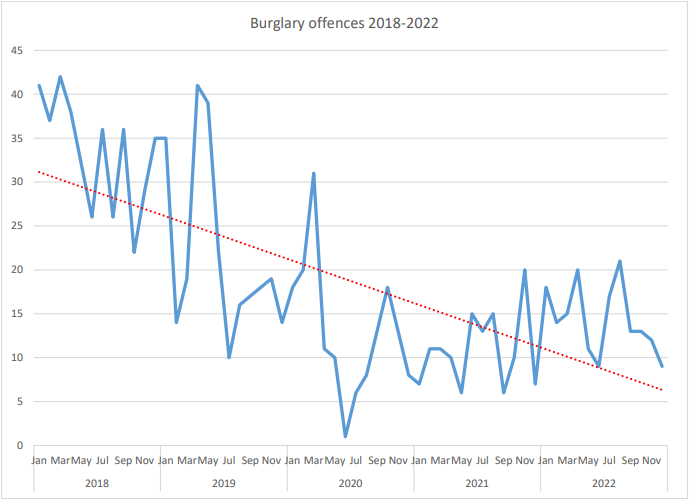
Publicly available crime and traffic statistics which date back to 2010 show that, under Byrne’s watch, the most serious offences either decreased or remained the same, despite a population increase.
Between 2010 and 2016, before his arrival, there were 26 murders, 95 reported rapes, 4,031 reported burglaries, 343 reported robberies, and 162 charges for unlicensed firearms.
Between 2017 and 2022, while Byrne was at the helm, there were 16 murders, 88 reports of robberies, 1,452 reported burglaries, 176 reported robberies, and 70 charges for unlicensed firearms.
That represents an average 20% fall in the most serious crimes during his watch, with the most notable figure being a drastic 60% drop in reported burglaries.
These figures also do not include the tens of thousands of pounds of drugs that have been seized during his tenure.
The only real area of worrying growth was that of car crashes, which saw 8,515 collisions, including 50 fatalities, between 2010 and 2016; that figure nearly doubled to 15,605, with 53 fatalities, between 2017 and 2022.
While the comparisons are not exact matches, because of a discrepancy between timelines of seven years versus six years, the population increase of 20,000 people during Byrne’s tenure (as per the Economics and Statistics Office) helps to compensate for the one less year.



Successes and failures
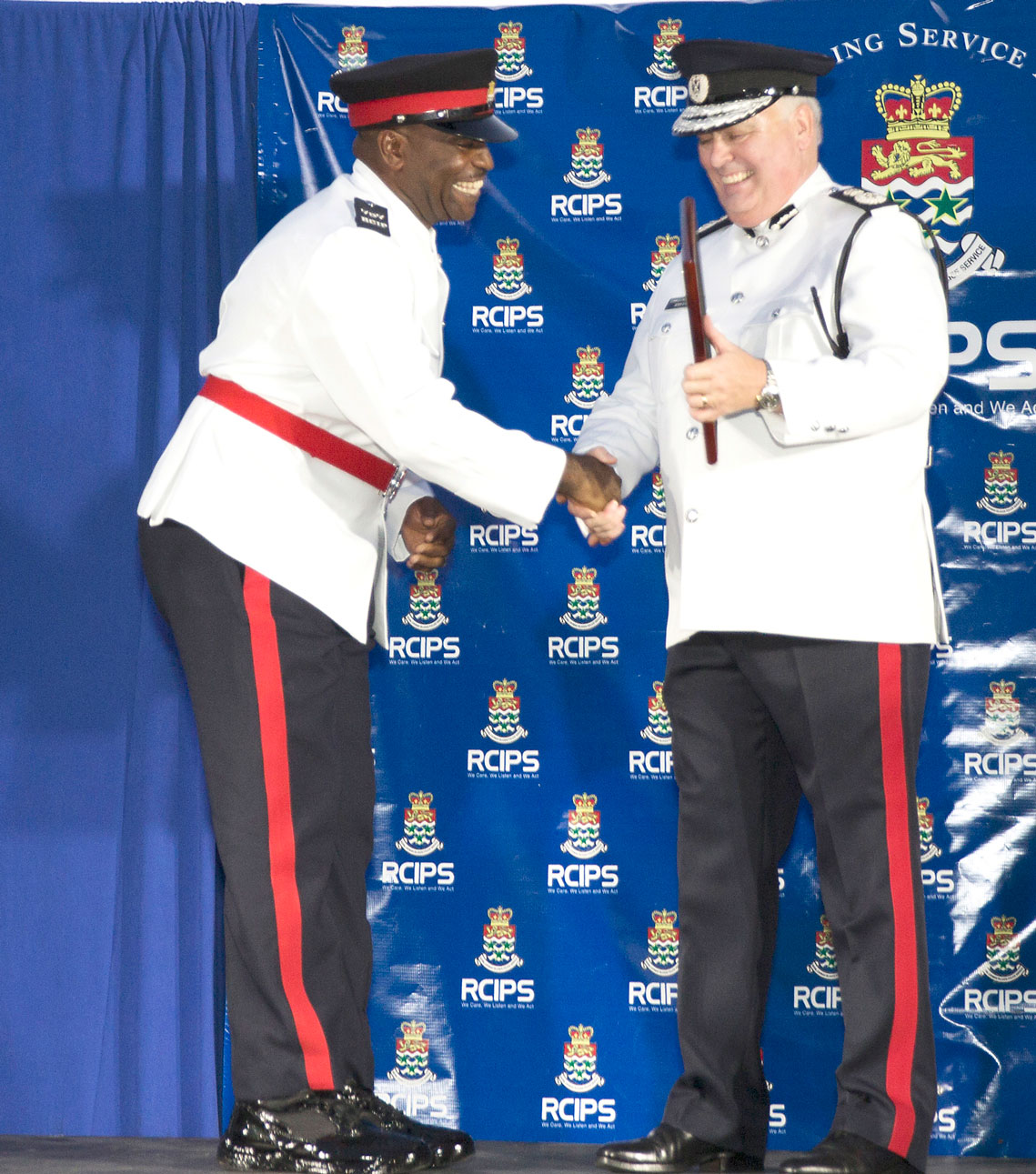
When asked about the successes and failures of the last seven years, Byrne noted that, in addition to the support he received from his officers, the police also attracted financial and public support from successive governments and governors – which allowed his officers to shine when the world’s eyes descended upon Cayman, for example when British royals visited the islands.
The then Prince Charles and his wife Camilla, Duchess of Cornwall, visited in 2019, and Prince Edward and his wife Sophie visited last year.
“A royal visit is no light touch event,” said Byrne. “If something goes wrong, it’s significant. We hosted them without any issues arising.”
He added, “To have the international policing services say to us, we are as good as they’ve seen and as good as it gets, shows that we have that capacity, that our officers are able to deliver [and] that we can plan, and we can host [royal visits] safely.”
Other successes of which the commissioner says he is proud are behind-the-scenes projects which have noticeable benefits to the police and the wider community.
In 2017, the RCIPS unveiled a ballistics hub at the George Town Police Station, which has since processed hundreds of rounds of ammunition and more than 250 firearms from Cayman and the wider Caribbean. One notable success was the recent seizure of a handgun that has been matched as the murder weapon in five murders in Jamaica during the last four years.
Another win for the police was the rethinking of child safeguarding and the introduction of the Multi-Agency Safeguarding Hub in 2017, following the mishandling of a number of earlier child abuse cases. Since then, there have been numerous successful prosecutions for sexual abuse of minors and adults, but Byrne believes more can be done.
“I have a concern about the number of sexual crimes that are in the islands, and that includes involving children,” he said. “I have to say, I’m really concerned about the level of it. It seems disproportionate to me, the whole issue.”
Under his leadership, the police gained another helicopter which has assisted with medevacs, border patrols, search and rescue, and prisoner transports, in addition to several other police investigations, and support to other overseas territories.
During his time in Cayman, the RCIPS’s marine unit formally became a Coast Guard detachment that works in tandem with land-based officers.
Police also bolstered its financial and cyber-crimes unit that helps to investigate money laundering, fraud, theft and an array of telecoms-based crimes and threats. Between 2010 and 2016, police detected 188 cyber-related crimes – since Byrne took over, that number has increased to 666 incidents.
But with his successes, the commissioner has had his fair share of failures.
In a defiant stance, his own officers sued him and the organisation on several occasions, alleging workplace bullying, discrimination and unfair employment practices. There were also internal promotion disputes, as well as external lawsuits from the public.
While the results of the court battles have been mixed, Byrne believes they’re signs of growth, not just within the RCIPS, but in the Cayman Islands.
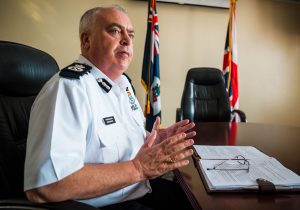
“This is part of the change process, and you either sit back and say that something is wrong but don’t challenge the status quo, or, for governance and the fact that it’s public funds we’re talking about and accountability, you say these are the things we all have to look at, and at my level, it’s about creating equity in the service,” he said.
While the dust has settled on some of the lawsuits, some matters are still ongoing, which will be a challenge for the commissioner-designate, Caymanian Kurt Walton.
During Byrne’s tenure, Walton served as a deputy commissioner, alongside Anthony Ennis. Although Byrne leaves large shoes to fill, there is much optimism that Walton will be able to chart a new path without missing a stride.
“I expect him to put his own stamp on it,” Byrne said. “I think he’ll probably take a week to look at the service; there’s obviously things up for continuity that he has to keep going, things still in train that he has to keep going, and then he’ll have some new ideas in terms of how he’s going to bring it forward.”
Lasting moments
With his departure imminent, the commissioner will spend his last few days wrapping up his affairs in Cayman, and his eyes are set on returning to Ireland.
“I have to reconnect with my neighbours, my community and work colleagues, and the department I came from,” said Byrne. “I would have to say it’s not an easy task departing the Cayman Islands.”
And when he does leave, he will be taking memories of the impact he and his officers have had on the lives of Cayman’s residents, one of which is a simple token of gratitude from a Bodden Town resident.
“I got this card and a beautiful present, a crocheted detective bear that has a little eyepiece,” said Byrne. “I still have it to this day.”
The gift was a gesture of gratitude to the commissioner, who together with former head of community policing Courtney Myles, visited the resident and held an informal discussion with her and her neighbour to address a then perpetual noise complaint.
In a parting comment, Byrne said, “It has been an honour and a privilege to have served as the commissioner for the Royal Cayman Islands Police Service for the past seven years, to work with some of the finest men and women you’ll ever meet.”
Related Videos