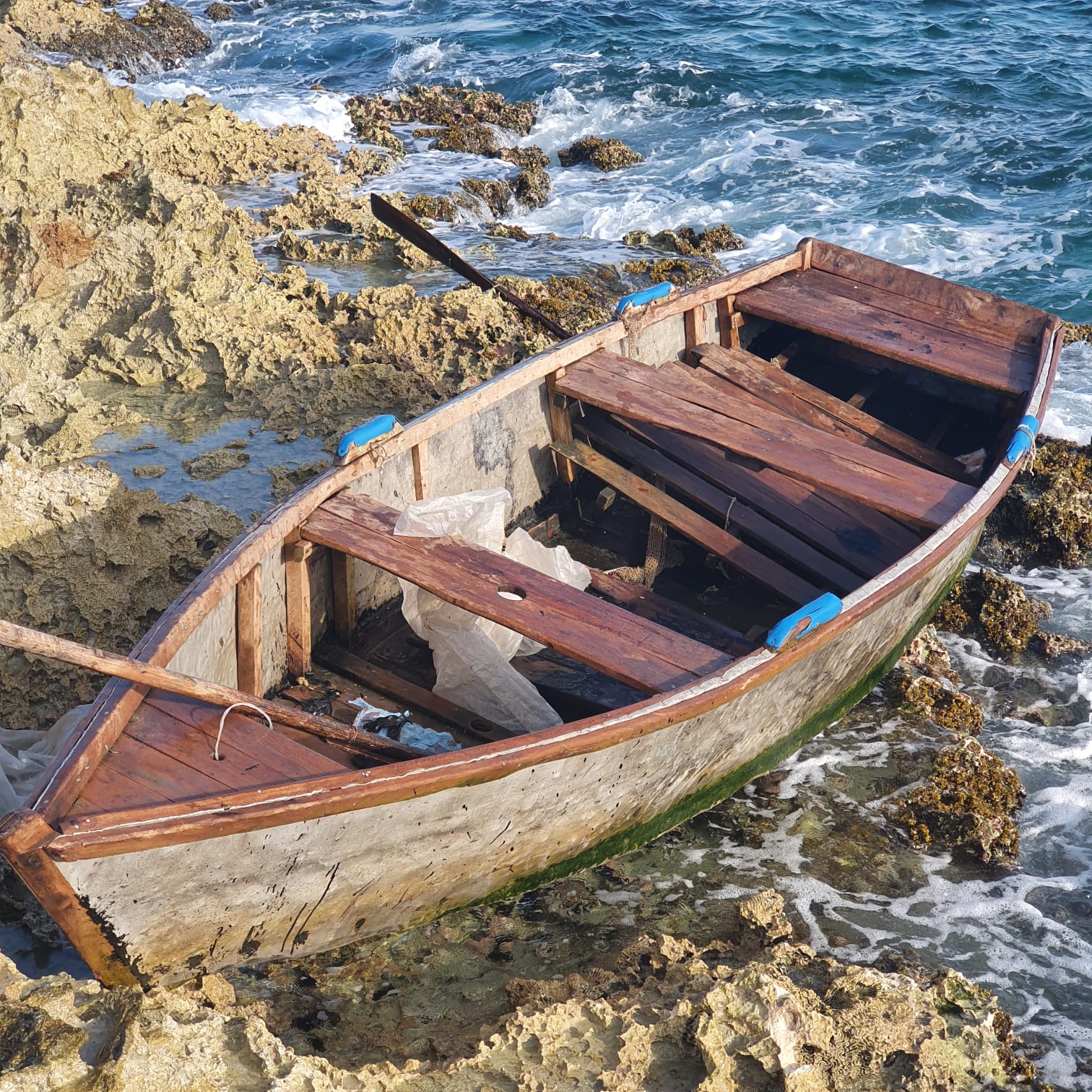
A citizen-led rescue effort to save a group of Cubans whose makeshift boat capsized close to Cayman Brac provided a rare glimpse of the ‘invisible shipwrecks’ responsible for hundreds of deaths each year in the Caribbean Sea.
Eight people were rescued after one of the Cubans swam for miles through the night to reach the Brac and raise the alarm. Two of his companions are still missing, feared drowned, the latest victims in an unfolding humanitarian crisis in the region.
The incident was a relatively rare case in that it ended with the survival of the majority of the crew, who are believed to have been trying to reach the United States.

In most cases, when makeshift rafts carrying migrants through the region capsize or break apart in the ocean, no trace is ever found.
“This is what we mean when we talk about invisible shipwrecks,” Jorge Galindo, at the International Organization for Migration, told the Compass.
“We only hear about cases when there are survivors.”
The organisation’s Missing Migrants Project has recorded 1,541 deaths on known Caribbean migration routes since 2014.
There were a record 321 deaths and disappearances in the region last year, according to the organisation’s latest data report.
The numbers, pieced together from official reports, media coverage and, in some cases, families of the missing, represent only a fraction of the likely total of those lost.
“The numbers don’t paint the whole picture. We are only scratching the surface,” he added.
He said the organisation wants to bring attention to the global crisis of irregular migration, and the data project also aims to bring closure to families.
“A lot of people are never officially identified and a lot of deaths go unrecorded,” Galindo said.
“The bodies are never recovered and the families never get to know about the whereabouts of their relatives.”
However, the data doesn’t give a complete picture. The nationality of the victims is only known in 12% of the recorded deaths. Most are believed to be from Haiti, Cuba, Venezuela and the Dominican Republic.
Tracking deaths and missing persons is made more challenging by the fact that most migrants are travelling incognito – fleeing corrupt or dysfunctional regimes and actively trying to conceal their identity.
A memorial to the lost
El Toque, an independent newspaper covering Cuba from offices in Cuba, Florida, Spain, Canada and Ecuador is attempting to bring some solace to families of the deceased.
In a groundbreaking project, the newspaper has produced obituaries along with photographs for 155 people who died trying to reach the US since 2021.
It is the biggest “mass exodus” of Cubans since the 1960s, according to the newspaper.
The investigation website of the newspaper states, “We know that counting the victims of this human drama and putting a face on them will not return them; but it will allow us, as a society, not to forget.
“We want this space of memory and tribute to serve as help and accompaniment to the relatives who continue their search.”
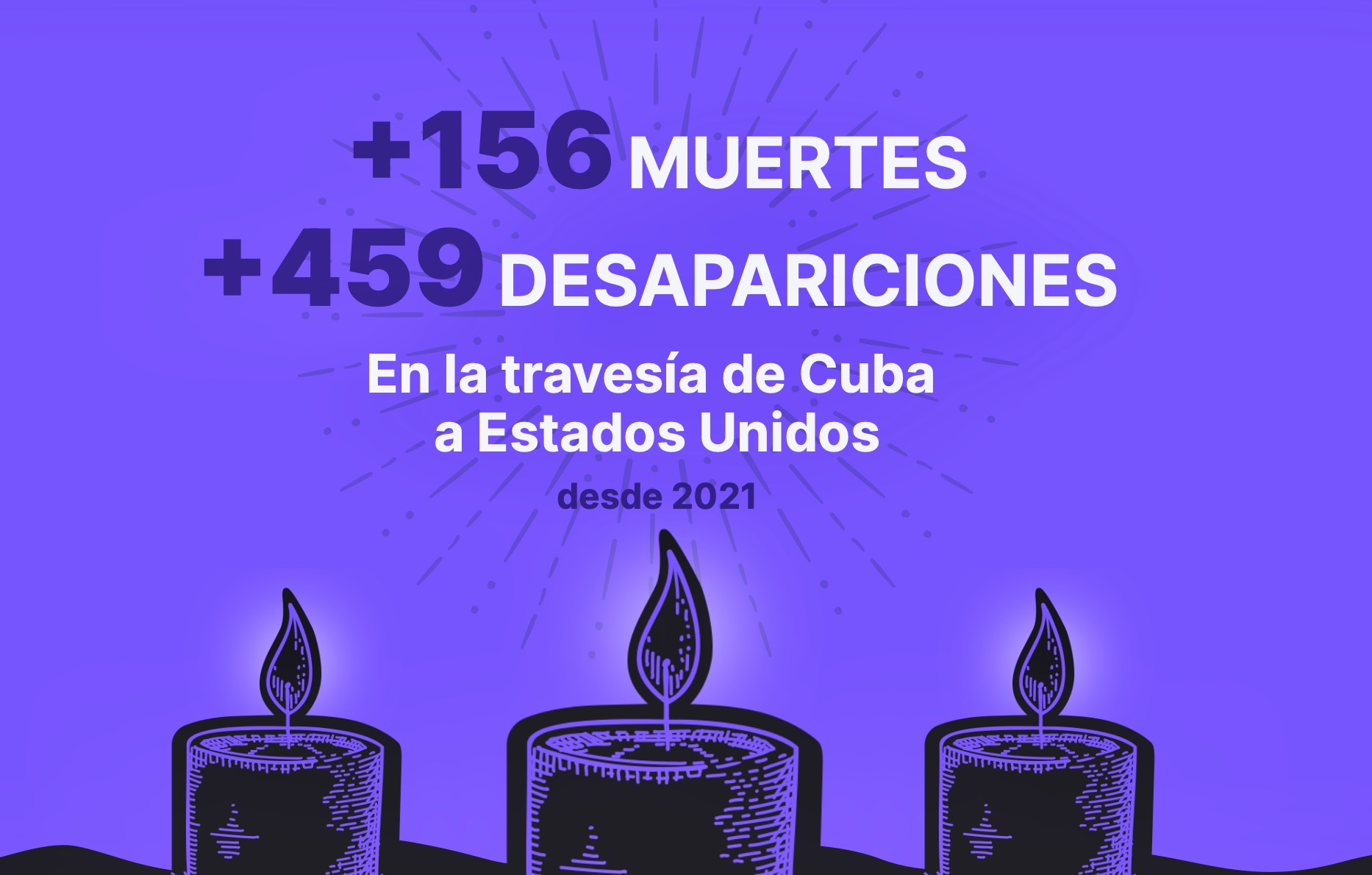
It includes harrowing details of the variety of fates that have met migrants en route to the US.
There is 3-year-old Ashley Paola, drowned in a shipwreck just 30 miles off the Cuban coast. There is 19-year-old Cristian San Martin Estrada, who made it to the Mexico-US border but was murdered in Juarez shortly before he could file his asylum application. There is Juliet Acosta Perez, who died in the Darién Gap, a jungle south of Panama, trying to make a land crossing through Central America.
“These are all victims of the political regime in Cuba,” José Jasán Nieves, the Miami-based editor-in-chief of El Toque, told the Compass.
“We wanted to build a memorial for them.”
Putting names and faces to the data also serve as a potent reminder of the human costs.
“It hurts when you see the faces, especially the children. That is the really unfair part of this crisis.”

The project also has become a hub for helping to locate the missing.
Data compiled with the assistance of families searching for loved ones, includes the names and, in some cases, pictures and profiles of 459 missing persons who left Cuba and have not been heard from since.
“Sometimes people listed as missing turn up in detention in the Bahamas or Cayman,” he said.
Again the data set is incomplete. The stories, names and numbers listed are just what the newspaper’s reporters could piece together over the past two-to-three years.
The fact that so many are prepared to take such diverse risks to try to reach the US, even as the American government tightens entry requirements, shows the extent of the political and economic crisis in Cuba, he says.
While migration from the communist island has been a constant for the past six decades, things have escalated in recent years.
US authorities detained 220,000 Cubans at the US-Mexico border from 1 Oct. 2021-30 Sept. 2022, according to US Customs and Border Protection data, shattering records set by prior immigration crises, including the Mariel boatlift, in which about 125,000 Cubans left for the US from April to October 1980.
Meanwhile, 2022 was the deadliest year on record for migrants in Central America, according to Galindo, of the International Organization for Migration.
“There has been little or no progress with regard to saving lives,” he said, as his organisation seeks greater cooperation among governments in the region to help protect migrants.
Compass reports: The Cuba-Cayman Connection
Related Videos