

Government is set to embark on a review of Cayman’s pensions plans which could see existing pension contributions, as well as, the local retirement age increased.
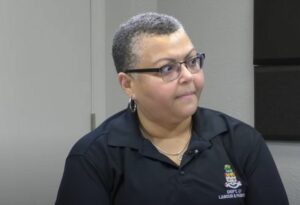
Deputy Director of Pensions Amy Wolliston, speaking on Wednesday’s episode of the Cayman Compass lunchtime talkshow ‘The Resh Hour’, said the Department of Labour and Pensions has commenced drafting tender documents for an actuarial study to review and make recommendations on changes to the current 5% pension contribution from employee and employers.
“We will holistically review all of the pension plans collectively to determine what should the contribution rate be. After that project, we will then be also looking at the investment regulations because we as a regulator, and I think the ministry as well, understand that’s something that does need to evolve and it hasn’t changed since the regulations came into effect in 1998. So that’s something that needs to happen,” Wolliston said, as she explained the planned study.
She said Chris Saunders and Dwayne Seymour, both former ministers of labour, hinted that changes were coming and now this study will determine what those changes should look like.
Wolliston said as part of the study, the retirement age, which stands at 65, will also be reviewed as that “may need to be increased” as people are living longer.
“I think the study needs to speak to that formally but I also think enough been said publicly about it by the government that we’re at that stage [to increase both contributions and the retirement],” she said.
The study, she said, will commence next year following the procurement process.
She said the changes to the investment regulations will seek to respond to concerns within the community about the poor returns on investments made with pension funds.
At present, Wolliston said, there are 11 registered pension plans with 70,000 members and a collective $1.3 billion in holdings.
Call for public comment on changes
Public consultation is currently ongoing for proposed changes to the existing National Pensions Act, which will see increased withdrawal limits for Caymanians. The feedback period ends 16 Oct.
Wolliston said the community should read the changes that are being suggested by government and provide input, especially those seeking to make use of the provisions when they are passed.
She said the community needs to know “what they are getting into” with the withdrawals, as a key change is an increased repayment threshold of 3% (up from 1%) for any new withdrawals under the revised law.
The bill proposes increasing the maximum withdrawal allowed for home purchase or construction from $35,000 to $50,000, allowing a maximum of $50,000 for a reduction payment on an existing mortgage or residential land loan, increasing the withdrawal amount to pay off an existing mortgage from $35,000 to $100,000.
Applicants will be required by law to repay an additional 3% contribution into their pension plan.
At present, those who have made withdrawals are required to pay back what they took at a rate of 1%.
Wolliston explained that this means anyone who makes a withdrawal will have to pay 3% towards their pension, in addition to the legally required 5% contribution.
Wolliston said the area of compliance with repayments has posed a challenge for the department, especially as the onus is on the employee who makes the withdrawal to inform the employer to make the additional deduction towards the pension plan.
“I think that’s the area where has been the most challenging for us generally. We are working on developing an internal tracking system with our computer services department in order to facilitate that, because technically under the legislation a member can be prosecuted for not paying the 1% or the 3% when it actually comes,” she said.
The current penalty for non-compliance stands at $20,000 or imprisonment for two years or both.
Wolliston said no one has been prosecuted for non-compliance yet, but that may come.
“Unfortunately, we may have to for people to realise that we’re serious,” she added.
Few repayments made after emergency ‘raid’
Wolliston said after near $500 million was withdrawn from pensions during the height of the pandemic very few made repayment contributions.
“There are some people who make additional voluntary contributions but unfortunately they’re the minority. Most people only pay what they’re legally obligated to pay,” she said.
She urged those who “raided” their pensions to make additional payments as they will need the funds in the future when they retire.
Wolliston said the public can make reports of pension breaches to the confidential hotline at 945-3073 and can email the department at [email protected].
Related Videos













“At present, Wolliston said, there are 11 registered pension plans with 70,000 members and a collective $1.3 billion in holdings.”
Based on these figures, that means the average account only has a balance of $18,571.43.
Doing a quick internet search, I found these quotes: “Fidelity, which manages employee benefits programs for more than 22,000 businesses and offers a variety of financial planning services, suggests saving at least 10 times your annual salary by age 67.” “Average 401(k) plan balances reached $112,572 in 2022, down from $141,542 in 2021 and $129,157 in 2020, according to Vanguard’s “How America Saves 2023” report.”
Since the Cayman pension system is basically the same thing as the US 401(k) system, based on these statements, Cayman society is in a lot of trouble (i.e. there are going to be a lot of people that will never be able to retire and/or will become a burden to government – which everyone else will have to pay for).