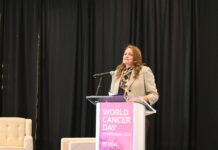
With the world moving on from COVID-19, another threat looms, with a Cayman oncologist warning that cancer could develop into the next pandemic.
“For Cayman, [and] everywhere in the world, cancer is becoming the next pandemic actually, or epidemic,” said Dr. Vineetha Binoy, senior consultant medical oncologist at Health City Cayman Islands.
“It’s soon going to overtake cardiovascular diseases as the number one killer of mankind.”
She said breast cancer is a commonly diagnosed cancer, and that while the incidence of “cardiovascular diseases, strokes, heart attacks [was] at the top, and cancer second, by 2030, it is estimated cancer will overtake cardiovascular diseases.”
Higher incidents of cancers in various stages

Health City Cayman Islands. – Photo: Health City Cayman Islands
Binoy reported Cayman is seeing higher incidents of breast, prostate, and colon cancers in various stages of the disease, adding they were also finding younger people, under 60, with cancers.
She also pointed to contributing risk factors including a sedentary lifestyle, diet, and socio-economic changes.
Acknowledging there is still a long way to go before finding a cure for cancer, especially in advanced stages of the disease, Binoy said that was “very worrisome, so we have to focus on detecting cancers early so that we can cure them”.
She explained the nature of cancer cells compound the difficulty of finding a cure. “After a few months, those cells become smart enough to resist responding to a particular treatment. They are always mutating, that’s one of the properties that make them monstrous or cancerous. They can evade our immune responses, and the properties of cancer cells make them hide in places where the treatment may not even reach,” she said.
‘Breast aware’
Binoy said cancers are being detected in early stages due to screenings, and advised women to become ‘breast aware’.
“You know your body better than anyone else, so you’ll be the first person to know changes, very minor changes – blood in your stool, frequent constipation, a lump that’s not going away, a rash, or pain that doesn’t go away – those things you should never ignore. It’s always better to overdo it rather than ignoring and waiting because it could be a sign of cancer that may cause trouble later,” she said.
Cancers are detected early because the patient has been an advocate for himself or herself, she added, noting that no symptom or complaint is considered minor, and “there’s no age limit for [breast] cancer,” saying she’s seen patients as young as 18 and 23 years old.
Cancer doesn’t discriminate, she added.
Fear is a fear for life
“Fear is on top of their mind when they hear ‘cancer’,” she said of patients, noting she was thankful that in her practice, at least 60% of patients detect their cancer early.
“I’m able to reassure them, but I’m always concerned about how it is going to affect their day-to-day life. For example, the treatment, radiation, therapy, surgery, depending on the cancer. It used to be a big concern five years ago, but now thankfully, most of the things we can do locally, like diagnostics and treatments.”
Among other concerns of her patients, she said, were chemotherapy, surgery, the impact on family life, and breaking the news to children, partners and parents, adding that the Cayman Islands Cancer Society can help, by providing “financial assistance, advice, support and guidance”.
Cancer Registry appeal
At the same time, more local data on the disease is needed. Cancer registrar Amanda Nicholson told the Compass there about 750 people are listed on the Cancer Registry.
“I’m satisfied with this number, although we would love to capture every case of cancer in the Cayman Islands,” she said.
“Presently, the most reported cancers for females are: breast (52%); colon (4%), and cancers of the blood (4%).”
Nicholson said breast cancer has consistently been the most reported cancer on the registry. “If we look at every cancer reported (both males and females), breast cancer accounts for 36% of all cancer cases. It is important to keep in mind that 65% of registrants are female. That may, in part, account for the high number of breast cancers,” she noted.
Average age at time of diagnosis for breast cancer:
- Ages 20-29: 2% of reported cases
- Ages 30-39: 11% of reported cases
- Ages 40-49: 35% of reported cases
- Ages 50-59: 24% of reported cases
- Ages 60-69: 20% of reported cases
- Ages 70 and older: 7% of reported cases
Nicholson said the Cancer Registry aims to better understand cancer trends “within our population so that health officials can do everything possible to fight this disease. Registering is fast, easy, and always confidential. The information collected helps us plan for cancer prevention and management within Cayman,” she said.
Binoy has found nine out of 10 of her patients willing to sign up for the registry. “Knowledge is power and getting the information is what we want to have to provide to the community. We may not be able to prevent all cancers, but we can probably detect a lot of them early, [when] not only are your chances of [a] cure high but you also get away with less intense treatment,” she said.
Binoy encouraged adopting a healthy, predominantly plant-based diet; being active; avoiding or quitting smoking; limiting alcohol consumption; maintaining your ideal body weight; knowing your family history; knowing your body and noting changes in your body; and contacting your doctor to find out more information.
“Cancer is not a death sentence anymore… There are a lot of survivors because the cancers are getting diagnosed early, treated and cured. There are effective treatments available and most of the cancers can be cured if they are detected early,” she said.
For more information on mammogram vouchers, financial assistance, support and guidance, or Breast Cancer Awareness Month wellness programmes, events, and activities, visit the website of the Cayman Islands Cancer Society or the Cayman Islands Breast Cancer Foundation. Anyone interested in being added to the Cancer Registry can contact Amanda Nicholson at 244-2560 or [email protected].
Related Videos