

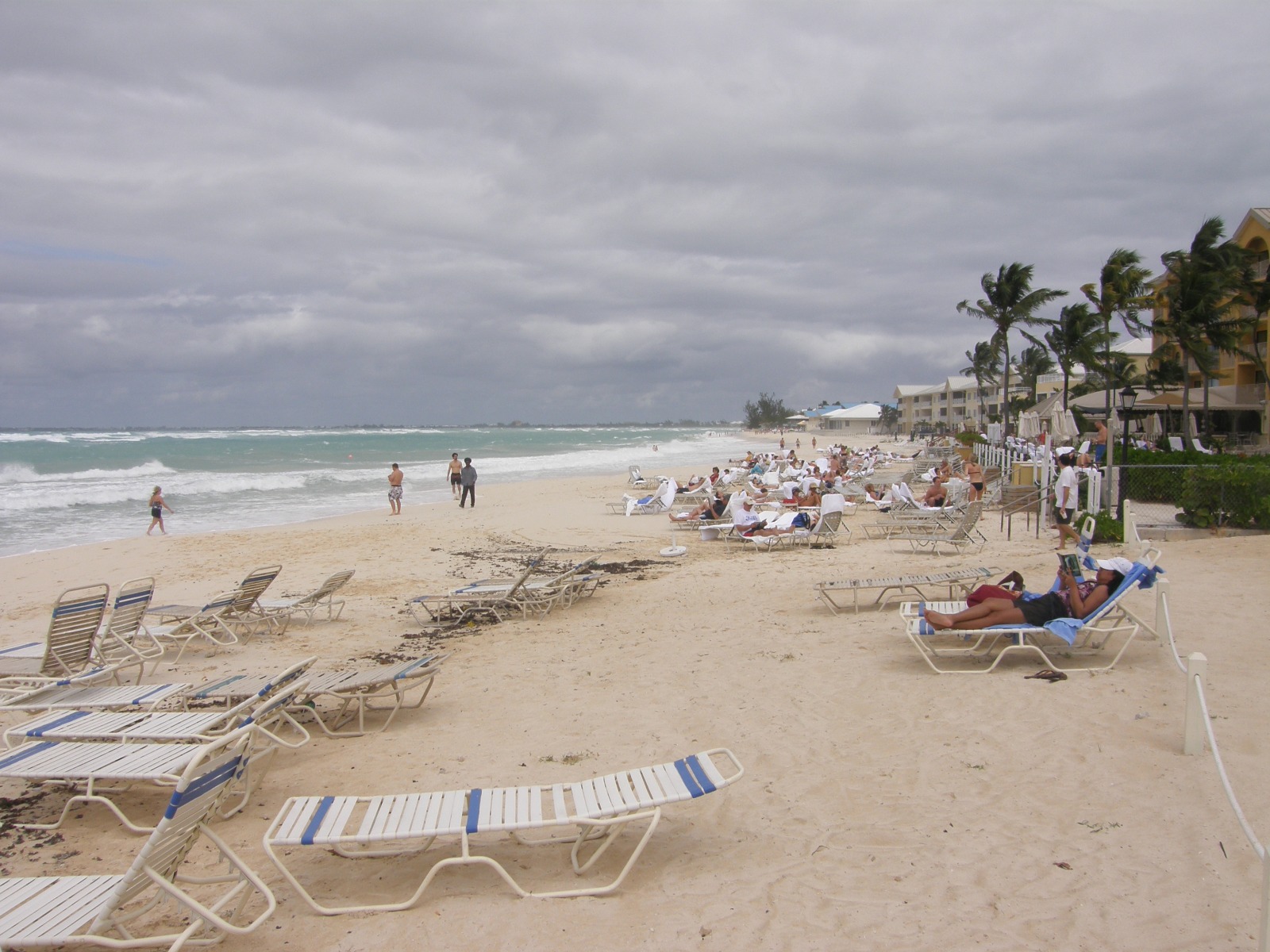
Plans to spread more than 52,000 cubic yards of fresh sand across a severely eroded stretch of coastline on Seven Mile Beach were identified as an urgent national priority by a government task force in late 2021, according to records obtained by the Cayman Compass.
The project would have involved importing a large portion of the required sand from the Bahamas or Cuba, and potentially using T-shaped rock structures jutting into the water at strategic locations to keep it in place.
Consultants recommended that a massive volume of sand – equivalent to 16 Olympic swimming pools – would be required to avoid the beach being swept away once more in future storms.
A task force, including Premier Wayne Panton, Tourism Minister Kenneth Bryan, Planning Minister Jay Ebanks and host of senior civil servants, had agreed the project should go ahead and the details were being finalised. There was also buy-in from the Department of Environment, according to minutes from two government committees established to deal with the issue.
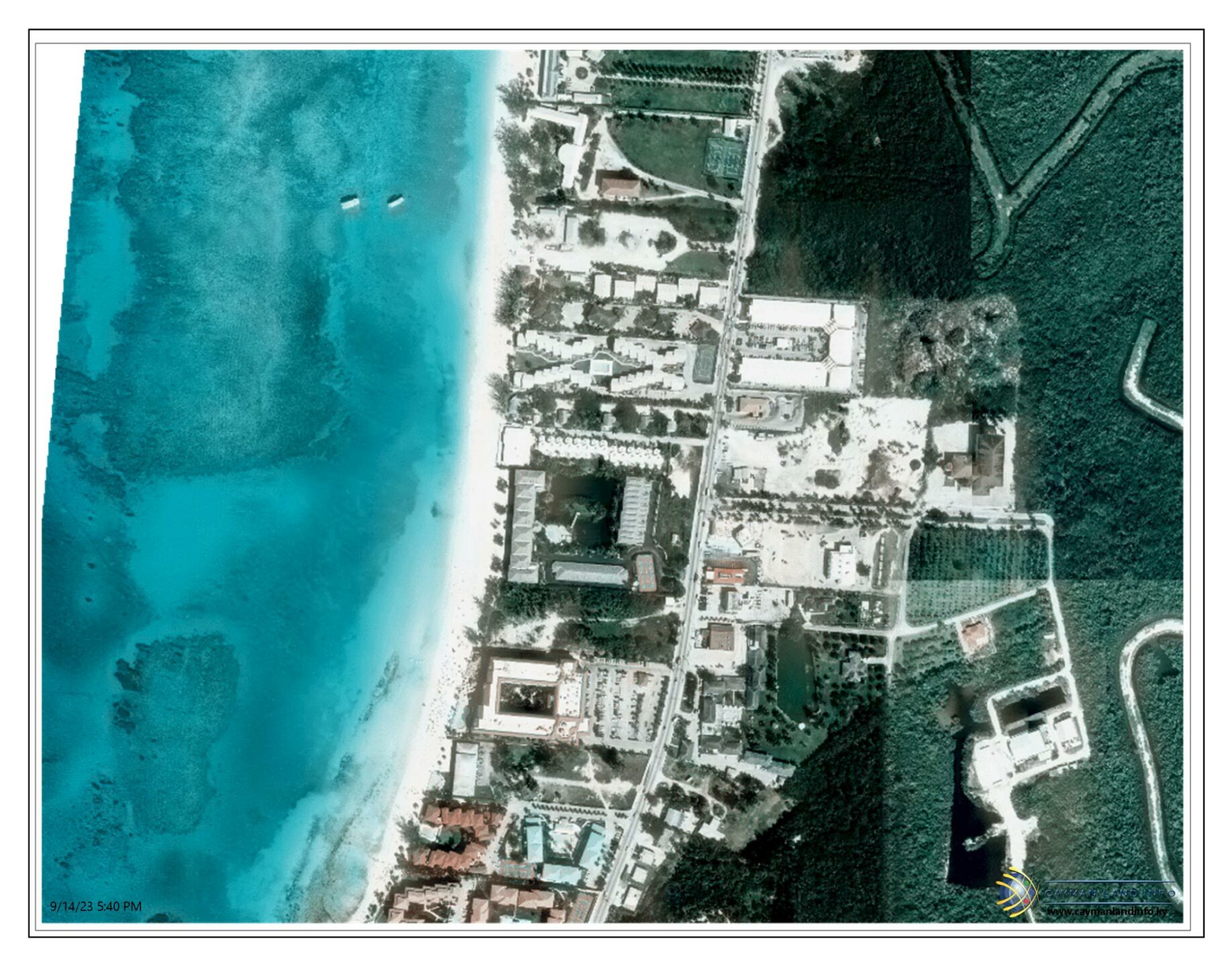
An initial flurry of meetings, around the time Tropical Storm Grace stripped away the remaining slivers of beach in front of the Marriott Resort and neighbouring condos in late 2021, appear to have achieved broad consensus on how to proceed.
Notes from the meetings, shared with the Compass under the Freedom of Information Act, indicate a draft plan had been formulated to truck in the sand and spread it along the worst-hit areas of the coastline – a half-mile stretch at the southern end of the famous beach.
Panton, who chaired the task force, pushed for a “speedy, comprehensive solution” to the erosion problems in the first meeting in August 2021. More than two years later, the project is still at the first stage of the three-phase business case process – required before work can begin. It remains to be seen if funds will be allocated to complete the work in the next two-year project, amid division among key Cabinet ministers over the multi-million-dollar works.

It was agreed that government should fund the beach renourishment project, despite concerns about perceptions that private land owners or hoteliers would benefit. Seven Mile Beach, the group concluded, was Cayman’s key natural asset and government needed to invest to preserve and protect it, as a national priority. New legislation was also proposed to prevent property developers encroaching on a newly expanded beach.
“If we do not have a Seven Mile Beach, we do not have a tourism product.
“A common goal is to have a pristine Seven Mile Beach and to keep [the beach] as wide as possible,” notes of a 30 Aug. 2021 meeting of the main task force indicate.
An ‘aggressive’ nine-month timeline is outlined in the documents, with the team initially targeting a contract award for the work in April 2022 and project completion in early 2023.
But the initial enthusiasm and harmony among the public officials appears to have dissipated as time went on.
Despite $21 million in funds being allocated in the 2022/23 budget – more than enough to complete the work, according to cost estimates included in the notes – the meeting frequency slowed in 2022 and both groups stopped meeting in March 2022.
There is no indication in the FOI response, provided by the Lands Ministry, as to why the meetings stopped at that time.
The Seven Mile Beach Erosion Mitigation Steering Group – a high-level oversight committee chaired by the premier and involving ministers and chief officers – and the Seven Mile Beach Erosion Technical Working Group – a civil-service-led offshoot with specific remit to come up with recommendations – appeared to be in the midst of their work when the meetings stopped.
Lost momentum
Two key factors appear to have stalled the momentum of the project.
The notes to the meetings, held between August 2021 and March 2022, indicate that the Central Projects Office advised the work could not be viewed as an ‘emergency’ and would therefore need to go through a full procurement process.
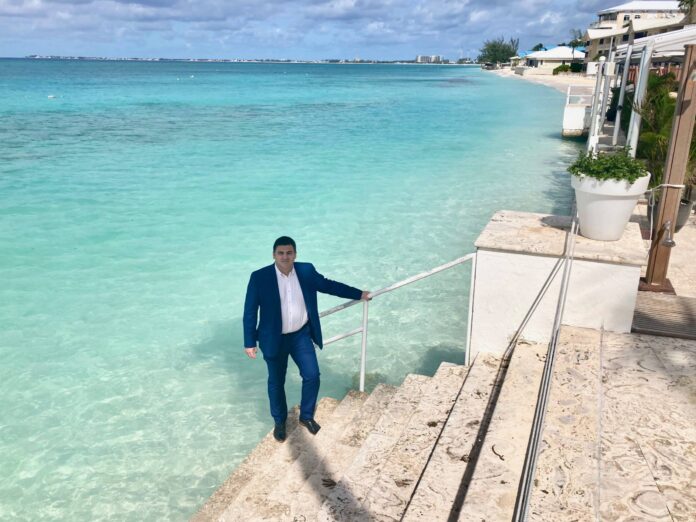
Initially ambitious timelines for that process appear to have run into the reality of the time consuming accountability required by the law.
Ministry Chief Officer Wilbur Welcome, answering questions from the Compass this week, highlighted the need for a ‘three stage’ business case process as one of the key reasons the project had not moved forward as yet.
He said his team had produced a strategic outline case which is currently with Cabinet for consideration. But he cautioned that this is just the the “first of the three required business cases” before the project could proceed.
At the end of this year, the $21 million budget allocated to the Ministry of Sustainability in 2021 will be lost.
It’s plausible that it will be reallocated to the Lands Ministry in the new budget, scheduled to be unveiled in December, but with every minister vying for a slice of the funds for a growing suite of infrastructure projects, there is no certainty.
Welcome said he believed the issue remains a priority, although he indicated it would now be subject to a more extensive planning process.

He said the government envisages taking a short-, medium-, and long-term view to the re-nourishment and retention of Seven Mile Public Beach.
“Such vision cannot be achieved by simply taking a short-term measure of dumping sand on the beach,” he said.
He acknowledged, however, that the wait was taking a toll on business- and home-owners in the worst affected areas.
“We understand the urgency of the re-nourishment as a significantly eroded Seven Mile Beach can have a significant adverse effect on various sector of the Cayman Islands’ economy,” he said.
Enthusiasm among key Cabinet members for the project appears to be waning, however.
Tourism Minister Bryan, who was a part of the committee that identified the project as a priority back in 2021, has since spoken out against the allocation of funds for sand that he said could be swept away in a storm.
How would the project work?
With the budget allocation yet to be confirmed and government at stage one in a three-stage business case process, it seems unlikely that trucks will be pouring sand on the beach any time soon.
But the minutes give an insight into what a re-nourishment project would look like, as well as the confidence of government officials and their experts that it would work.
The minutes include input from Kevin Bodge, of coastal engineering company Olsen & Associates, who describes it as a “tried and true” process.
Nonetheless, Bodge cautioned in a 1 Oct. 2021 meeting of the technical working group against a ‘pilot project’ involving a much smaller amount of sand, counselling that it may not work and could negatively impact public opinion.
“Pilot project not advised, as the sand will disappear, which will not be good PR and possible waste of resources (local sand and money). There are a lot of ways to ruin your beach,” he noted.

At the time, with no date set for the re-opening of borders after COVID, the committee saw a chance to get the full project done and to “do it right first time”.
The issue of whether the sand would be washed away in a storm – highlighted by Bryan in an interview on the Cayman Compass show ‘The Resh Hour’ – was something the committee sought to address.
The notes suggest the volume of sand was key to the success of the project.
Bodge’s report also indicates that T-shaped groyne structures – similar to those behind the former Treasure Island hotel – could be used to keep the sand in place.
The minutes reflect concern among the members of the committee about how these would be perceived.
“Although it is initially an emotional issue to see such structures on SMB, we may need to move onto the business aspect of this and accept that something is needed,” the meeting notes for the technical working group’s meeting on 1 Oct. 2021 indicate.
“Existence of the Treasure Island structures will soften the idea as well, and make the point that these will address the serious issues on the southern tip, not along the whole beach.”
Further concerns were aired about importing sand and whether the public and tourists would still consider Seven Mile Beach truly Cayman.
Who pays?
The issue of who should fund the project was also a hot topic for the committee. Thought was given to asking hoteliers and condo owners fronting the beach to fund the works.
The Marriott Beach Resort, in particular, has been a long-term advocate for solutions to the erosion problem, and has put forward its own project proposals – rejected as unworkable by the Department of Environment – to help retain sand at the site.
The committee minutes indicate the group decided that government should seek a solution for the whole southern end of the beach and use public funds.
“It was discussed that [the Cayman Islands government] could manage expectations of the project by having property owners pay some of the costs.
“However, it was noted that, if some owners assist with funding, then those same owners will want to have a say in how the project is carried out,” the notes to a 23. Sept 2021 meeting of the Technical Working Group indicate.
Drawing a line in the sand
One additional concern was the question of who owns the new land once the beach re-nourishment is complete.
Under current regulations, private property rights extend to the ‘mean high water mark’ – a moving line based on surveys of the coastline.
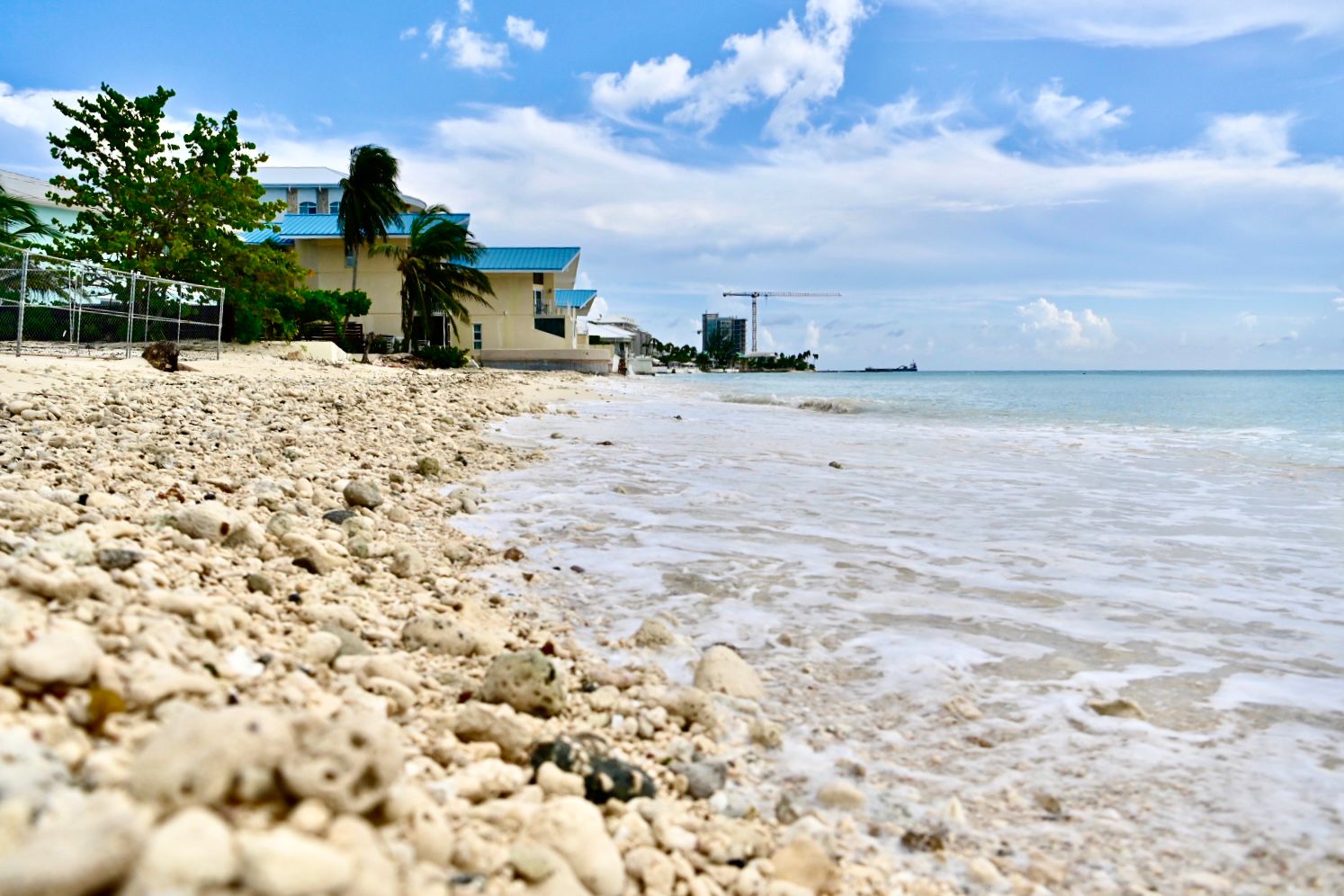
What’s to stop developers from encroaching on the newly laid sand?
The steering committee indicated that legislation would need to be developed to ensure “adjacent property owners will not be able to claim or build on the sand that will be installed on the project site”.
A solution to this – as well as to future development concerns along the beach – was proposed in the form of a new fixed coastal setback reference line.
Based on the old vegetation line, this would be the reference point to assess where coastal property owners could build. The net impact would be to create stricter rules on how close landowners could build to the ocean in future. The Compass will take a closer look at this proposal in future articles.
Though that concept was approved in principle in December 2021, according to the documents, it has yet to be carried through.
A spokesperson for the Ministry of Sustainability and Climate Resiliency said consultation on this and other related issues had been taking place as part of the work to create a climate change policy and to update the planning framework.
“Damage to coastal communities and properties is an ongoing risk of climate change that is expected to be made worse by rising seas and severe weather events,” the spokesperson said.
“Developing a new regime for coastal construction setbacks requires a holistic, coordinated approach across relevant Ministries, and strategic actions for revising coastal setbacks are included in both the draft Cayman Islands Climate Change Policy 2023-2050 and the PlanCayman National Planning Framework, which is being used to inform an updated Planning Statement.
“With both of these important projects moving forward – and given the increasing urgency to ensure the Cayman Islands’ climate resiliency – the Ministry of Sustainability & Climate Resiliency looks forward to working with the relevant stakeholders to develop a recommendation for an updated coastal setback reference line for Seven Mile Beach based on decades of coastal data.”
Related Videos







Import sand? Wow!!!!
I live on the west coast of Florida. The Gulf of Mexico beach on Anna Maria Island and Long Boat Key over years of large and power hurricane waves need to be refurbished. Every 10 or so years when it is required a suction dredge will park offshore over the areas where much of the clean white sand from the beaches collects. Huge flexible pipes are laid from the dredge to the beach and for a week or two the beep beep beep of bull dozers can be heard 24 hours a day while they spread the white sand that was removed by wind and waves of previous storms to where it is needed.
I imagine this was considered by the powers that be on Grand Cayman and rejected for some reason.
Our beaches are public property and our taxes pay the cost. Like Seven mile Beach, our sand is the life of the entire area. “Just Saying”
I, 1000% agree with James T! We do not need to import sand. All our Cayman Sand is sitting 1000 yards out. (unless it has gone over the edge). We need more Parrot fish! Dredge or vacuum up the sand to build up the beach. It requires a slope up to the boundary/sea walls. Otherwise, we will just be renting the sand. Unless a system holds in the sand, build up the same so the waves will not crash against the walls. Do not build another Sunset Cove jetty, that could be the issue since that has been the only change done to SMB. It was approved many years ago but was not built until recently. It would be interesting to read the current and flow data collected before and after construction to see the facts. In 2019, Marriott paid for a coastal works company to collect data and measure the current and flow. They suggested a system called GeoTubes, basically sand catchers/mattress pads (like the green scrubbers you use for washing dishes) but massive ones that catch the sand and hold it in place. Then, once the sand is there, they pull the pad away and continue to pump sandy water in. Google: GeoTubes design for Beach restoration. I am sure all of us who live on SMB would chip in a few dollars to find an ongoing preventive solution to beach erosion. Nor’wester storms typically bring back the beach but that has not happened for years now and the damage has not been controlled, so the situation will keep getting worse and worse. Let’s work with the Parrotfish!
I totally understand that one of the biggest problems with the loss of sand on Seven Mile Beach is that developers built hard structures too close to an active beach. However, I find it interesting that no one ever talks about another major issue that has led to the reduction of the sand of this beautiful Cayman resource: the over fishing of parrotfish.
According to this article – https://www.nature.org/en-us/get-involved/how-to-help/animals-we-protect/parrotfish/ – one “parrotfish can poop out more than 2,000 pounds of sand each year!”
According to this website – https://www.aqua-calc.com/calculate/gravel-weight-to-volume – 2,000 pounds of coral sand equals 3/4 of a cubic yard.
According to Courtney Platt’s Tedx Talk done at UCCI in 2015 – https://www.youtube.com/watch?v=1CkqA2s1oUk – at the 5 minute 15 seconds mark, 40 to 60 large parrotfish could be seen on every dive site in Grand Cayman 50 years ago (but now they are almost non-existent).
The Department of Tourism lists 365 dive sites in the Cayman Islands – https://www.visitcaymanislands.com/en-us/experiences/caribbean-diving/365-dive-sites – but if you use a conservative number of just 50 sites, and then if you use 50 as an average number of parrotfish per site, that would be 1,875 cubic yards per year. Since it has been over 50 years since that video was taken, that would mean that we’ve missed out on at least 93,750 yards of sand production (using VERY conservative numbers).
What an absolute shame, yet nobody talks about it. I hope all that ate those fish enjoyed your meals.
Absolutely correct. I’ve been diving here for over 40 years and have noticed the steady disappearance of parrotfish from the reefs.
And the death of the once thriving reefs too.
The parrotfish guy has it wrong. There is no big pile of sand anywhere around Cayman.
SMB has been rated one of the top 10 beaches in the world. No more. WE NEED THE SAND NOW
Hi Bruce.
I think you’re a diver too.
You are right about “no big pile of sand” however the previously healthy reefs used to be constantly grazed on by parrotfish, excreting sand in the process.
Now the reefs are 70% dead and almost all of the reef fish have gone.
Including the large Nassau groupers, the yellowtail snappers, the sergeant majors and moray eels.