

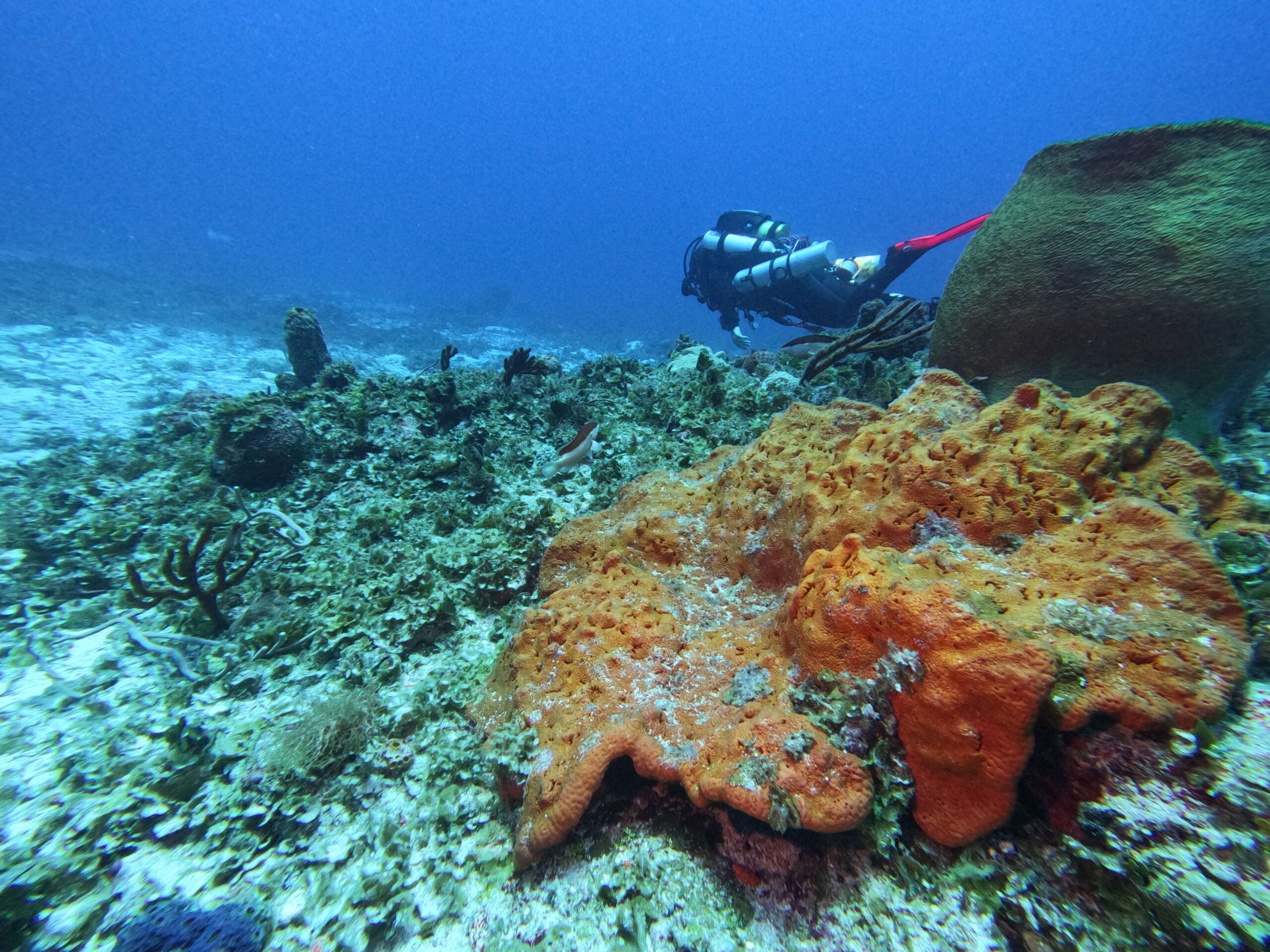
Marine scientists have explored 12-Mile Bank, a seamount located a dozen miles west of Grand Cayman, for the first time in a bid to gather information about its ecological significance.
A team of technical divers, led by Gretchen Goodbody-Gringley, director of research of Little Cayman’s Central Caribbean Marine Institute, dived to depths of 160 feet to collect data that will be added to the Cayman government’s Biodiversity Action Plan.
The researchers had also planned to visit another previously unexplored site – Pickle Bank – 45 miles north of Little Cayman, but inclement weather and other challenges prevented that from happening. Plan to explore Pickle Bank next year are being drawn up.
Funded by the UK government’s Darwin Plus Programme, the research is being carried out by CCMI, the Department of Environment, the Guy Harvey Ocean Foundation and the Smithsonian Tropical Research Institute.
While the exploration of 12 Mile Bank was carried out in August, CCMI released a three-part video documentary, called ‘Expedition Hope’, about the project on Friday, 15 Dec.
Goodbody-Gringley, the expedition leader, said, “With this docuseries, we’re not only showing you what we did to document the fish, coral and biodiversity that live on the seamounts, but you get a deep glimpse into the operations that go into expeditions like this.
“It’s not easy to go offshore and dive to 50 meters [160 feet], and sometimes things don’t go as you expect. CCMI is thrilled to show viewers behind the scenes and how science happens in this exciting expedition to 12-Mile Bank.”
Gathering samples at 160 feet
During the research expedition, the team completed twice the initial number of proposed fish surveys and 20% more photo-mosaics of the seabed. They also carried out genetic connectivity assessments, produced a map of 12-Mile Bank and collected samples of environmental DNA, known as eDNA.
eDNA is gathered in samples of water collected at depth, which is then examined for genetic evidence of species of marine life, for example, from their faeces or shed skin – traces of which can remain in the water after a creature has moved elsewhere.
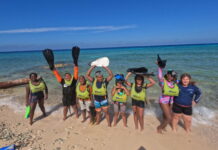
The team consisted of divers and scientists from CCMI, the University of Delaware, Harbour Branch Oceanographic Institute and the Smithsonian Tropical Research Institute.
‘Vulnerable Marine Ecosystems’
In a press release, CCMI stated that, as shown in the ‘Expedition Hope’ series, there is a reason these seamounts remain largely unexplored, as weather conditions are rarely conducive with research expeditions.
Both Pickle Bank and 12-Mile Bank are classified as ‘Vulnerable Marine Ecosystems’ under international criteria and are thought to be home to rich biodiversity with fewer impacts from human activity due to the remote location, CCMI noted.
During the 12-Mile Bank expedition, the researchers found that the seamount harboured productive environments, with high levels of coral on the south, and larger numbers and sizes of fish on the north side.
Open access data
Goodbody-Gringley said the collaborative effort across international research and conservation organisations will produce open access data for future conservation action and data-driven decision-making and management of both seamounts.
CCMI says once these valuable ecosystems are more understood as a result of this project, they can be better protected and conserved to ensure their health for future generations.
The data from this project will be incorporated into a new section of the Cayman Islands government’s Biodiversity Action Plan and will be used to underpin discussions for future marine spatial planning legislation.
“These unexplored and poorly understood seamount ecosystems could provide a glimmer of hope for the future of Cayman’s coral reefs, potentially providing refuge, larvae sources and resilience from the impacts of climate change. As such, it is essential that they are understood in order to be protected,” CCMI said in the release.
It added, “With Pickle Bank even further away from land and human impacts, CCMI are excited to explore this unknown ecosystem in spring 2024 and share the findings of these unique and unrevealed habitats with both local and international communities and scientists.”
View the YouTube docuseries here:
Part 1:
Part 2:
Part 3:
Related Videos








Great article. Especially good that you were able to include the three YouTube videos, which added so much more to the information and appreciation of all that the team went through.