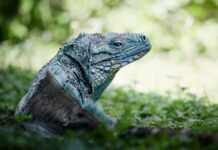
The chill of a drizzly morning began to dissipate, and with it, the Cayman Islands’ iconic ‘blue dragons’ emerged from under the foliage of their open-air enclosures, seeking patches of sunshine.
Members of the public paid them a visit over the holiday weekend at Blue Iguana Conservation, located in the Queen Elizabeth II Botanic Park, peering over the concrete walls to watch as the iguana puffed out the blue spikes on their cheeks, stretched out their jet-black claws, and blinked their crimson eyes against the sunshine. But the otherwise statuesque creatures are quick to action when caretakers throw them a tasty flower or when challenging a neighbouring male.
As residents of the conservation facility, the blue iguanas serve two purposes: educating visitors about the need to protect the species and playing their part in its breeding programme.
BIC has been leading the charge in bringing the native iguanas back from near extinction in the early 2000s, and now it is making plans to enhance its facilities to further that mission, particularly with the addition of a new hatchery.
Joe Jamieson, BIC assistant manager of operations, explained what the conservation centre has done recently to enhance its hatchery programme, and what still needs to be done.
Recent enhancements
In 2001, BIC penned a strategic action plan for carrying out its mission for the next five years, with support from the Darwin Plus Initiative.
“When the plan was initiated, we were coming out of COVID,” he said. “We did a lot of expansion.”
What was once a patch of bush evolved into individual, semi-wild enclosures surrounded by accessible pathways. Park staff supplement their diets, but the iguanas can feed on the plants now growing in their enclosures.
These animals were near extinction only 20 years ago, and the centre is working to ensure their long-term survival.
“We moved from recovery to conservation, but we’re still on the endangered list,” Jamieson said. “We came off ‘critically endangered,’ but we’re still ‘endangered.’”
He walked back past where the adults are housed at the centre’s entrance toward a collection of wire-covered enclosures. These spaces are home to the juvenile iguanas that need a bit more protection from potential predators.
New donor funding allowed the centre to recently build several new rows of enclosures for their yearlings and up to 3-year-old iguanas. Through experimentation, the conservationists found the right size for enclosures that allow the captive-bred iguanas to quickly grow.
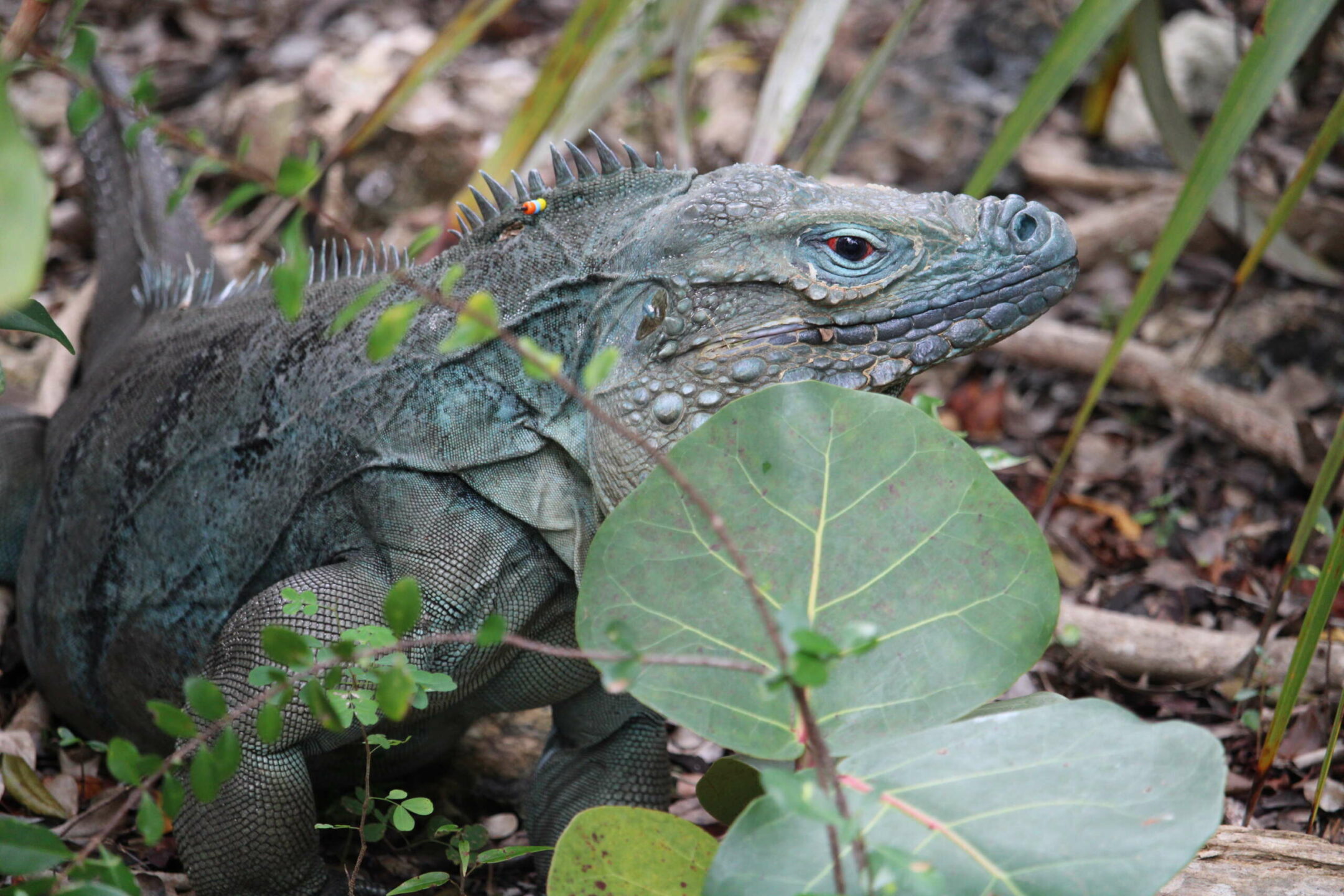
Once they get big enough to avoid most predators, they are ready to be released into one of three protected areas – the Botanic Park where the facility is housed, the Salina Reserve and the Colliers Wilderness Reserve. They each have a unique beaded tag so they can later be identified.
Every one of the centre’s current 230 residents plays a key role in the rehabilitation of the species. Most are part of the breeding programme, but BIC also helps injured iguanas recuperate before heading back out into the wild.
Needed upgrades
The next priority for the rearing programme is building a new hatchery room and dedicated office space, which Jamieson said the centre hopes to accomplish before the end of the year.
“At the moment, when we get eggs, we house them at the office,” he said. “We’re going to have the incubators here in a specific incubation room.”
Staff also plan to increase storage to facilitate their work.
Jamieson said the extra space is necessary so visiting experts have the resources they need to carry out tasks like veterinary support or post-mortem exams. He said they are also hoping to raise funds to upgrade their vehicle fleet to help with relocation efforts.
“Having a golf buggy would help us to monitor the parks,” he explained.
At the sanctuary, animals can survive well into their 60s, Jamieson said. However, outside the facility, the iguanas typically only reach their 30s as they are susceptible to predation from unrestrained dogs and cats, and face competition from the invasive green iguanas that have survived culling campaigns.
Predation and human encroachment left a population of fewer than 25 known individuals in 2001, making them the most endangered iguana in the world at the time, according to BIC. The centre celebrated releasing its 1,000th captive iguana in 2018, bringing them back from the brink of extinction.
However, staff still have concerns about the species’ ability to maintain itself.
“We’re not seeing the growth of the population and expansion we’d like to see,” Jamieson said. “So right now we’re trying to find out what’s going on with them.”
Out in the wild
The hatchery programme is essential to the continuation of the species considering the strategic plan highlighted that breeding in the wild still remains low.
“Although a remarkable conservation milestone, successful captive breeding and release does not accurately reflect the ongoing situation regarding the wild populations within the protected areas,” the plan states. “Through years of conducting population census surveys, there is strong evidence to show a lack of natural recruitment, even though successful breeding and hatching is recorded within all three protected areas.”
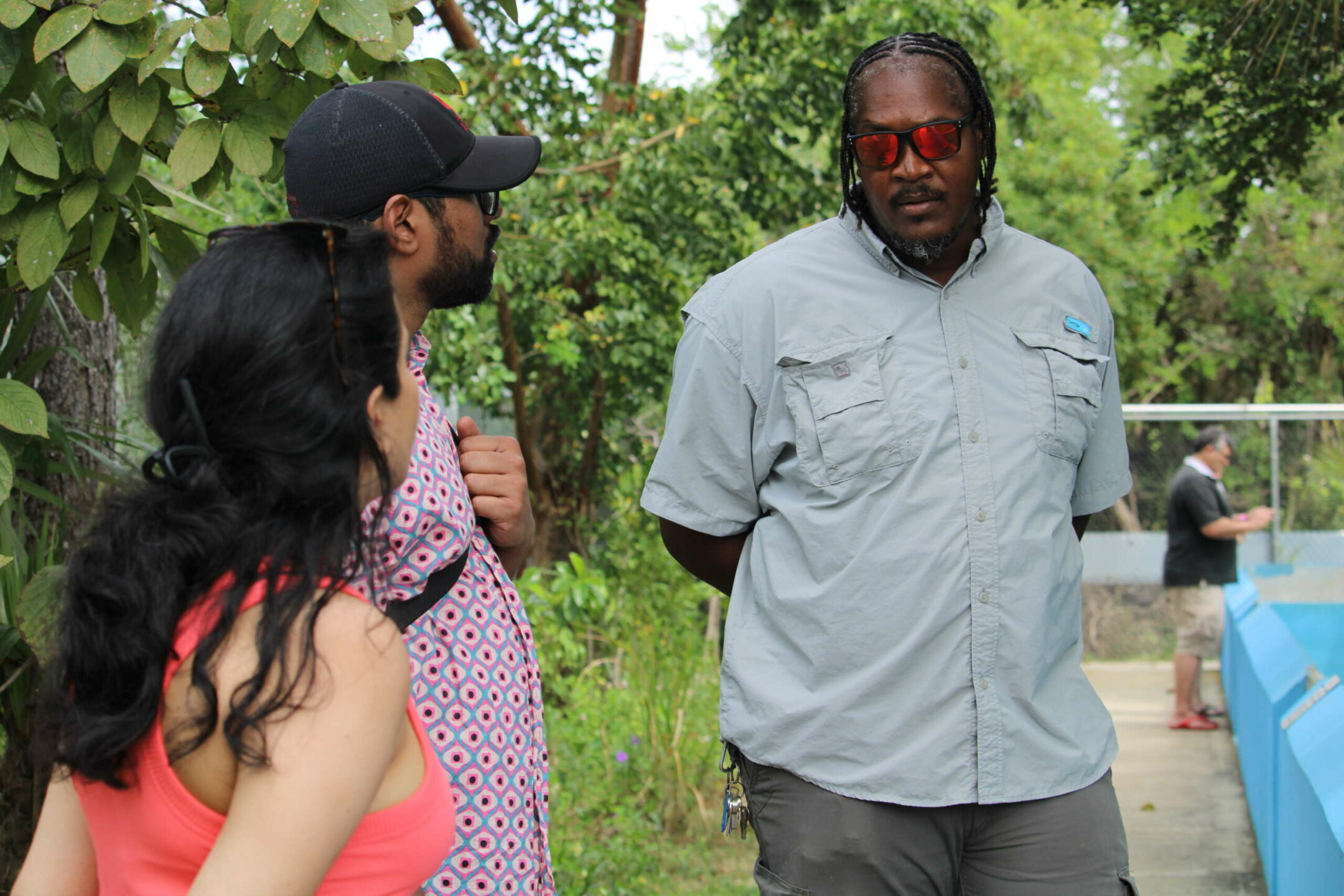
As Jamieson explained to several park visitors on Monday, 22 Jan., BIC is planning to start radio-tagging more of the animals they release to the wild, hoping they will reveal a hotbed of natural breeding that BIC can ensure is well protected. He said two staff members are also posted out on the reserves and aim to figure out where the iguanas are going.
“Is there a safe haven that we don’t know?” Jamieson questioned.
The centre doesn’t have a specific fundraising goal for the facility enhancements but welcomes donations from the community. Beyond financial support, Jamieson said the centre hopes the community continues to show its love for the uniquely Caymanian creatures.
“That’s an important part of the action plan – to create awareness and get people to help us,” he said.
Related Videos