A two-year study of the Grand Cayman’s George Town harbour area, which began immediately after the strict local COVID-19 lockdown was lifted, has shown that the fish population increased dramatically in the absence of cruise ships and other marine activities.
Cruise ships were banned from Cayman from March 2020 until March 2022.
The Central Caribbean Marine Institute began its ‘Quiet Oceans’ study in July 2020, when the local strict shelter-in-place restrictions were removed. Its researchers carried out surveys every two months over the following two years, and the findings from that study has now been published in a paper in the scientific journal Nature Scientific Reports.
The project, funded by Walkers and the UK government’s Darwin Plus Programme, involved recording the fish population at Eden Rock, Don Foster’s, Fish Point, and the Wharf.
The CCMI researchers said in their paper that Cayman’s strict two-year border closure had provided “an unprecedented opportunity to assess how the ‘human confinement experiment’ influenced the community composition of reef fish”.
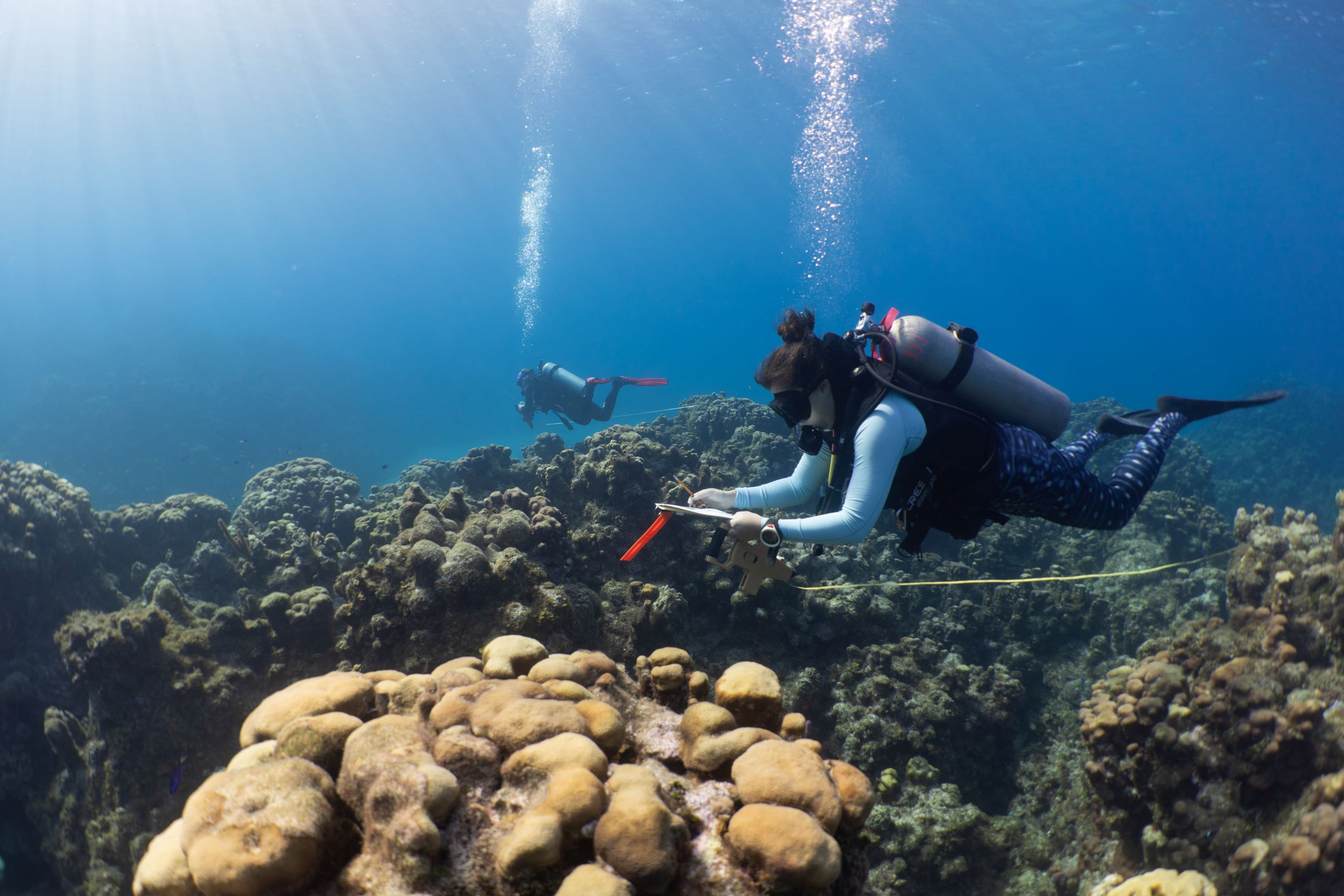
Using a baseline they had recorded in 2018, they found there was a three-fold increase in the fish population in the harbour.
This “stark increase in reef fish biomass” included larger numbers of herbivores, such as parrotfish, of which the researchers recorded a dramatic rise in juvenile parrotfish.
The researchers noted in their paper that the study provided unprecedented insights to the impacts of human activity and the resilience of reef fish populations, and the unique opportunity to see what happens when this human activity is taken away.
The Compass previously reported on an earlier report of the research, published a year and a half into the study, in December 2021.
While studies had been carried out in other parts of the world during what scientists dubbed the ‘Anthropause’ – referring to the global slowing of modern human activities – those were for much shorter periods of time than in Cayman, where there was a two-year break in tourism and travel.
The results showed that the researchers in Cayman noted an increase in the number of fish species recorded, the mean biomass (the total number of fish counted in a specific area of water multiplied by the average weight of fish), and the abundance of fish.
In a snapshot of one site surveyed – Eden Rock – the number of species of fish went from a low of 11.7 in July 2020 to a high of 26 in September 2020. Mean biomass at that site was lowest in July 2020 at 13.28kg, and highest in April 2022 at 65.35kg, while the mean abundance of all fish during a survey month varied from a low of 160 in July 2020 to a high of 844 in September 2020.
‘Positive implications’
“Given the functional role of herbivores, including parrotfish, our results suggest that reductions in human water-based activities have positive implications for coral reef ecosystems and should be considered in future management strategies,” the CCMI researchers stated in their paper.
Parrotfish play a vital role in the health of coral reefs, as they eat algae that can suffocate living coral.
The research team found that the abundance and biomass of fish populations near the main harbour of Grand Cayman were lowest when the study began in July 2020 – four months after the lockdown and border closure began – and continued to increase through 2021 to early 2022 in the absence of cruise ships.
“It is likely that these increases are due to shifts in fish behaviour, where they re-enter areas of previously high activity, and improved fish fitness, leading to more reproduction,” the study paper noted. “Research has found that reductions in stress from water-based activities, such as noise and boat waste, improve fish feeding, sociality, reproduction, and overall healthy functioning.”
CCMI’s post-doctoral researcher Jack Johnson, in a statement, said the results proved that both immediate and long-term changes in fish communities “can occur when human water-based activities are limited” and should be considered in future strategies for managing coral reefs.
The marine institute noted in the statement that marine ecosystems are under threat, “and the more scientists understand what impacts their health, the better we can protect them through planning and management”.
CCMI presented the research findings to the Food and Agriculture Organisation of the United Nations in December 2021, while the study was still ongoing, “to ensure that the results are disseminated to managers and decision makers for consideration during planning decisions around development and marine activities”.
Related Videos