

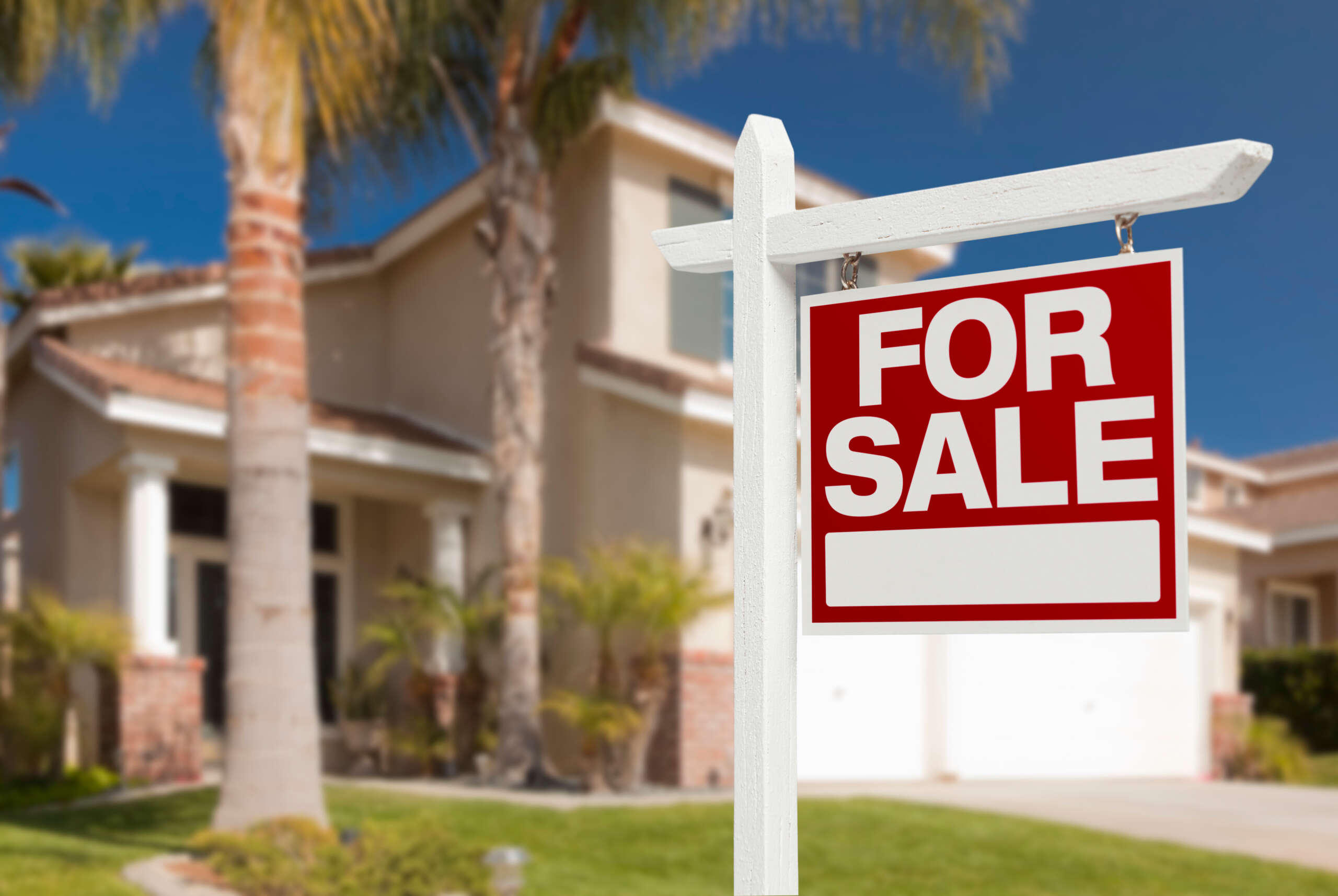
Cayman home owners can avoid punitive commission rates by “selling their property themselves”, according to one of the islands’ top realtors.
Responding to questions about price-fixing in the industry, James Bovell, one of the directors of RE/MAX denied that the Cayman Islands Real Estate Brokers Association’s mandatory 5-7% commission rate was anti-competitive.
“At the end of the day, everyone has the opportunity to sell the property themselves,” Bovell said.
He added his belief that customers were willing to pay, if they feel like they are getting value.
CIREBA locks its members – including almost 300 agents across 40 different firms – into a fixed commissions structure.
Collectively the group’s members sold just over US $900 million of properties last year according to data published by multiple member realtors. That would mean an estimated total commission of around $50 million for its member brokers.

CIREBA, previously described by the Cayman Islands Court of Appeal as “seeking to operate like a cartel”, would not be permitted to co-operate on price to that extent in the UK or the US under anti-competition laws. But the set up is perfectly legal in Cayman.
Bovell’s comments came during the question and answer session of a panel discussion on property at the Royal Institution of Chartered Surveyors conference at The Ritz-Carlton on Friday.
Lawyer Adam Johnson, a partner at Appleby, on the same panel, also spoke up in defence of the current fee structure.
“CIREBA doesn’t have a 100% market share,” he said.
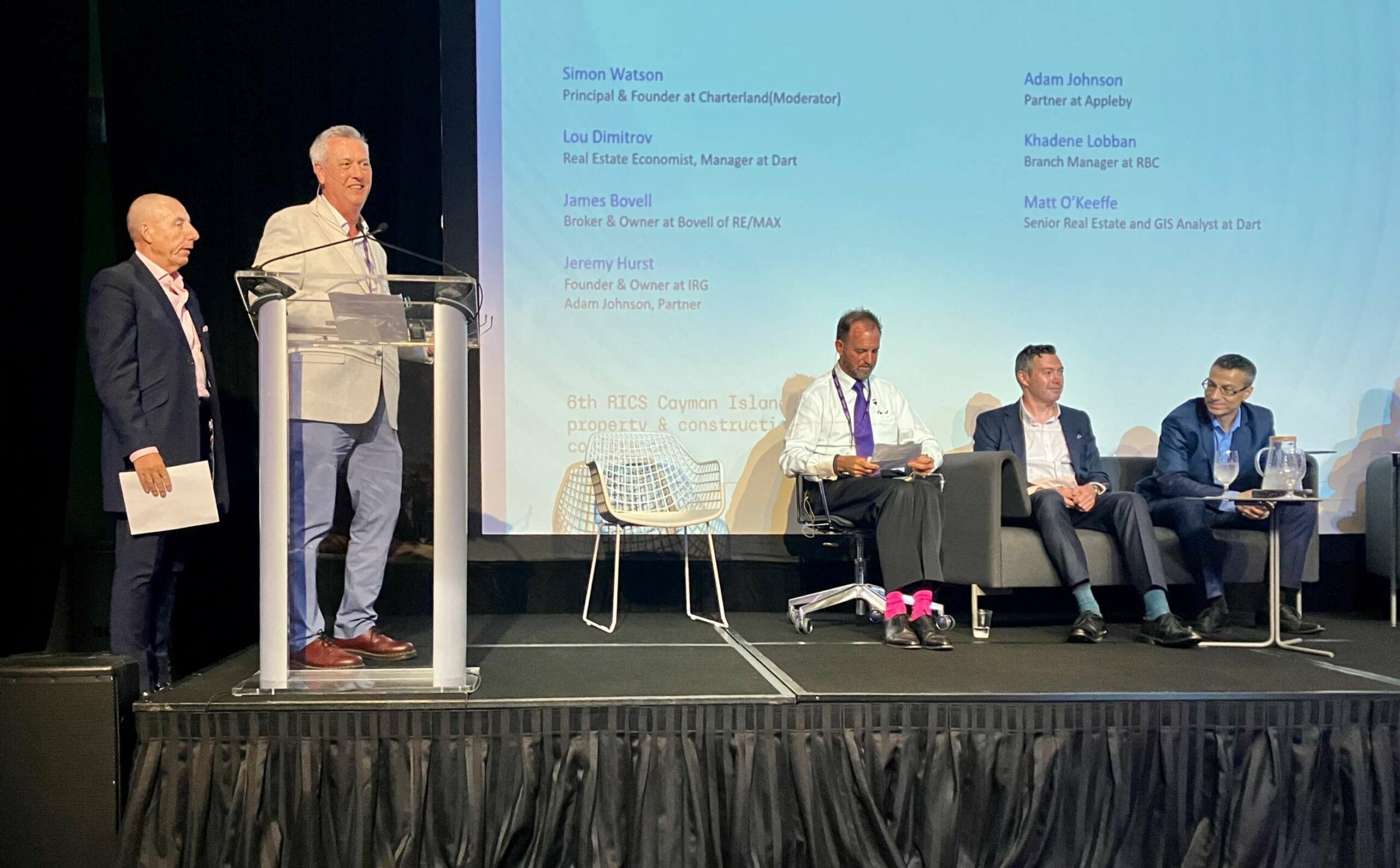
“I don’t really see the need for anti-competitive legislation.”
Johnson said industry organisations like CIREBA were designed to increase ‘buyer confidence’.
Data-analysis by the Compass, using Lands and Survey annual sales numbers and CIREBA’s own published figures, suggests the association has around 70% market share in dollar terms on property transactions in Cayman.
‘Competition should be let loose’
A fresh spotlight has been thrown on the co-operation over pricing among CIREBA members by a pair of lawsuits in the US that threaten to upend industry pricing standards in that country.
CIREBA Commissions
- $9,995,000 and over: 4%
- $995,000 to $9,994,999: 5%
- $495,000 to $994,999: 6%
- $95,000 to $494,999: 7%*
The powerful National Association of Realtors has now agreed to pay hundreds of millions in damages and amend its rules in a landmark deal that is expected to “eliminate the industry standard 6% sales commission” according to the New York Times.
The complexities of the US lawsuit, which hinge on how fees are split between buyers’ and sellers’ agents, and the differences with Cayman are explained here.
The major similarity is that, in both jurisdictions, co-operation on pricing between realtors has been linked to a commissions rate that is orders of magnitude higher than international norms.
In Cayman, as in the US, selling a home for US $1 million – around the average price for last year in Cayman – would cost $60,000 in realtor commissions.
Those costs are baked into the final sales price and impact the affordability of property, industry sources have told the Cayman Compass.
Economists cited in the New York Times article estimated that the changes in the US would transform the market and reduce commissions by as much as 30% across the board, with a knock-on effect on home prices.
“The forces of competition will be let loose,” Benjamin Brown, co-chairman of the antitrust practice at Cohen Milstein and one of the lawyers who hammered out the settlement, told the NYT.
“You’ll see some new pricing models, and some new and creative ways to provide services to home buyers. It’ll be a really exciting time for the industry.”
Ripple effect
The ripple effect from the wave of change sweeping the US has yet to reach Cayman’s shores in a meaningful way.
But independent realtors are already seeking to distance themselves from CIREBA and do their own thing on pricing.
Roger Southam, of My Realtor, an agency not affiliated to CIREBA, where commissions start at 3%, helped found the Cayman Islands Realtors Organisation, he says, to provide professional standards, training and credibility for the collection of realtors who wished to work outside of CIREBA’s mandatory price structure.
He believes the changes in the US will ultimately have an impact in Cayman.
“The fee debacle in the USA is fascinating, and as someone from UK where fee fixing was outlawed in the 1980’s it has to be right to allow free market forces to flow,” said Southam, who is also the Cayman chair of the Royal Institution of Chartered Surveyors.
“With the launch of the new governing body CIRO, I am coming across more cases where CIREBA agents are not sticking to their scales and offering clients discounts. So I sense the change is happening under the radar and I sense we will see this grow.”

Though CIREBA doesn’t have a total market share, realtors have told the Compass they feel it necessary to be part of the organisation for credibility reasons and to get full access to its ‘Multiple Listing System’.
The association’s guidelines also dictate how it deals with members that are not part of the organisation – essentially preventing them from offering an equal split of fees on a co-brokered sale.
In a previous interview with the Compass, Southam argued the two issues of standards and price should not be linked.
“This is not something against CIREBA,” he said. “I just don’t happen to agree with being told what documents to use and what fees I have to charge.”
Another Cayman lawyer with knowledge of the property industry said the reasoning from CIREBA agents to defend their co-operation on pricing is weak.
“Asked to justify the current structure, the best our realtors can manage is either “take it or leave it” or “it’s always been like this”, neither of which is any justification at all,” said the lawyer, who asked to remain anonymous.
“We are supposed to be an advanced jurisdiction. We need to introduce robust anti-cartel, anti-price-fixing legislation here, like the US and UK have had for decades.
“Sellers should have the right to negotiate commission rates with their own agents, and should not have to subsidise their buyers’ agents in any way.
“In two words, it needs to be a free market, not an antiquated shake-down relying on what is to all intents and purposes a monopoly for which CIREBA has not produced a single plausible justification.”
- This article has been amended to reflect the fact that CIREBA has now dropped its top 10% commission rate
Related Videos











In the US currently the seller pays commission to both the sellers agent and buyers agent. In the past the NAR deal was 6%. 3% to each agent. Members of NAR have exclusive access to MLS listings.
Recently due to low inventory sellers have been able to lower the rate paid to 4%.
The advent of Zillow, Realtor.Com, etc. allows buyers to search for properties easily. They can also get info on when open house take place and they don’t have to be members of NAR to view the listings.
The problem in the US is that buyers agents won’t give listings to their clients that don’t include a commission.
Yes you can buy / sell a property in the US without agents however, a knowledgeable agent can be an asset when making such a large purchase.
I have read that sellers may start offering an hourly rate or a flat fee to an agent and no payment to the buyers agent ( buyer pays the buyers agent).
Fat chance getting anywhere right now with that scenario but, it’s coming…
CIERBA fixing of commission rates at an outrageously high price is harming consumers and the economy, as explained in the article. Having 70% of the market qualifies as having a dominant position in the product and geographic market in all jurisdictions in the world. One hundred percent is not needed to be deemed to be dominant and be caught by competition law. Having a substantial effect on competition in the market is what matters. In the US, the threshold for dominance is 70% while in the UK and Europe, market share of 50% and sometimes even 40% (United Brands v Commission) qualifies as having a dominant position in the relevant market, depending on the market share of the closest rival. Cayman Islands would benefit greatly from introducing Competition Law (antitrust law in the US). Because of its small size, there is a huge concentration in sectors like import and retail. Given that almost everything consumed is imported, cooperation or cartelization between importers is possible particularly since they know each other very well, and can cause consumers harm by having to pay higher than competitive prices. Jamaica has had a competition law since 1993, and consumers have benefitted greatly by its enforcement. Barbados, Trinidad and Tobago, and Guyana also have competition laws and competition commissions. And the OECS countries have a draft law and are taking steps to legislate and enforce. So, we need not look to the big industrialized countries to justify having legislation here. Our sisters small island states do have and are enforcing competition law and consumer protection law. to the benefit of consumers. We are still waiting for the Consumer Protection Bill to be passed.
Dr. Taimoon Stewart, Competition Law Specialist.
We all know and might even be friends with at least a few CIREBA agents, it is almost impossible not to be given the sheet number in Grand Cayman. Some are likely very good at what they do, but it is commodity service for the most part. The behaviour is cartel like and based on information asymmetry. They have even made the http://www.cireba.com website less user friendly recently.
If one remembers years ago the CIREBA listing & MLS used to include things like strata and insurance costs. Now this requires an interaction with your agent so they can “find out” from the other agent.
We have too many of them and I would say that many of them don’t deserve the cash they are pulling out of transactions where they appear to add very little value.
It’s no surprise that CIREBA would be against this change. They have long enjoyed Caymans unfair price fixing cartel like structure. And CIG (past and present) have remained unwilling to address this issue. It’s a system that enables prices to exponentially increase to unaffordable for all but the very wealthy. That’s in large part why home ownership is now unaffordable for so many.
Realtors claim they have the value of “market insight”, in my area upmarket properties have been offered under broker signage for excessive prices and remained unsold. Is there not a conflict between offer price and broker commission?.