

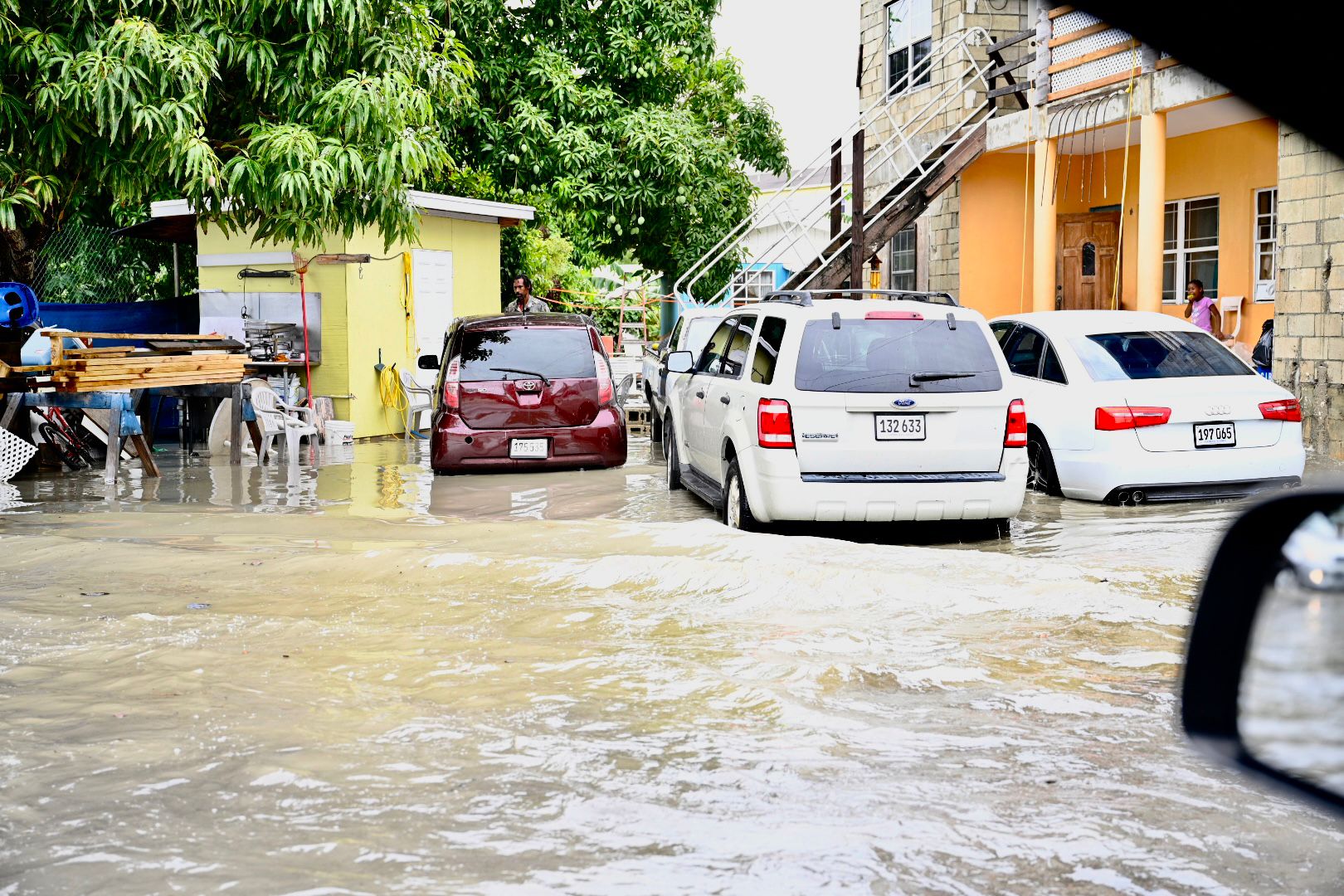
Cayman’s hazard readiness was put to the test on Monday, 10 June when persistent heavy rainfall led to widespread flooding in Grand Cayman. The wet weather prompted deployment of the Cayman Islands Regiment and the ‘partial’ triggering of the National Emergency Operations Centre.
Hazard Management Cayman Islands says the community can be better prepared.
“To be ready for hazards, as a wider community we will need to continue to create, develop and nurture the ideas and practices of being ready, always. This will not happen overnight,” Hazard Management told the Cayman Compass Thursday.
The more the community talks about preparedness and holds emergency exercises in schools, across the private sector and within government, “we will have a nation better prepared. Each of us play a key role in being prepared”, the agency said.
With the Atlantic Hurricane Season underway, having a storm plan in place is critical. Forecasters are holding fast to their projection for an extremely active hurricane season. Colorado State University’s Tropical Meteorology Project expects as many as 23 named storms with winds of 39 miles per hour or higher.
Ready or not
In the aftermath of Monday’s downpour, Hazard Management said it recognises that educating the public and encouraging preparedness habits is of the utmost importance.
“With the unpredictability of weather systems, the community needs to be ever ready, with rapid response becoming second nature. With support from the country’s leaders, HMCI is committed to building upon our public awareness communications to reach a wider audience,” it said.
No alerts were issued through the Hazard Management National Emergency Notification System (NENS) on its BlackBerry AtHoc platform on Monday as flood waters rose. Hazard Management said this was because the app works under the direction of two hazard onsets – sudden events and slow events.
“The criterion for a slow onset is based on AtHoc and the needs of individuals while making an assessment in the communities. Whereas in a sudden onset, it is based on the level of threat that the country is experiencing and provides an immediate alert to users in the event of a major incident or disaster and shares critical information,” it said.
The NENS app has about 7,300 registered users.
“Members of the public are encouraged to register and download the app for future alerts in un-forecasted and forecasted incidents,” it said.
As it observed the heavy rainfall impact across Grand Cayman, Hazard Management said it recommended the partial activation of the National Emergency Operations Centre, which included frontline emergency responders and the Joint Communication Services.
“This approach ensured that we were able to coordinate response and relief efforts and receive the latest updates about varying matters as the weather system progressed,” Hazard Management said.
A month’s worth of rain in a day
The unpredictability of Monday’s weather conditions was evident in the usually heavy rainfall, with 165 millimetres or 6.49 inches of rain recorded that day.
National Weather Service Chief Meteorologist Kerry Powery Linwood confirmed the day’s rainfall was greater than the monthly average for June.
Cayman’s average monthly rainfall is 6.91 inches during the May-November rainy season.
The heavy rain event came after a significant dry spell for Cayman.
Hazard Management said, while torrential downpours occurring periodically is just a fact of life in the Caribbean, “we must do our best to manage and balance the threats and encourage residents to prepare and anticipate them”.
It added, “Residents are strongly encouraged to know their risks … the elevation of their homes and what measures they can take to protect themselves and their families. We encourage motorists to slow down in flood waters to lessen the likelihood of stalling out your vehicle, and if you don’t have to drive during heavy rainfall events, then try to avoid the roads.”
Governor Jane Owen also stressed the need to prepare for hazards, in the aftermath of the floods.
“It is a good reminder to ensure that we all have plans in place for the challenging weather in this season and that everyone is familiar with the communication channels for regular updates in times of difficulties,” she said.
Flood-prone communities like Randyke Gardens and Windsor Park in George Town, as well as areas of Bodden Town and West Bay, were left inundated with water Monday, after stormy weather carried over from the weekend.
Schools were allowed to open despite the obvious worsening weather conditions, leading to deployment of the Cayman Islands Regiment to assist in getting children back to their homes in flood-hit areas.
Some motorists who tried to navigate the flood waters found their vehicles stalling and required rescue by first responders after they became trapped.
Drivers should never traverse flooded roads, as the gushing water can easily overrun a vehicle, leading to serious life-threatening situations.
The British Red Cross advises that even “six inches of fast-flowing water can knock you over. Two feet of water can float a car”.
The rising waters also created sinkholes and lifted asphalt from some roads. Printers Way in George Town had to be closed off after a large hole appeared after the rains.
Hazard Management also opened the Red Cross shelter on Huldah Avenue and the East End Civic Centre for residents impacted by flood waters.
Damage assessments were continuing at press time.
Community rallied throughout
As the rains came down, community volunteers stepped up to aid the Cayman Islands Humane Society, lining up in the torrential downpour to take rescue dogs and cats to safety as the George Town animal shelter battled intruding flood waters.
Humane Society director Saskia Salden said the Cayman community outreach was “amazing”.
By lunchtime on 10 June, she said all “social” cats had gone to foster homes and “all but a few dogs and some puppies with ringworm were left at the shelter”.
Those animals, she said, were kept upstairs, safe and dry.
Many of those animals remained in foster care as the rains continued in the intervening days after 10 June.
Meals on Wheels also saw support from volunteers, and together with the assistance of the Regiment and the Cayman Islands Red Cross, ensured that those waiting on hot meals in their homes did not miss out on something to eat while the rain poured.
Meanwhile, in the worst hit areas of Windsor Park, some residents enjoyed an almost carnival atmosphere, despite the lake-like flooding around their homes.
By the end of the day, people had set up tables in the puddles to play dominoes, and parents carried their giggling kids across the thresholds to their homes.
In Bodden Town, children paddled a kayak down the street, even casting a line into the flood waters in a comedic display.
Some residents boarded dinghies and cruised through the flood waters.
The volume of flood water in some areas rose to two feet of water. The National Weather Service’s Powery Linwood explained that factors beyond just rainfall would have led to this, “such as low elevation and run-off from neighboring land, watershed area collection at [the] lowest point”.
Looking back at the response, Governor Owen also said it was “reassuring” to see the National Emergency Operations Centre partially activated and “all agencies providing support across the Island and relief to those in need following the exceptional rainfall and flooding”.
She thanked all those involved in supporting the community, including NEOC/Hazard Management colleagues, first responders, the Red Cross, shelter management volunteers and medical services.
“We also mobilised our Regiment to provide additional flood defences, support for children travelling home from school and those areas particularly hit by high water levels,” she added.
Looking ahead
Hazard Management said it is committed to building on its public awareness communications to reach a wider audience.
It said it is working on a flood monitoring network, installing storm surge sensors, conducting vulnerability and risk analysis for storm surge, and wave impact modelling with regional partners.
“In time, residents can expect more information and access to resources about locations that experiencing flooding (in real time),” the agency said.
The capacity to accurately forecast weather events is also improving as technology advances, it added.
One sensor is already installed behind the Government Administration Building and is being beta tested before the pilot phase is proposed for further observation and data recording.
“During the beta test phase, data is checked for accuracy and that successful communication is achieved with the corresponding equipment. Two residential communities have been identified for the pilot. These are Randyke Gardens and Windsor Park in George Town, Grand Cayman,” Hazard Management said.
The key benefit of the flood sensor programme upon completion will be providing accurate information to residents in real time, the agency said.
“With the implementation of the wider network throughout the islands, residents will have the ability to plot their travel route based on recorded water levels in identified areas when conditions are rainy, and roads are wet,” it said.
Related Videos












A lot of verbiage from Hazard Management but exactly how do we prepare for for serious flooding when all the drains are blocked as they have not been cleared for years. Should we all invest in a rubber dinghy?!.
Roads built recently, such as the Esterley Tibbets Highway and its extensions should have better drainage.